
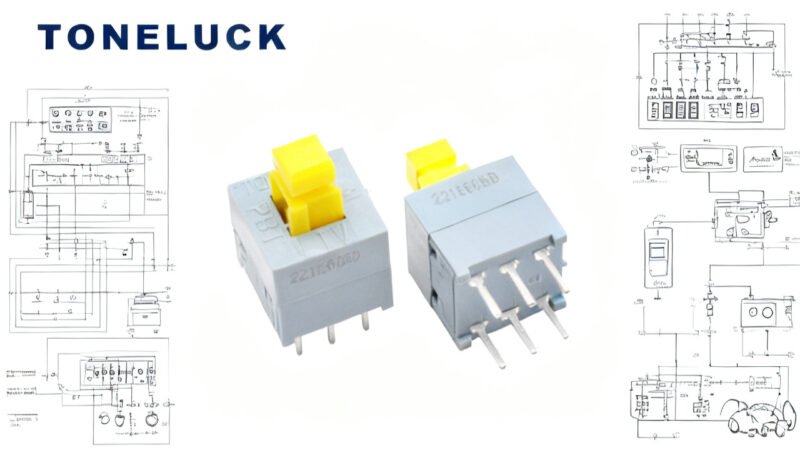
In the intricate world of modern engineering and product design, seemingly small components often play the most critical roles. Among these, the micro switch stands out as a ubiquitous, yet profoundly important, electromechanical device. Known for its snap-action mechanism, compact size, and exceptional reliability, the micro switch is the silent workhorse behind countless applications, ensuring precision, safety, and seamless operation across diverse industries.
At its core, a micro switch is a small, sensitive switch that requires minimal force to operate. Its defining characteristic is the ‘snap-action’ mechanism, which ensures a rapid and decisive change in contact state, regardless of the speed at which the actuator is pressed. This snap-action provides a high degree of repeatability and prevents contact welding or arcing, thereby extending the switch’s operational lifespan. Typically featuring Normally Open (NO) and Normally Closed (NC) contacts, often in a Single Pole, Double Throw (SPDT) configuration, micro switches are designed for precise position detection, limit sensing, and basic on/off control.
Key Characteristics and Advantages
- Exceptional Precision and Repeatability: The snap-action mechanism guarantees consistent actuation points, making them ideal for applications requiring accurate positional feedback.
- High Durability and Longevity: Engineered for millions of operational cycles, micro switches offer remarkable endurance, reducing maintenance needs and total cost of ownership.
- Compact Design: Their small footprint allows for integration into space-constrained designs, from intricate medical devices to compact consumer electronics.
- Versatile Actuation Options: Available with a wide array of actuators—pin plunger, short/long hinge lever, roller lever, simulated roller lever—to suit specific mechanical interfacing requirements.
- Broad Electrical Ratings: Capable of handling various current and voltage loads, making them adaptable for both low-power signaling and higher-power switching.
- Cost-Effectiveness: Offering high performance and reliability at a competitive price point, they provide excellent value for industrial and commercial applications.
Types and Specialized Variations
While the fundamental principle remains constant, micro switches come in various forms tailored for specific environments and applications:
- Standard Micro Switches: The general-purpose workhorses, suitable for a vast array of indoor and controlled environment applications.
- Limit Switches: Often more robust and industrial-grade, a limit switch typically incorporates a micro switch element within a heavy-duty housing. They are designed to withstand harsh industrial conditions and are crucial for detecting the presence or absence of an object, or for limiting the travel of moving parts in machinery.
- Waterproof Micro Switches: Essential for environments exposed to moisture, dust, or liquids. These switches are sealed to achieve various Ingress Protection (IP) ratings (e.g., IP67), ensuring reliable operation in demanding conditions like outdoor equipment, automotive applications, or washdown areas. A high-quality waterproof micro switch prevents ingress that could lead to corrosion or malfunction.
- Mini Micro Switches: Such as the MQS-9A Mini Micro Switch, these are designed for ultra-compact applications where space is at an absolute premium. Despite their diminutive size, they maintain the critical snap-action precision and reliability of their larger counterparts, making them indispensable in miniaturized devices.
Applications Across Industries
The reach of the micro switch is truly extensive:
- Industrial Automation: Critical for position sensing in robotics, conveyor systems, safety interlocks on machinery, and control panels. Every piece of automated equipment relies on precise feedback often provided by a limit switch or micro switch.
- Automotive: Used in door latches, seatbelt buckles, gear shift mechanisms, power windows, and engine management systems for reliable feedback.
- Home Appliances: Found in microwaves (door interlock), washing machines (lid position), refrigerators (ice dispenser), and HVAC systems for fan control and damper positioning.
- Medical Devices: Ensuring safety and precision in diagnostic equipment, patient beds, and surgical tools.
- Aerospace: For landing gear position sensing, cockpit controls, and various safety mechanisms.
- Security Systems: Door/window sensors, alarm triggers, and access control systems.
Choosing the Right micro switch manufacturer
Selecting the appropriate micro switch is paramount for the long-term reliability and performance of any product. Engineers and procurement professionals must consider several factors:
- Electrical Specifications: Voltage, current rating (AC/DC), and contact resistance.
- Mechanical Characteristics: Actuator type, operating force, pre-travel, over-travel, and differential travel.
- Environmental Conditions: Operating temperature range, presence of dust, moisture, or corrosive agents (necessitating a waterproof micro switch).
- Lifecycle Expectancy: The number of operations the switch is guaranteed to perform.
- Certifications: Compliance with international standards such as UL, cUL, ENEC, CQC, ensuring safety and quality.
- Manufacturer’s Reputation: Partnering with an experienced micro switch manufacturer known for quality, consistency, and technical support, like TONELUCK, is crucial. A reputable manufacturer offers a broad portfolio, ensuring you find the exact component for your specific needs, whether it’s a standard model or a specialized MQS-9A Mini Micro Switch.
Conclusion
Micro switches, in all their variations—from robust limit switches to delicate mini micro switches and resilient waterproof models—are fundamental building blocks of modern technology. Their ability to provide precise, reliable, and repeatable switching actions makes them indispensable across virtually every industry. For engineers and product developers, understanding the nuances of these compact powerhouses and partnering with a trusted micro switch manufacturer is key to designing durable, efficient, and high-performing products that meet the rigorous demands of today’s market. Investing in quality micro switches ensures not just functionality, but also the long-term integrity and safety of your applications.
