
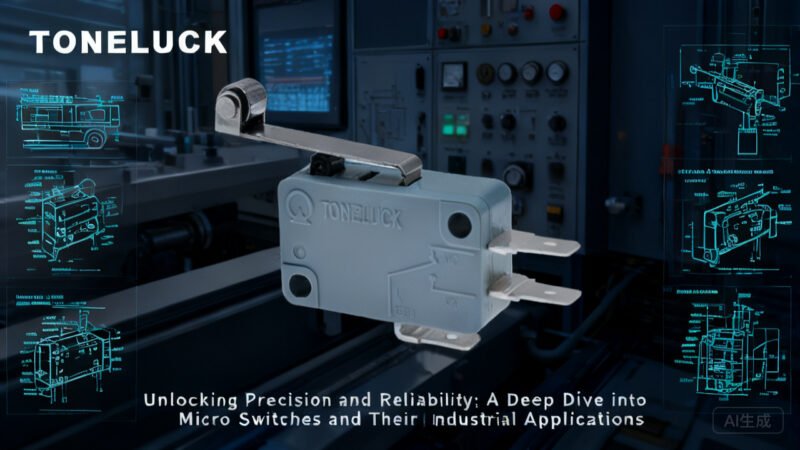
In the intricate landscape of modern industrial and consumer electronics, small components often hold the key to immense functionality and reliability. Among these unsung heroes, the micro switch stands out as a critical electromechanical device, pivotal in countless applications ranging from everyday appliances to complex industrial machinery. Understanding the nuances of these compact yet powerful switches is essential for engineers, product designers, and procurement professionals seeking to optimize performance and ensure long-term operational integrity.
At its core, a micro switch, also known as a miniature snap-action switch, is an electrical switch actuated by a very small physical force, operating with a rapid, decisive action. This “snap-action” mechanism is achieved through an internal spring system that quickly shifts the contacts from one position to another once the actuation point is reached, ensuring a clean break or make and minimizing arcing. Their compact size, high precision, and robust design make them indispensable in scenarios requiring reliable on/off switching, often where space is at a premium.
Diverse Applications Across Industries
The versatility of micro switches is staggering, finding homes in virtually every sector:
- Automotive: Door latches, seat belt sensors, gear shift interlocks, power window controls.
- Home Appliances: Microwave ovens, washing machines, refrigerators, vacuum cleaners, coffee makers, where they detect door closures, water levels, or button presses.
- Industrial Control: Safety interlocks on machinery, conveyor belt systems, process control, and automation equipment, ensuring safe operation and precise positioning.
- Medical Devices: Infusion pumps, diagnostic equipment, patient beds, requiring high reliability and safety standards.
- Security Systems: Tamper detection in alarms, access control systems, and surveillance equipment.
- HVAC Systems: Damper controls, fan limit switches, and pressure sensors.
Their ability to provide precise feedback and control makes them a foundational component in the pursuit of automation and intelligent system design.
Exploring Key Types of micro switches
Standard Micro Switches
The baseline for many applications, standard micro switches offer reliable snap-action switching in a compact form factor. They come in various configurations regarding operating force, terminal types, and actuator styles (pin plunger, lever, roller lever), allowing for broad adaptability to different mechanical interfaces and electrical requirements. Their fundamental design prioritizes durability and consistent performance over millions of cycles.
Waterproof Micro Switches
For applications exposed to harsh environmental conditions, such as moisture, dust, or corrosive agents, waterproof micro switches are indispensable. These specialized switches are engineered with enhanced sealing mechanisms, often achieving high IP (Ingress Protection) ratings like IP67, which signifies complete protection against dust ingress and the effects of temporary immersion in water. This makes them ideal for outdoor equipment, industrial machinery in wet environments, automotive under-hood applications, and marine electronics, ensuring operational integrity even when faced with challenging elements.
Limit Switches
A specific and crucial category, limit switches are designed to detect the presence or absence of an object, or to monitor the limits of travel for moving parts in machinery. They function as electromechanical sensors, providing feedback to control systems when a physical contact is made. Commonly found in industrial automation, robotics, elevators, and CNC machines, limit switches are vital for safety interlocks, position sensing, and sequence control, preventing over-travel and ensuring precise machine operation. Their robust construction often includes metal housings and heavy-duty actuators to withstand demanding industrial environments.
Mini Micro Switches (e.g., MQS-9A Series)
As devices become smaller and more integrated, the demand for miniature components grows. Mini micro switches, such as those in the MQS-9A series, address this need by offering the same reliable snap-action functionality in an ultra-compact package. Their reduced footprint makes them perfect for space-constrained applications like consumer electronics, compact handheld devices, automotive electronics where miniaturization is key, and intricate control panels. Despite their small size, they maintain high performance standards, including respectable electrical ratings and operational lifespans, proving that small packages can deliver significant impact.
Critical Factors When Selecting a Micro Switch
Choosing the right micro switch involves careful consideration of several technical specifications:
- Electrical Ratings: Ensure the switch can safely handle the required voltage and current for both AC and DC loads.
- Operating Force: The amount of force required to actuatethe switch, critical for tactile feedback and mechanical compatibility.
- Actuator Type: Pin plunger, lever, roller lever, push button – each suited for different mechanical interfaces and actuation methods.
- Durability and Lifecycle: Specified in terms of mechanical and electrical operations, indicating the switch’s expected lifespan.
- Environmental Resistance: For demanding conditions, consider temperature range, vibration resistance, and IP ratings (for waterproof models).
- Contact Configuration: Normally Open (NO), Normally Closed (NC), or Changeover (SPDT) to match circuit requirements.
- Material Quality: The quality of contacts, housing, and internal components directly impacts performance and longevity.
- Certifications: Compliance with international standards such as UL, cUL, ENEC, and CE ensures safety and quality.
The Importance of a Reliable micro switch manufacturer
The performance of any system relying on micro switches is only as good as the quality of its components. Partnering with a reputable micro switch manufacturer is paramount. A leading manufacturer not only offers a broad portfolio of high-quality, durable products, including specialized waterproof and limit switches, but also provides critical technical support, customization capabilities, and rigorous quality control. Manufacturers like TONELUCK, for instance, are known for their commitment to engineering excellence, ensuring their products meet stringent industry standards and deliver consistent, reliable performance across diverse applications. Their expertise in designing and producing robust switches, from standard models to advanced MQS-9A Mini Micro Switches, underscores the value of choosing an experienced partner dedicated to innovation and customer satisfaction.
Conclusion
Micro switches, in their various forms—be it standard, waterproof, limit, or mini—are fundamental building blocks of modern technology. Their ability to provide precise, reliable, and durable switching actions under diverse conditions makes them indispensable across a multitude of industries. As technology continues to advance and miniaturize, the demand for high-performance, specialized micro switches will only grow. By understanding their types, applications, and critical selection factors, and by collaborating with an experienced micro switch manufacturer, businesses can ensure the longevity, efficiency, and safety of their products and systems, paving the way for continued innovation and operational excellence.
