
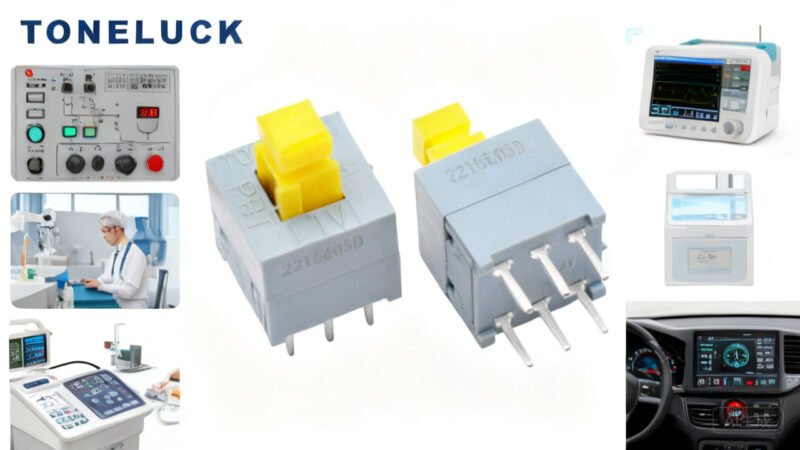
In the intricate world of industrial design and automation, the seemingly small components often play the most critical roles. Among these, the micro switch stands out as an indispensable element, powering countless applications across diverse sectors. These compact, high-precision devices are fundamental to ensuring reliability, safety, and efficiency in everything from consumer electronics to heavy machinery. For B2B professionals, understanding the nuances of micro switches—their types, applications, and selection criteria—is paramount to optimizing product performance and longevity.
At its core, a micro switch, often referred to as a snap-action switch, is an electrical switch actuated by very little physical force, through the use of a tipping point mechanism. This mechanism produces a rapid and decisive transfer of contacts from one position to another, regardless of the speed of actuation. This “snap-action” ensures a clean break and make, minimizing arcing and extending the switch’s operational life. Their small size, high repeatability, and robust performance under various conditions make them a go-to choice for designers and engineers.
Key Characteristics and Advantages
- Compact Size: Their miniature footprint allows integration into space-constrained designs.
- High Precision: Consistent operating points ensure reliable performance over millions of cycles.
- Rapid Actuation: The snap-action mechanism provides quick and decisive contact transfer, reducing contact bounce.
- Long Lifespan: Designed for millions of mechanical and electrical operations, offering exceptional durability.
- Versatility: Available in a vast array of configurations, actuator types, and electrical ratings.
Diverse Applications Across Industries
The ubiquity of micro switches is a testament to their versatility. They are found in:
- Automotive: Door latches, seat belt indicators, gear shift mechanisms, power window controls.
- Industrial Control: Safety interlocks, position sensing in machinery, control panels, robotics.
- Home Appliances: Microwave ovens, washing machines, refrigerators, HVAC systems.
- Consumer Electronics: Gaming devices, power tools, printers.
- Medical Devices: Diagnostic equipment, patient monitoring systems.
Exploring Micro Switch Variants
While the basic principle remains consistent, micro switches come in several specialized forms, each tailored for specific operational environments and requirements.
Standard Micro Switches
These are the foundational components, offering reliable snap-action switching for general-purpose applications. They come in various sizes and with different contact configurations (SPDT, SPST-NO, SPST-NC), suitable for a wide range of electrical loads and mechanical forces. Their straightforward design makes them a cost-effective solution for many standard applications.
Mini Micro Switches: The MQS-9A Example
As devices become increasingly smaller, the demand for miniaturized components grows. Mini micro switches, such as the MQS-9A Mini Micro Switch, exemplify this trend. These switches offer the same reliable snap-action functionality in an even more compact package. The MQS-9A, for instance, is engineered for applications where space is at an absolute premium, without compromising on performance or durability. They are ideal for high-density PCBs, portable devices, and intricate electromechanical assemblies where traditional micro switches might be too large.
Limit Switches: Robust Position Sensing
A specific and highly robust application of the micro switch principle is the limit switch. These are electromechanical devices designed to detect the presence or absence of an object, or to monitor the travel limits of moving machinery. Unlike standard micro switches, limit switches are typically housed in rugged, often sealed enclosures to protect them from harsh industrial environments, including dust, moisture, and mechanical impact. They feature a variety of actuators (roller levers, plungers, whisker arms) to suit different sensing requirements, making them critical for safety interlocks, process control, and automation systems in manufacturing plants, conveyors, and heavy equipment.
Waterproof Micro Switches: Resilience in Harsh Environments
For applications exposed to moisture, dust, or other contaminants, a standard micro switch simply won’t suffice. This is where waterproof micro switches become indispensable. These switches are engineered with specialized sealing mechanisms, often achieving high IP (Ingress Protection) ratings like IP67, indicating full protection against dust ingress and the effects of temporary immersion in water. They are crucial for outdoor equipment, marine applications, automotive under-hood components, and any industrial setting where environmental factors could compromise standard switch operation. Their enhanced durability ensures reliable performance and extends the lifespan of the equipment in challenging conditions.
Selecting the Right Micro Switch: Key Considerations
Choosing the optimal micro switch involves a careful evaluation of several technical parameters to ensure compatibility and long-term reliability:
- Electrical Ratings: Match the switch’s voltage and current capacity to the circuit requirements (AC/DC, resistive/inductive loads).
- Actuator Type: Select an actuator (e.g., pin plunger, roller lever, simulated roller, straight lever) that fits the mechanical interface and operating force requirements of your application.
- Operating Force: Determine the minimum and maximum force required to actuate the switch, ensuring it aligns with the mechanical design.
- Operating Temperature Range: Verify the switch can perform reliably within the environmental temperature extremes of the application.
- Lifespan (Mechanical & Electrical): Consider the expected number of cycles and choose a switch rated for that durability.
- Environmental Protection: For harsh conditions, specify appropriate IP ratings (e.g., IP67 for waterproof micro switches).
- Mounting Configuration: Ensure the switch’s mounting style (e.g., PCB mount, panel mount, screw mount) is compatible with your assembly process.
- Certifications: Look for industry-standard certifications (UL, cUL, ENEC, CQC) to ensure compliance and safety.
The Role of a Specialized micro switch manufacturer
Partnering with an experienced and reputable micro switch manufacturer is crucial for success. Companies like TONELUCK micro switch manufacturers distinguish themselves through:
- Quality Assurance: Rigorous testing and adherence to international standards ensure consistent product quality.
- R&D Capabilities: Continuous innovation in materials, design, and manufacturing processes.
- Customization: Ability to provide tailored solutions for unique application requirements.
- Technical Support: Expert guidance in switch selection, integration, and troubleshooting.
- Reliable Supply Chain: Ensuring timely delivery and availability of components.
Conclusion
Micro switches, in their various forms—from standard snap-action devices to robust limit switches and specialized waterproof variants—are the unsung heroes of countless industrial and consumer products. Their precision, durability, and adaptability make them indispensable for engineers and designers aiming for optimal performance and reliability. By carefully considering the application’s specific demands and collaborating with a trusted manufacturer like TONELUCK, B2B professionals can confidently select the ideal micro switch solution, ensuring the longevity and efficiency of their critical systems.
