
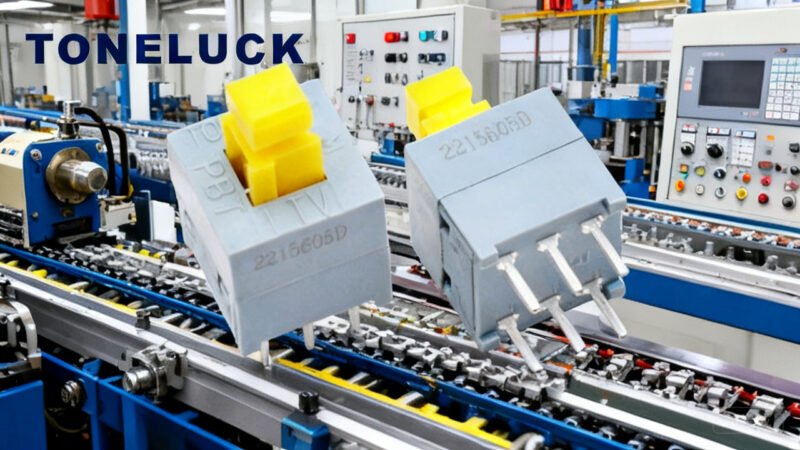
In the intricate landscape of industrial automation, consumer electronics, and specialized machinery, certain components operate silently, yet are indispensable for precision, safety, and reliability. Among these unsung heroes, the micro switch stands out. Its small footprint belies its critical role in nearly every device requiring precise positional sensing or rapid electrical switching. For B2B professionals – engineers, product developers, and procurement specialists – a deep understanding of micro switches is not just beneficial, but essential for designing robust, long-lasting, and compliant systems.
What is a Micro Switch?
At its core, a micro switch is a snap-action electrical switch, meaning it employs a specific internal mechanism that causes the movable contact to rapidly change state (from open to closed or vice versa) once the actuator reaches a certain point, and then rapidly returns when the actuator is released. This ‘snap-action’ ensures a quick break and make, minimizing arcing and contact wear, thereby extending the switch’s operational life and providing highly repeatable performance. This mechanism is crucial for applications demanding consistent and precise activation.
Key Types and Their Diverse Applications
The world of micro switches is diverse, with various types tailored to specific environmental and operational demands. Understanding these distinctions is key to optimal component selection.
Standard Micro Switches
These are the foundational components, offering robust performance in a wide array of general-purpose applications. They are commonly found in HVAC systems, home appliances (e.g., microwave door interlocks), automotive systems (e.g., seatbelt sensors), and vending machines. Their versatility and reliability make them a go-to choice for many designs where environmental protection isn’t the primary concern but consistent electrical switching is paramount.
Limit Switches
While often used interchangeably in casual conversation, a limit switch is typically a more robust, often housed, version of a micro switch designed for industrial environments. Its primary function is to detect the presence or absence of an object, or to monitor the limits of motion for machinery. They are integral to industrial automation, conveyor systems, machine tools, and safety interlocks, providing critical feedback on component position. Limit switches come with various actuator types, including roller levers, plungers, and wobble sticks, to suit different mechanical actuation methods.
Waterproof Micro Switches
For applications exposed to moisture, dust, or harsh chemicals, a waterproof micro switch is indispensable. These switches are engineered with advanced sealing technologies, often achieving IP ratings like IP67 or IP68, ensuring protection against ingress of water and fine particulates. Industries such as marine, medical equipment, food processing, outdoor security systems, and automotive under-hood applications heavily rely on their ability to perform reliably in challenging conditions. The integrity of the sealing material and design is critical for maintaining performance over time in these demanding environments.
Mini Micro Switches (e.g., MQS-9A Mini Micro Switch)
The ongoing trend towards miniaturization in electronics and industrial equipment has led to the development of mini micro switches. Components like the MQS-9A Mini Micro Switch offer the same snap-action precision in a significantly smaller form factor. These are ideal for space-constrained applications such as compact consumer electronics, portable medical devices, automotive interiors, and precision instruments where every millimeter counts. Despite their size, they maintain high performance standards, making them critical enablers for compact and innovative product designs.
Critical Considerations for Micro Switch Selection
Choosing the correct micro switch involves a detailed evaluation of several parameters to ensure optimal performance, longevity, and cost-effectiveness.
- Electrical Ratings: Understand the voltage, current, and load type (resistive, inductive, lamp load) your application demands. This dictates the contact material (e.g., silver alloy for general loads, gold plating for low-current/logic level applications) and the switch’s overall capacity.
- Mechanical Specifications: Key parameters include operating force (the force required to actuate the switch), pre-travel (distance actuator moves before contact change), over-travel (additional distance actuator can move after contact change), and differential travel (distance between trip and reset points). The actuator type (plunger, lever, roller lever) must match the mechanical interface of your system.
- Environmental Factors: Consider the operating temperature range, humidity, presence of dust, water, oil, or corrosive gases. This is where options like a waterproof micro switch with appropriate IP ratings become essential. Vibration and shock resistance are also crucial for mobile or heavy-duty machinery.
- Durability and Lifespan: Evaluate the mechanical life (number of operations before mechanical failure) and electrical life (number of operations under electrical load before contact failure). High-quality switches are designed for millions of cycles, ensuring long-term reliability and reducing maintenance costs.
- Mounting and Termination: Switches are available in various mounting styles (panel mount, PCB mount) and terminal types (solder terminals, quick-connect terminals, wire leads) to integrate seamlessly into your product design.
- Certifications: Ensure the switch meets relevant industry standards and safety certifications such as UL, CE, RoHS, and others applicable to your target market.
The Imperative of a Reliable micro switch manufacturer
Beyond the technical specifications, the choice of a micro switch manufacturer is paramount. A reputable manufacturer, such as TONELUCK micro switch, offers more than just components; they provide consistent quality, rigorous testing, and often, the ability to customize solutions for unique application requirements. Their commitment to R&D ensures access to the latest innovations, while their technical support can be invaluable in navigating complex design challenges. Partnering with an experienced micro switch manufacturer ensures that your products benefit from superior component reliability, contributing directly to the performance and reputation of your end product.
Future Outlook and Innovation
The evolution of micro switches continues, driven by demands for greater miniaturization, enhanced environmental protection, and integration into smart systems. Innovations include switches with even higher IP ratings, specialized materials for extreme chemical resistance, and designs optimized for IoT connectivity, enabling more intelligent and responsive industrial ecosystems.
Conclusion
The selection of a micro switch is a critical design decision that impacts the safety, functionality, and longevity of countless products and systems. From standard workhorses to specialized waterproof micro switches, and the precision of mini micro switches like the MQS-9A, each variant plays a vital role. By meticulously evaluating application demands, environmental conditions, and partnering with an expert micro switch manufacturer, B2B professionals can ensure they integrate components that deliver unparalleled precision, durability, and operational excellence, ultimately driving the success of their industrial endeavors.
