
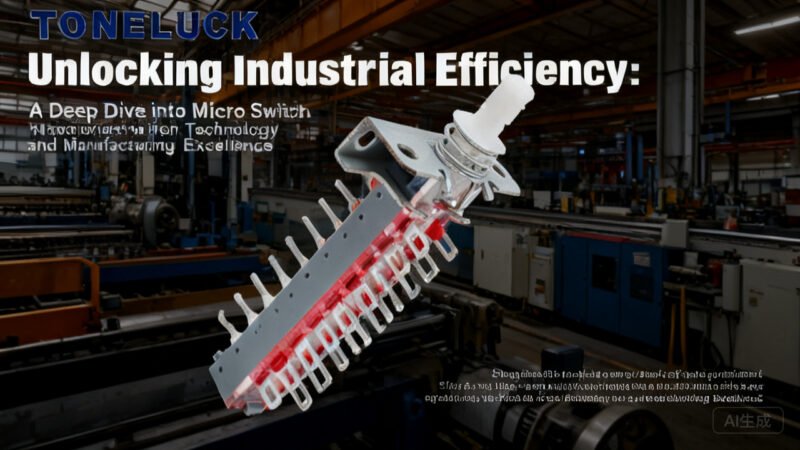
In the intricate world of modern industrial design and consumer electronics, countless components work silently behind the scenes to ensure seamless operation, safety, and precision. Among these critical elements, the micro switch stands out as a fundamental yet often overlooked hero. A micro switch, also known as a miniature snap-action switch, is an electromechanical device renowned for its rapid change of state with a small amount of force and a distinct audible click. Its robust design and reliable performance make it indispensable across a vast spectrum of applications, from ensuring the safety of a washing machine door to precisely controlling complex machinery on a factory floor.
Understanding the nuances of micro switch technology, from basic functionality to specialized variants, is crucial for engineers, product designers, and procurement professionals seeking to optimize system performance and longevity. The right micro switch can significantly impact a product’s reliability, user experience, and overall safety profile.
What Defines a High-Performance Micro Switch?
At its core, a micro switch operates on a simple yet highly effective principle: a snap-action mechanism. When a small amount of force is applied to the actuator, it causes the internal contacts to rapidly switch from one position to another, ensuring a quick and decisive electrical connection or disconnection. This snap-action feature is vital as it minimizes arcing, reduces contact wear, and provides a clear tactile and audible feedback, confirming the switch’s operation.
Key characteristics that define a high-performance micro switch include:
- Reliability: Consistent operation over millions of cycles, critical for long-term product viability.
- Precision: Accurate and repeatable actuation points, essential for control systems.
- Durability: Ability to withstand mechanical stress, vibration, and environmental factors.
- Compactness: Small footprint allowing integration into space-constrained designs.
- Versatility: Available in various configurations, actuator types, and electrical ratings to suit diverse needs.
Diverse Applications Across Industries
The versatility of micro switches means they are embedded in virtually every sector imaginable:
- Automotive: Used in door latches, seatbelt indicators, power window controls, gear shift interlocks, and various safety systems.
- Industrial Automation: Essential for position sensing in machinery, safety interlocks on protective guards (often as a limit switch), conveyor belt controls, and process automation. They provide feedback on the presence or absence of an object, or the end of a mechanical travel.
- Home Appliances: Found in microwave ovens (door interlocks), washing machines (lid/door switches), refrigerators (ice dispenser switches), and HVAC systems.
- Medical Devices: Critical for precision control and safety in diagnostic equipment, hospital beds, and drug delivery systems.
- IoT & Smart Devices: Enabling user interface feedback, presence detection, and various sensing functions in smart home devices, wearables, and more.
Specialized micro switches for Demanding Environments
While standard micro switches meet many requirements, specific applications demand enhanced protection and performance.
The Power of Protection: Waterproof Micro Switches
For applications exposed to moisture, dust, or harsh cleaning agents, a waterproof micro switch is indispensable. These switches are engineered with specialized sealing mechanisms, often meeting IP (Ingress Protection) ratings like IP67, to prevent the intrusion of water and dust. This ensures reliable operation in challenging environments such as outdoor equipment, marine applications, industrial washdown areas, and automotive under-hood systems. Investing in a properly sealed switch prevents premature failure, reduces maintenance costs, and enhances overall system safety and performance.
Precision in Miniaturization: The MQS-9A Mini Micro Switch
As electronic devices become smaller and more integrated, the demand for compact yet powerful components grows. The MQS-9A Mini Micro Switch exemplifies this trend, offering robust performance in a significantly reduced footprint. Ideal for applications where space is at a premium, such as compact handheld devices, intricate medical instruments, or miniaturized control panels, the MQS-9A provides the same reliable snap-action and long mechanical life as its larger counterparts, but in a form factor that enables innovative product designs without compromising functionality or durability.
The Strategic Advantage of Partnering with an Expert micro switch manufacturer
Choosing the right micro switch manufacturer is as crucial as selecting the right switch itself. A reputable manufacturer offers more than just components; they provide expertise, quality assurance, and technical support that are vital for product success. Companies like TONELUCK micro switch, for example, are known for their commitment to precision engineering and stringent quality control, ensuring that every switch meets the highest industry standards.
Key advantages of partnering with an experienced manufacturer include:
- Quality Assurance & Testing: Rigorous testing for electrical, mechanical, and environmental performance ensures product reliability and compliance.
- R&D and Innovation: Access to cutting-edge technology and design capabilities for custom solutions and future-proof components.
- Customization Capabilities: The ability to tailor switches (actuator type, operating force, terminal configuration) to specific application needs.
- Compliance & Certifications: Adherence to international standards (e.g., UL, CQC, ENEC, CE) crucial for global market access.
- Technical Support & Longevity: Expert guidance during design, integration, and long-term product lifecycle support.
Navigating Selection: Key Considerations for Your Application
Selecting the optimal micro switch requires a comprehensive understanding of your application’s specific demands. Consider the following factors:
- Operating Force & Travel: The amount of force required to actuate the switch and the distance the actuator moves.
- Electrical Rating: Maximum voltage and current the switch can safely handle for both AC and DC loads.
- Terminal Type & Mounting: Options include solder terminals, quick-connect terminals, PCB pins, and various mounting configurations.
- Actuator Type: Pin plungers, roller levers, simulated roller levers, short/long hinges, etc., depending on the mechanical interface.
- Environmental Sealing: Crucial for harsh conditions, determining if a waterproof micro switch or dust-proof variant is necessary (e.g., IP67 rating).
- Material Durability & Temperature Range: The housing and contact materials must withstand the operational environment’s temperature and chemical exposure.
- Mechanical & Electrical Lifespan: The number of operations the switch is guaranteed to perform reliably.
Conclusion: Powering the Future with Precision
Micro switches, in their various forms—from robust limit switches in industrial settings to the compact MQS-9A Mini Micro Switch in consumer electronics, and specialized waterproof micro switches for challenging environments—are foundational components that underpin modern technology. Their role in ensuring precision, safety, and reliability cannot be overstated.
For businesses looking to innovate and build durable, high-performing products, the strategic partnership with an expert micro switch manufacturer like TONELUCK is paramount. By understanding the diverse types available and carefully considering application-specific requirements, engineers and designers can leverage these small but mighty components to achieve unparalleled industrial efficiency and product excellence, driving innovation across countless industries.
