
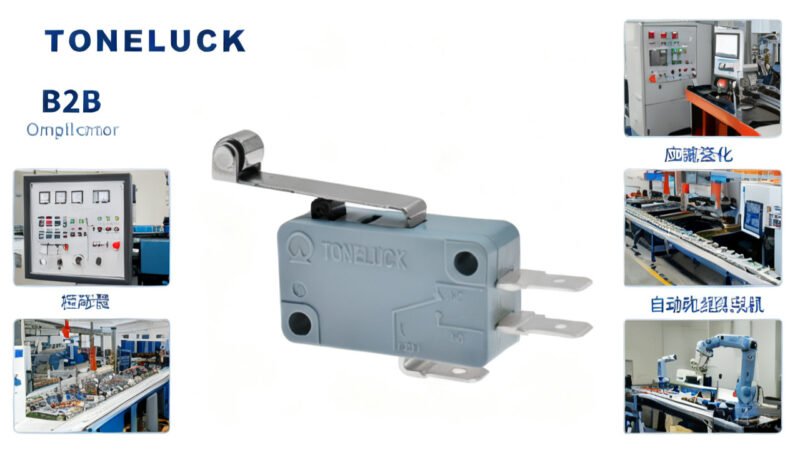
In the intricate world of industrial automation, consumer electronics, and automotive systems, seemingly small components often play the most critical roles. Among these, the micro switch stands out as an indispensable element, silently ensuring precision, reliability, and safety across countless applications. For B2B stakeholders, understanding the nuances of micro switch technology is not merely academic; it’s fundamental to designing robust, efficient, and competitive products.
At its core, a micro switch, also known as a miniature snap-action switch, is an electrical switch actuated by very little physical force, through the use of a tipping-point mechanism, sometimes called an ‘over-center’ mechanism. This mechanism produces a rapid, decisive transfer of contacts from one position to another, irrespective of the speed of actuation. This ‘snap-action’ is crucial for preventing slow-moving contacts that can cause arcing and premature wear, thereby enhancing the switch’s electrical life and reliability.
The defining characteristics of micro switches include their compact size, high repeatability, and durability. They are designed to operate reliably over millions of cycles, making them ideal for applications requiring consistent performance over extended periods. Their precise actuation point ensures that equipment responds accurately to positional changes, pressure, or temperature variations.
Diverse Applications Across Industrial Landscapes
The versatility of micro switches is evident in their widespread adoption across a multitude of industries:
- Industrial Automation & Machinery: Critical for safety interlocks on machine guards, position sensing for robotic arms, and end-of-travel detection for linear actuators. Here, the limit switch, often a robust form of micro switch, is paramount for ensuring machinery operates within safe parameters.
- Automotive Industry: Found in door latches, seatbelt detection systems, gear shift mechanisms, and power window controls, where their small footprint and reliability are highly valued.
- Home Appliances: Integral to microwave ovens (door interlocks), washing machines (lid safety), refrigerators (ice dispenser activation), and various small kitchen appliances, ensuring user safety and optimal functionality.
- HVAC Systems: Used for damper control, airflow sensing, and safety cut-offs.
- Medical Devices: Employed in patient beds, infusion pumps, and diagnostic equipment, where precision and reliability are non-negotiable.
- Security Systems: Essential for tamper detection in alarms and access control systems.
Key Types and Their Strategic Advantages
While the basic principle remains consistent, micro switches come in various configurations tailored for specific environments and demands:
- Standard Micro Switches: The workhorses of the industry, offering a balance of size, force, and electrical rating for general-purpose applications.
- Limit Switches: Often more robustly built, designed to withstand harsh industrial environments. They typically feature larger actuators and can be configured with various levers, plungers, or rollers to detect the presence or absence of an object, or to monitor the limits of travel for moving parts. Their rugged construction ensures reliable operation in dusty, oily, or vibrating conditions.
- Waterproof Micro Switches: Essential for applications exposed to moisture, dust, or other contaminants. These switches incorporate specialized sealing techniques, often achieving high IP (Ingress Protection) ratings (e.g., IP67), to prevent the ingress of liquids and particulates. A waterproof micro switch is critical for outdoor equipment, marine applications, and devices requiring wash-down procedures.
Selecting the Right Micro Switch: A Manufacturer’s Perspective
For B2B procurement and design engineers, selecting the appropriate micro switch involves a careful evaluation of several factors:
- Electrical Ratings: Matching current and voltage requirements to prevent overload and ensure longevity.
- Operating Force: The force required to actuate the switch, which impacts user experience and system response.
- Mechanical & Electrical Life: The number of cycles the switch can reliably perform, a key indicator of durability.
- Operating Temperature Range: Ensuring the switch can function effectively in the specified environmental conditions.
- Environmental Sealing: For challenging environments, an appropriate IP rating (for dust and moisture protection) is crucial.
- Actuator Type: Plunger, lever, roller lever, or simulated roller lever – chosen based on the mechanism it interfaces with.
- Certifications: Compliance with international standards like UL, CE, RoHS, and REACH ensures product safety and market acceptance.
The choice of a reliable micro switch manufacturer is paramount. Manufacturers with extensive R&D capabilities, stringent quality control processes, and a wide product portfolio can provide tailored solutions. For instance, reputable brands like TONELUCK micro switch offer a diverse range of products known for their precision engineering and robust performance. Their offerings often include specialized components like the MQS-9A Mini Micro Switch, which exemplify compact design without compromising on reliability, making them ideal for space-constrained applications requiring high sensitivity and durability.
The Future of Micro Switch Technology
Innovation in micro switch technology continues, driven by demands for greater miniaturization, enhanced environmental resistance, and smart integration. Future trends include even smaller form factors for increasingly compact devices, improved sealing technologies for extreme conditions, and the incorporation of smart features for predictive maintenance and enhanced system diagnostics.
Conclusion
Micro switches, though small, are mighty components that underpin the functionality and safety of countless industrial and consumer products. Their inherent reliability, precision, and adaptability make them invaluable to modern engineering. For businesses aiming to build high-quality, durable, and efficient systems, a thorough understanding of micro switch technology and a strategic partnership with a reputable micro switch manufacturer are not just advantageous—they are essential for competitive success and long-term operational excellence.
