
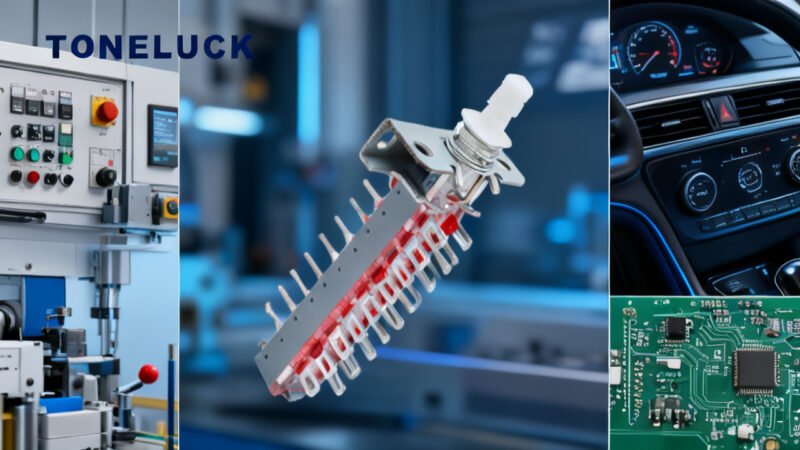
In the intricate world of modern engineering, where precision and reliability are paramount, few components are as ubiquitous and critical as the micro switch. These small, yet remarkably robust, electromechanical devices serve as the silent sentinels in countless applications, from the most common household appliances to advanced industrial machinery and mission-critical medical equipment. Their ability to deliver a swift, decisive electrical signal based on minimal physical movement makes them an indispensable part of almost every automated system.
At its core, a micro switch, often referred to as a miniature snap-action switch, operates on a simple but ingenious principle. It employs an over-center mechanism that rapidly transfers contacts from one position to another with a distinct ‘snap’ sound, ensuring a quick break and make action regardless of the speed of the actuator. This snap-action design is crucial for preventing arcing and extending the switch’s operational lifespan, making it a highly reliable component even after millions of cycles.
Beyond Simple On/Off: The Versatility and Applications
While often perceived as mere on/off toggles, the functionality of a micro switch extends far beyond basic electrical control. They are fundamental for:
- Position Sensing: Detecting the presence or absence of an object, or the end-of-travel of a moving part.
- Safety Interlocks: Ensuring machinery only operates when safety guards are in place.
- Door/Lid Detection: Common in automotive, appliances, and vending machines.
- Flow/Pressure Detection: Integrated into more complex sensors.
One of the most common applications where micro switches truly shine is within limit switch assemblies. A limit switch is an electromechanical device that consists of an actuator mechanically linked to a set of contacts. When an object comes into contact with the actuator, the switch operates, either making or breaking an electrical connection. Often, the core switching element within these robust industrial devices is indeed a high-quality micro switch, chosen for its precision, repeatability, and durability in demanding environments.
Navigating Harsh Environments: The Rise of Waterproof micro switches
Not all operational environments are benign. Industries such as marine, automotive, heavy machinery, and outdoor equipment frequently expose components to moisture, dust, and corrosive agents. In such scenarios, a standard micro switch simply won’t suffice. This is where the specialized waterproof micro switch becomes indispensable.
Designed with advanced sealing technologies, typically meeting IP67 or even higher ingress protection ratings, these switches are engineered to withstand complete immersion in water, exposure to dust, and extreme temperature fluctuations without compromising performance. Key features often include epoxy resin sealing, specialized gaskets, and robust housing materials. For instance, a waterproof micro switch is vital in applications like outdoor security cameras, automotive door latches, industrial washdown equipment, and marine instruments, ensuring continuous operation and safety where conventional switches would fail.
The Manufacturer’s Edge: Why Choice Matters
Choosing the right micro switch manufacturer is not merely a purchasing decision; it’s a strategic partnership that directly impacts product reliability, safety, and overall cost of ownership. A reputable manufacturer offers more than just components; they provide:
- Consistent Quality: Adherence to stringent manufacturing standards and quality control processes.
- Technical Expertise: Support for design integration, application-specific challenges, and customization.
- Reliability and Durability: Switches designed for long mechanical and electrical lifespans.
- Certifications: Compliance with international standards like UL, cUL, ENEC, and CE.
- Customization Capabilities: The ability to tailor switches to unique application requirements.
Brands like TONELUCK micro switch have built a reputation for delivering high-performance, durable, and precise switching solutions across a broad spectrum of industries. Their commitment to innovation and quality ensures that engineers have access to components that meet the rigorous demands of modern design.
Spotlight on Specifics: The MQS-9A Mini Micro Switch
In applications where space is at a premium but performance cannot be compromised, miniature switches are essential. The MQS-9A Mini Micro Switch exemplifies this need. This particular model, or similar mini micro switches, offers a compact footprint without sacrificing the critical snap-action mechanism, high precision, and robust electrical ratings expected from its larger counterparts. Typically featuring a long operating life and a variety of actuator types (e.g., pin plunger, lever, roller lever), the MQS-9A is perfectly suited for:
- Small consumer electronics (e.g., power tools, smart home devices)
- Automotive modules (e.g., door lock mechanisms, gear position sensors)
- Medical diagnostic equipment (e.g., fluid level detection)
- Office automation equipment (e.g., paper presence detection)
Its small size allows for greater design flexibility, enabling engineers to create more compact and sophisticated products without sacrificing critical sensing and control capabilities.
Conclusion: Partnering for Performance
The humble micro switch, in its many forms—from standard snap-action to robust waterproof micro switch variants and compact mini versions like the MQS-9A Mini Micro Switch—remains a cornerstone of reliable engineering. For designers and procurement professionals, understanding their nuances and selecting a trusted micro switch manufacturer is paramount.
By partnering with an experienced and quality-focused manufacturer, you ensure that your projects benefit from components that offer precision, durability, and consistent performance, ultimately contributing to the success and longevity of your end products. In a world increasingly reliant on automated and intelligent systems, the reliability of these unseen workhorses cannot be overstated.
