
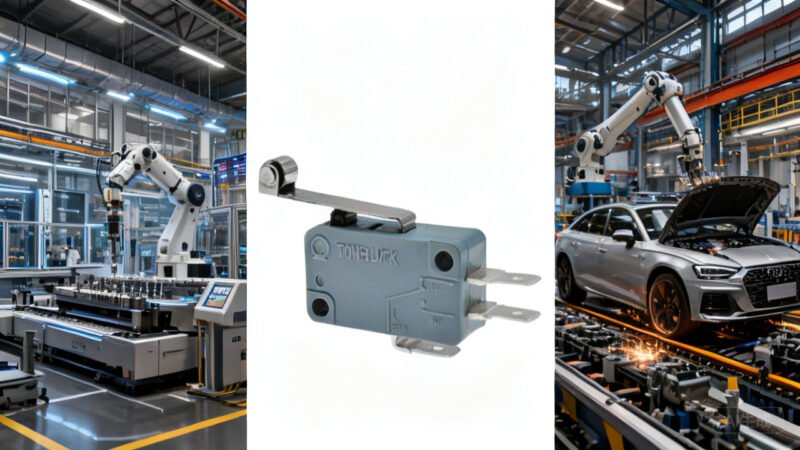
In the intricate ecosystem of modern industrial and consumer technology, countless electromechanical components work in concert to ensure seamless operation. Among these, the micro switch stands out as a fundamental, yet often overlooked, hero. Defined by its snap-action mechanism, a micro switch is a small electrical switch actuated by very little physical force, using an internal spring mechanism that produces a rapid transfer of contact from one position to another. This snap-action ensures quick make-and-break switching, minimizing arcing and extending the switch’s operational life. Its robust design, high precision, and rapid actuation make it an indispensable component across a multitude of applications, from ensuring safety in heavy machinery to providing tactile feedback in everyday devices.
Beyond the Basics: Diverse Applications Driving Innovation
The versatility of the micro switch is truly remarkable, underpinning functionality in an astonishing array of sectors. In industrial automation, these switches serve as critical limit switches, detecting the position of moving parts, ensuring safety interlocks, and controlling sequences in robotics, conveyor systems, and CNC machines. Their reliability in harsh environments is paramount. Within consumer electronics and appliances, micro switches are found in microwaves, washing machines, refrigerators, and power tools, providing essential control and safety mechanisms. The automotive industry relies heavily on them for door latches, seatbelt sensors, gear shifters, and various control panels, demanding high durability and consistent performance. Even in sensitive areas like medical devices, micro switches contribute to the precision and safety of diagnostic equipment and patient care systems. Their ability to handle diverse electrical loads and withstand millions of cycles makes them a go-to choice for engineers seeking dependable control solutions.
Specialized Micro Switches for Demanding Environments
Limit Switches: Guardians of Industrial Safety
While all limit switches are essentially micro switches, they are often designed for specific industrial applications where precise position detection and robust construction are critical. A limit switch is an electromechanical device that consists of an actuator mechanically linked to a set of contacts. When an object comes into contact with the actuator, it causes the contacts to either open or close, thereby controlling an electrical circuit. They are fundamental in industrial machinery for safety cut-offs, object presence detection, and monitoring the travel limits of moving parts, preventing machinery from exceeding its operational boundaries and ensuring operator safety. Their robust housings and various actuator types (roller, plunger, lever) allow them to function reliably in challenging industrial settings.
Waterproof Micro Switches: Conquering Harsh Conditions
For applications exposed to moisture, dust, or other contaminants, standard micro switches simply won’t suffice. This is where the waterproof micro switch becomes essential. Engineered with advanced sealing techniques, often featuring O-rings, epoxy potting, and specialized housing materials, these switches achieve high Ingress Protection (IP) ratings, commonly IP67 or even IP68. An IP67 rating signifies complete protection against dust ingress and the effects of temporary immersion in water (up to 1 meter for 30 minutes), making them ideal for outdoor equipment, marine applications, industrial wash-down areas, and automotive components exposed to the elements. The robust sealing ensures consistent performance and extends the operational life of devices in the most challenging environmental conditions.
Miniature Micro Switches: Power in a Compact Form
As devices become increasingly compact, the demand for smaller, yet equally powerful, components grows. Miniature micro switches are designed to meet this challenge, offering the same reliable snap-action mechanism in significantly reduced footprints. These tiny titans enable engineers to design more compact and aesthetically pleasing products without compromising on functionality or durability. A prime example is the MQS-9A Mini Micro Switch, which exemplifies how advanced manufacturing can deliver high precision, long mechanical life, and impressive electrical ratings within a very small package. Such miniature switches are critical in portable electronics, small appliances, automotive dashboards, and any application where space is at an absolute premium, proving that great things truly do come in small packages.
Critical Considerations When Selecting a Micro Switch
Choosing the right micro switch involves a careful evaluation of several key parameters to ensure optimal performance and longevity. Engineers must consider the electrical rating (voltage and current) to match the switch’s capabilities with the circuit load. The operating force, which is the force required to actuate the switch, is crucial for tactile feel and application compatibility. Various actuator types—such as pin plunger, lever, roller lever, or simulated roller lever—offer different actuation characteristics and mounting options. Terminal types (solder, quick connect, PCB) dictate ease of integration. Other vital factors include the operating temperature range, the required mechanical and electrical life cycles, and the necessary environmental protection (e.g., IP rating for dust and moisture). Finally, compliance with international certifications like UL, CE, and RoHS ensures safety and market acceptance.
The Imperative of Partnering with a Reputable micro switch manufacturer
The performance and reliability of a micro switch are directly tied to the quality and expertise of its manufacturer. Partnering with a reputable micro switch manufacturer is not merely about sourcing components; it’s about securing a foundation of quality, consistency, and technical support for your products. Leading manufacturers invest heavily in research and development, stringent quality control processes, and advanced manufacturing technologies to produce switches that meet the highest industry standards. They offer a wide range of standard and specialized products, including custom solutions tailored to unique application requirements. A manufacturer like TONELUCK, for instance, known for its commitment to engineering excellence and robust product lines, provides not just components but a partnership that ensures the long-term success and reliability of your designs. Their expertise can be invaluable in navigating complex design challenges and selecting the optimal switch for any given application.
The Evolving Landscape: Future Trends in Micro Switch Technology
The evolution of micro switch technology continues, driven by the ever-increasing demands for efficiency, miniaturization, and enhanced performance. Future trends point towards even greater precision, higher durability for extended operational life, and further integration into smart systems with advanced sensing capabilities. We can expect to see continued innovation in materials science, leading to switches that can withstand even more extreme temperatures and corrosive environments. As the world moves towards more interconnected and automated systems, the humble micro switch will continue to adapt, playing a critical, albeit often unseen, role in the technological advancements of tomorrow.
Conclusion: The Unseen Heroes of Modern Technology
Micro switches, in their various forms—from standard designs to robust limit switches, waterproof variants, and miniature marvels like the MQS-9A Mini Micro Switch—are the unsung heroes of countless industrial and consumer products. Their simple yet ingenious snap-action mechanism provides reliable control and safety across diverse applications. Understanding their fundamental principles, diverse applications, and critical selection criteria, and then partnering with a trusted micro switch manufacturer, is paramount for engineers and businesses striving for precision, reliability, and durability in their designs. These small but mighty components will undoubtedly continue to be indispensable pillars in the ongoing march of technological innovation.
