
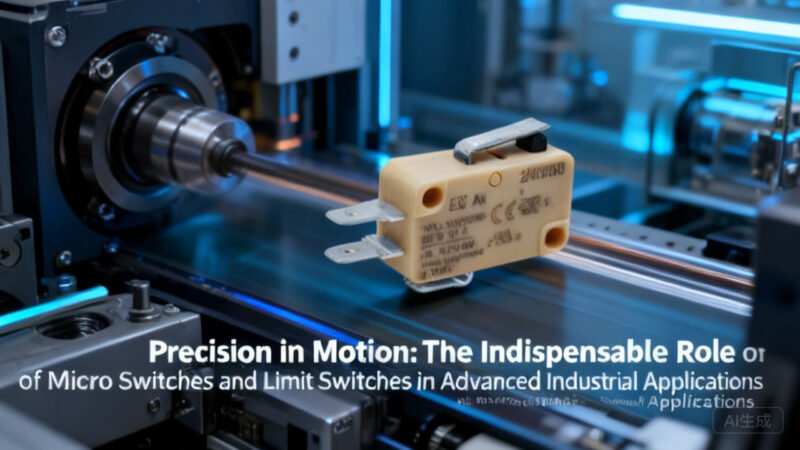
In the intricate world of industrial automation, consumer electronics, and specialized machinery, certain components, though often unseen, play an absolutely critical role in ensuring reliability, safety, and precise operation. Among these unsung heroes are micro switches and limit switches. These compact electromechanical devices are the silent workhorses that enable everything from the click of a car door to the precise positioning of robotic arms on an assembly line. Understanding their functionality, variations, and application is paramount for engineers, designers, and procurement professionals seeking to build robust and efficient systems.
At its core, a micro switch, often referred to as a miniature snap-action switch, is an electromechanical device designed to open or close an electrical circuit with a rapid, decisive action, even when the actuator is moved slowly. This “snap-action” mechanism is achieved through an internal over-center toggle spring system that ensures a fast transfer of contacts from one position to another once the operating force reaches a certain threshold. This rapid contact movement is crucial as it minimizes arcing, thereby extending the switch’s electrical life and enhancing its reliability.
micro switches are characterized by their high precision, consistent operating force, and remarkable durability, often boasting millions of mechanical cycles. Their compact size makes them ideal for applications where space is at a premium. They typically feature normally open (NO) and normally closed (NC) contacts, allowing for versatile circuit control. Common applications range from safety interlocks in industrial machinery and door sensors in appliances to trigger mechanisms in power tools and push buttons in control panels. The reliability and repeatability of micro switches make them indispensable for feedback control and status monitoring in countless systems.
Conquering Harsh Environments with Waterproof Micro Switches
While standard micro switches excel in controlled environments, many applications demand components capable of withstanding extreme conditions. This is where the waterproof micro switch becomes indispensable. Designed with enhanced sealing mechanisms, these switches prevent the ingress of dust, dirt, moisture, and various liquids, making them suitable for use in challenging environments. The level of protection is typically indicated by an Ingress Protection (IP) rating, such as IP67 or IP68, signifying complete dust protection and resistance to immersion in water up to a certain depth for a specified duration.
Waterproof micro switches are critical in outdoor equipment, marine applications, automotive systems exposed to road spray, medical devices requiring sterilization, and food processing machinery that undergoes frequent washing. Their robust construction ensures continued reliable operation even when subjected to splashes, sprays, or temporary submersion, thereby preventing costly downtime, system failures, and potential safety hazards. For designers, specifying a waterproof micro switch like a well-sealed TONELUCK micro switch ensures the longevity and consistent performance of their products in demanding operational scenarios.
Limit Switches: The Sentinels of Automation
Building upon the principles of micro switches, limit switches serve a broader, yet equally critical, function in industrial automation. A limit switch is an electromechanical device that detects the presence or absence of an object, or monitors the travel limits of moving machinery, by making or breaking an electrical connection. Essentially, they are position sensors that provide feedback to a control system about the physical state of a machine or process. Many limit switches incorporate a micro switch mechanism internally to achieve their precise snap-action switching.
These robust devices are vital for safety interlocks, preventing machinery from operating outside its safe parameters, and for controlling the sequence of operations in automated processes. For example, in a conveyor system, a limit switch might detect when a product has reached a specific point, triggering the next stage of the manufacturing process. In robotics, they define the end-of-travel limits for joints, preventing over-extension and damage. Common types include plunger, roller lever, and whisker actuators, each suited for different detection methods and forces. Their durability and ability to operate in harsh industrial environments make them a cornerstone of modern manufacturing and process control, ensuring both efficiency and operator safety.
Key Considerations for Selection and Manufacturer Importance
Selecting the appropriate micro switch or limit switch requires careful consideration of several technical parameters to ensure optimal performance and longevity. Key factors include:
- Electrical Rating: The maximum voltage and current the switch can safely handle. This is crucial to prevent overheating and premature failure.
- Operating Force: The force required to actuate the switch. This impacts the design of the mechanism interacting with the switch.
- Mechanical and Electrical Life: The number of cycles the switch can reliably perform. High-quality switches can offer millions of cycles.
- Environmental Conditions: Temperature range, humidity, vibration resistance, and the necessity for an IP rating (for waterproof applications).
- Actuator Type: Pin plungers, roller levers, hinge levers, simulated rollers – chosen based on the desired actuation method.
- Terminal Type: Solder terminals, quick connect terminals, PCB terminals, or lead wires, depending on the integration method.
The choice of micro switch manufacturer is equally critical. Reputable manufacturers adhere to stringent quality control standards, ensuring consistency in performance, reliability, and compliance with industry regulations. Partnering with experienced suppliers provides access to a wide range of reliable components, often including specialized designs like the MQS-9A Mini Micro Switch, which offers a compact footprint without compromising on performance, making it ideal for miniaturized applications in consumer electronics and portable devices. A reliable manufacturer provides comprehensive technical data, support, and guarantees, which are invaluable for long-term project success.
The Future of Precision Switching
While often considered mature technology, micro switches and limit switches continue to evolve. Trends include further miniaturization, enhanced durability for even more extreme conditions, and integration with smarter control systems, though their fundamental electromechanical principles remain robust. The demand for precise, reliable, and cost-effective position and presence sensing ensures their continued relevance, even amidst the rise of non-contact sensing technologies. Their simplicity, robustness, and clear tactile feedback offer distinct advantages in many applications where a definitive physical trigger is preferred or required.
In conclusion, micro switches and limit switches, in their various forms, are far more than just simple on/off devices. They are fundamental components that underpin the reliability, safety, and efficiency of virtually every modern industrial and consumer system. From the robust waterproof micro switch protecting outdoor machinery to the precise feedback provided by a limit switch in an automated assembly line, these devices are indispensable. For engineers and designers, a thorough understanding and careful selection of these components are key to developing high-performance, durable, and safe products that meet the rigorous demands of today’s technological landscape.
