
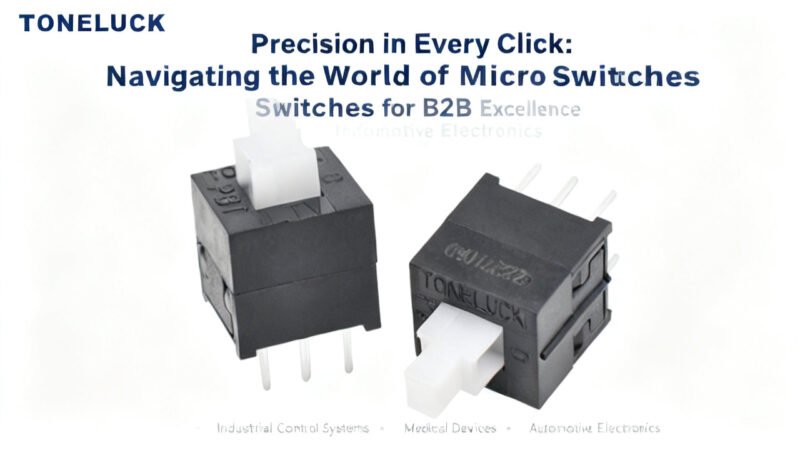
In the intricate tapestry of modern industrial and consumer electronics, some components operate silently, yet their impact is profound. Among these, the micro switch stands out as a fundamental, indispensable device. Often overlooked due to its compact size, this electromechanical marvel is the linchpin for reliability, safety, and precision across countless applications. For B2B stakeholders, understanding the nuances of micro switch technology and selection is not just beneficial—it’s critical for product integrity and operational efficiency.
What is a Micro Switch?
At its core, a micro switch is a snap-action electrical switch characterized by its quick-make, quick-break mechanism. This design ensures rapid transfer of contacts, minimizing arcing and extending the switch’s operational life. Its high repeatability and precise actuation point make it ideal for applications requiring accurate position detection, safety interlocks, and reliable on/off control. From the simplest household appliances to complex industrial machinery, the micro switch provides a definitive electrical signal based on a mechanical input.
The Versatility and Ubiquity of Micro Switch Applications
The widespread adoption of micro switches stems from their robust performance and adaptability:
- Industrial Automation: Integral to control panels, conveyor systems, robotic arms, and safety gates, they act as limit switches, detecting the position or presence of objects and ensuring machinery operates within defined parameters.
- Automotive Industry: Found in door latches, seat belt detection systems, gear shifters, and power window controls, contributing to both safety and convenience.
- Home Appliances: Essential components in microwaves (door interlocks), washing machines, refrigerators (ice makers), and numerous small kitchen gadgets.
- Medical Devices: Used in diagnostic equipment, patient monitoring systems, and surgical tools where precision and reliability are paramount.
- HVAC Systems: Regulating airflow, detecting filter status, and controlling damper positions.
- Security Systems: In door and window sensors, ensuring timely alerts.
Key Types and Advanced Considerations
Standard micro switches
These form the backbone, offering a wide array of actuation forces, electrical ratings, and terminal options. They are the go-to for general-purpose applications where environmental conditions are benign.
Limit Switches: The Industrial Workhorse
A specialized form of micro switch, limit switches are engineered for harsh industrial environments. They typically feature robust housings (often metal), various actuator types (roller levers, plungers, rotary), and enhanced sealing to withstand dust, oil, and coolant. Their primary function is to detect the presence or absence of an object, or to monitor the travel limits of moving parts in machinery, providing crucial feedback for automated processes and safety protocols.
Waterproof Micro Switches: Defying the Elements
For applications exposed to moisture, dust, or other contaminants, waterproof micro switches are indispensable. These switches are designed with superior sealing mechanisms, often achieving IP (Ingress Protection) ratings such as IP67 or IP68. This makes them suitable for outdoor equipment, marine applications, food processing machinery, and automotive under-the-hood environments, ensuring reliable operation even when submerged or subjected to high-pressure washdowns.
Miniature and Subminiature Micro Switches
As devices become smaller and more integrated, the demand for compact components grows. Mini and subminiature micro switches, such as the MQS-9A Mini Micro Switch, offer high performance in a significantly reduced footprint. These are crucial for portable electronics, compact medical devices, and space-constrained industrial sensors, enabling innovative designs without compromising functionality.
The Critical Role of a Reputable micro switch manufacturer
Choosing the right micro switch manufacturer is as vital as selecting the switch itself. A reputable manufacturer, like those known for producing high-quality components such as a TONELUCK micro switch, offers several advantages:
- Quality and Reliability: Adherence to stringent manufacturing standards, use of high-grade materials, and rigorous testing ensure consistent performance and extended lifespan.
- Technical Expertise: Access to expert support for application-specific challenges, helping in the selection of the optimal switch.
- Customization Capabilities: The ability to tailor switches to unique requirements, including specific actuator designs, terminal types, or electrical ratings.
- Certifications: Compliance with international safety and quality standards (e.g., UL, cUL, ENEC, CQC) is non-negotiable for global market access.
- Supply Chain Stability: A reliable manufacturer ensures consistent product availability and timely delivery, preventing costly production delays.
Key Selection Criteria for Optimal Performance
When specifying a micro switch, several factors must be carefully considered:
- Electrical Rating: Ensure the switch can handle the required voltage and current for both resistive and inductive loads.
- Operating Force: The amount of force needed to actuate the switch, critical for sensitive applications or those requiring robust resistance to accidental actuation.
- Lifespan: Both mechanical (number of operations without load) and electrical (number of operations at rated load) endurance should meet application demands.
- Operating Environment: Temperature range, humidity, presence of dust, water, or corrosive agents dictate the need for sealed or specialized switches.
- Actuator Type: Pin plungers, lever arms, roller levers, and simulated roller levers each suit different mechanical interfaces.
- Terminal Type: Solder terminals, quick-connect terminals, or PCB terminals must match assembly requirements.
- Mounting Style: Panel mount, PCB mount, or chassis mount options influence integration.
Conclusion
Micro switches, though small, are mighty contributors to the safety, efficiency, and innovation of countless B2B applications. Their precision, reliability, and adaptability make them indispensable components in an increasingly automated and interconnected world. By understanding the different types, considering the operational environment, and partnering with a reputable micro switch manufacturer, businesses can ensure they select the right components to build robust, high-performance systems that stand the test of time and deliver excellence in every click.
