
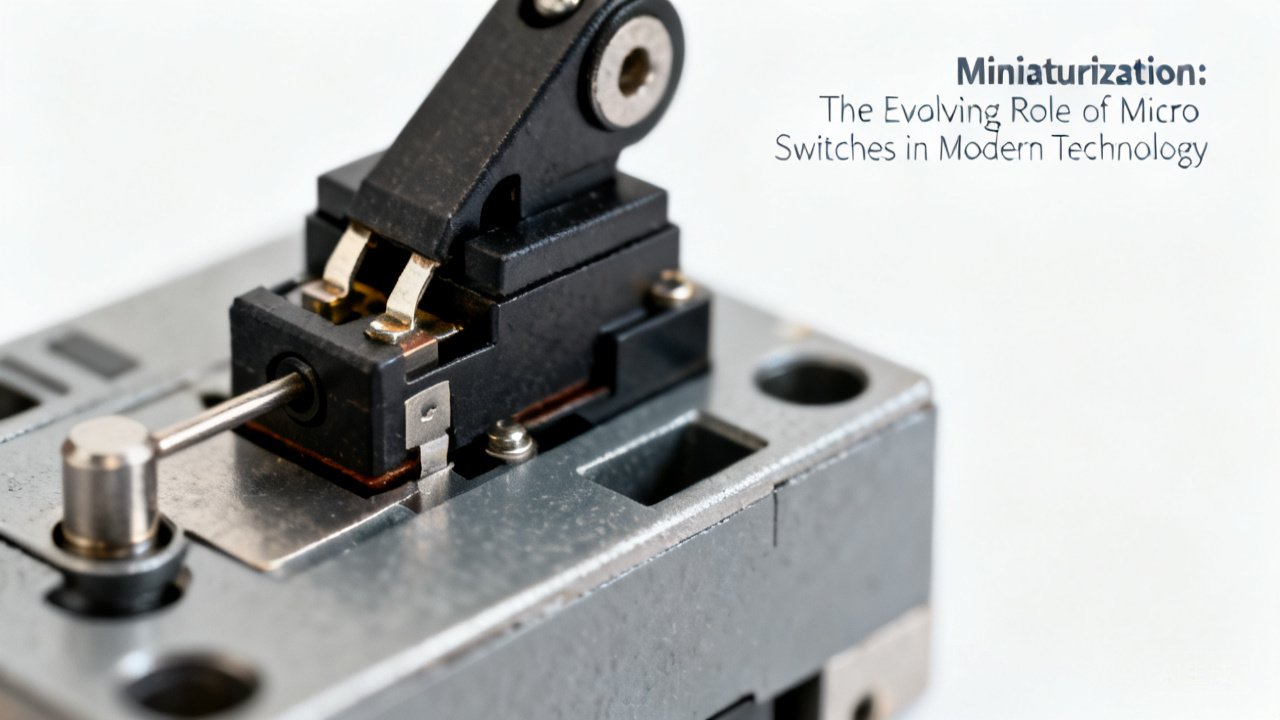
In an era defined by rapid technological advancement, where devices shrink, become smarter, and operate in increasingly demanding environments, the humble micro switch stands as an unsung hero. These compact, electromechanical components, known for their precise actuation and reliability, are far more than simple on/off mechanisms. They are critical enablers for the Internet of Things (IoT), advanced industrial automation, and the relentless drive towards miniaturization across virtually every sector, from consumer electronics to heavy industry.
Once considered a standard component, the micro switch is undergoing a significant evolution, driven by market demands for enhanced performance, extended lifespan, and resilience against harsh conditions. Manufacturers like TONELUCK are at the forefront of this transformation, developing switches that meet the stringent requirements of tomorrow’s innovations.
The Imperative of Miniaturization and Its Impact
The global push for smaller, more integrated devices is undeniable. From sleek smartphones and wearable tech to compact medical instruments and automotive systems, space is at a premium. This trend directly elevates the importance of compact components, and micro switches, by their very design, are ideally suited to meet this challenge. Their small footprint, combined with high operational precision, makes them indispensable in applications where every millimeter counts.
Consider the intricate mechanisms within a digital camera, a medical diagnostic tool, or the control panel of a modern vehicle. Each often relies on multiple micro switches to detect position, confirm status, or register user input. For instance, a mini micro switch like the TONELUCK MQS-9A series exemplifies this trend. Its ultra-compact dimensions do not compromise on performance, offering reliable switching in tight spaces, making it a preferred choice for designers striving for reduced product size without sacrificing functionality or durability. This miniaturization isn’t just about aesthetics; it’s about enabling new form factors, enhancing portability, and integrating more features into smaller packages.
Micro Switches as Critical Enablers for the Internet of Things (IoT)
The proliferation of IoT devices, from smart home appliances to complex industrial monitoring systems, hinges on reliable data input. Micro switches play a pivotal role in this ecosystem, acting as the physical interface that translates mechanical action into electrical signals for digital processing. In smart appliances, they detect door closures, water levels, or button presses. In industrial IoT (IIoT) applications, robust limit switches monitor the position of machinery, activate safety protocols, or control automated processes with unparalleled accuracy.
For IoT devices, continuous and accurate operation is paramount. A faulty switch can lead to incorrect data, system failures, or even safety hazards. Therefore, the demand for micro switches with exceptional lifecycle ratings and consistent performance under varying loads has never been higher. They provide the foundational input data that allows smart systems to make informed decisions, automate tasks, and provide real-time feedback, forming the very backbone of a connected world.
The Imperative of Durability and Environmental Resistance
As technology permeates every aspect of our lives, devices are increasingly exposed to challenging environments. Dust, moisture, extreme temperatures, and corrosive agents can severely compromise the performance and lifespan of electronic components. This has led to a significant surge in demand for highly durable and environmentally resistant micro switches.
Waterproof micro switches, for example, are no longer a niche product but a necessity in numerous applications. In outdoor security systems, automotive engine compartments, marine equipment, or industrial washdown areas, protection against ingress of liquids and particulates is critical. Advanced sealing technologies, such as epoxy potting, O-rings, and specialized housing materials, enable these switches to achieve high IP ratings (Ingress Protection), ensuring reliable operation even when submerged or exposed to high-pressure water jets. Similarly, specialized materials and designs allow micro switches to function flawlessly across wide temperature ranges, from sub-zero conditions in refrigeration units to high heat environments in industrial ovens or power tools. This focus on ruggedization extends the applicability of micro switches into previously inaccessible or unreliable domains, bolstering the overall reliability of the systems they support.
Innovation in Materials and Design for Extended Lifespan
To meet the demands of modern applications, micro switch manufacturers are continually innovating in materials science and design. The quest for extended operational life, often reaching millions of cycles, drives research into new contact materials that resist arcing and wear, such as gold alloys for low-current applications or silver-cadmium oxide for higher loads. Precision-engineered spring mechanisms ensure consistent actuation force and rapid snap action over the switch’s entire lifespan.
Furthermore, the choice of housing polymers is critical for environmental resistance and mechanical strength. Advances in thermoplastic compounds provide superior resistance to chemicals, UV radiation, and high temperatures, contributing to the overall robustness of the switch. Customization is also a growing trend, with manufacturers offering bespoke solutions for specific application requirements, including unique lever designs, terminal configurations, and operating forces. This continuous innovation ensures that micro switches remain at the cutting edge of component technology, ready to support the next generation of smart and robust devices.
Key Considerations for Manufacturers and Engineers
Selecting the appropriate micro switch is a critical decision that impacts a product’s performance, reliability, and cost-effectiveness. Engineers must carefully consider factors such as the required actuation force, electrical contact rating, mechanical and electrical lifecycle, operating temperature range, and the necessary environmental sealing (e.g., IP rating). Compliance with relevant industry standards and certifications (e.g., UL, ENEC, CQC) is also paramount, especially for products destined for international markets or safety-critical applications. Partnering with experienced manufacturers like TONELUCK, who offer a broad portfolio of standard and customizable solutions, can significantly streamline the design and development process, ensuring that the chosen switch perfectly aligns with the application’s unique demands.
Conclusion
The micro switch, though small in stature, plays an outsized role in shaping the future of technology. Its ongoing evolution in precision, durability, and miniaturization is directly enabling the proliferation of smart devices, the efficiency of industrial automation, and the resilience of equipment operating in challenging environments. As industries continue to innovate, the demand for ever-more sophisticated and reliable micro switches will only grow, solidifying their position as essential components at the heart of our connected and automated world.
