
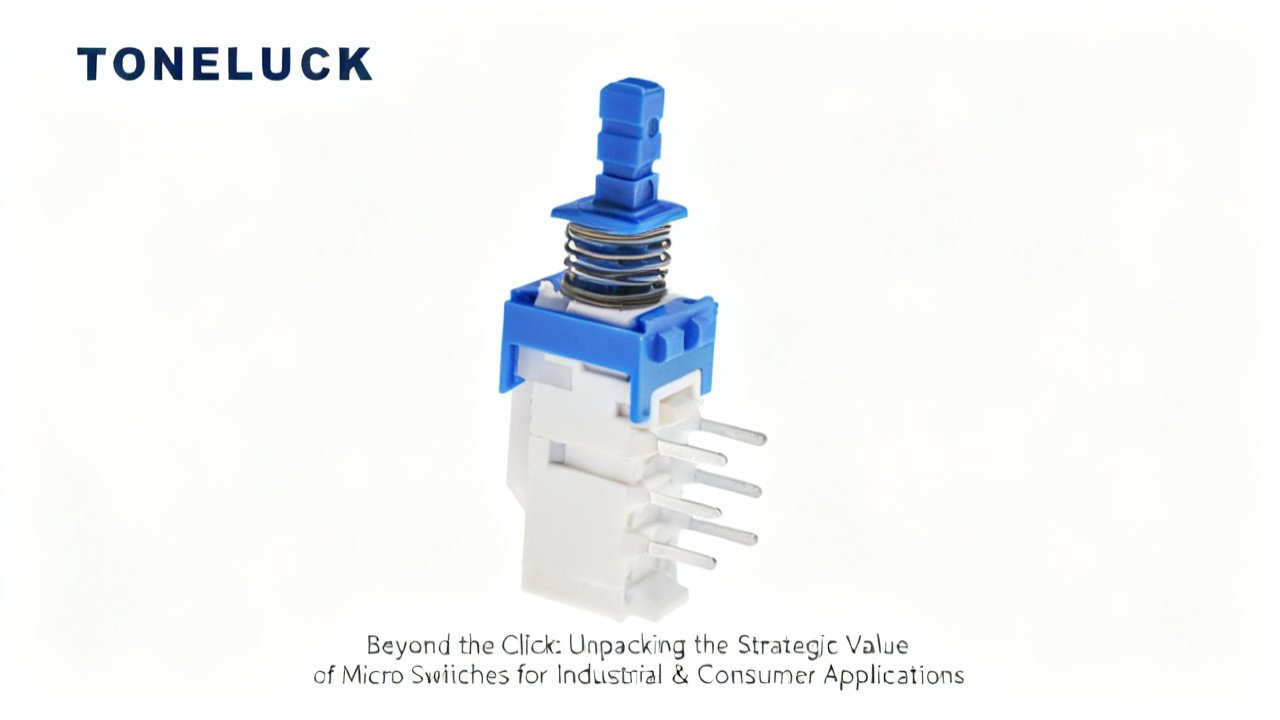
Beyond the Click: Unpacking the Strategic Value of micro switches for Industrial & Consumer Applications
In the intricate world of electronics and industrial automation, some components operate silently, yet their impact is profound. The micro switch is one such unsung hero. A ubiquitous electromechanical device, the micro switch is a cornerstone of countless systems, from the simplest home appliance to the most complex industrial machinery. For B2B professionals, understanding the nuances of these compact powerhouses – their design, applications, and the importance of selecting the right micro switch manufacturer – is critical for ensuring product reliability, operational efficiency, and long-term success.
What is a Micro Switch? The Heart of Precision Control
At its core, a micro switch is a small snap-action switch, famous for its high precision and rapid change of state. It utilizes an over-center mechanism that produces a quick, decisive change in contact position, irrespective of the speed of the actuator. This ‘snap-action’ ensures a clean break and make, minimizing arcing and extending the switch’s operational life. Typically, a micro switch consists of a spring-loaded lever or button that, when actuated by a small force, causes an internal mechanism to quickly switch between its normally open (NO) and normally closed (NC) states.
Their compact size, high repeatability, and robust design make them indispensable for applications requiring precise detection of position, presence, or limits. From safety interlocks to intricate control systems, the reliability of a micro switch directly translates to the safety and performance of the end product.
Key Characteristics and Advantages of Modern micro switches
The enduring popularity of micro switches stems from several key advantages:
- Exceptional Durability and Longevity: Designed for millions of cycles, high-quality micro switches offer unparalleled reliability, reducing maintenance costs and downtime.
- High Precision and Repeatability: The snap-action mechanism ensures consistent actuation points, crucial for applications requiring exact positioning or timing.
- Compact Size: Their small footprint allows for integration into tight spaces, a significant advantage in miniaturized devices and crowded control panels.
- Versatility: Available in a vast array of configurations – different actuator types, contact materials, current ratings, and environmental protections – they can be tailored to specific application needs.
- Cost-Effectiveness: Despite their advanced engineering, micro switches remain a cost-efficient solution for reliable sensing and control.
Diverse Types and Their Applications
The world of micro switches is more diverse than it might appear at first glance. Understanding the different types is key to optimal selection:
Standard Micro Switches
These are the foundational models, widely used in everything from consumer electronics like microwave ovens and washing machines to industrial control panels and vending machines. Their reliability and simplicity make them a go-to choice for general-purpose switching.
Waterproof Micro Switches
For harsh environments where dust, moisture, or even direct water exposure is a concern, a waterproof micro switch is essential. These switches are sealed to various IP (Ingress Protection) ratings, such as IP67, ensuring protection against dust ingress and temporary immersion in water. Applications include outdoor equipment, marine electronics, automotive systems, and industrial machinery exposed to washdowns or contaminants.
Limit Switches
Often, a limit switch is essentially a robust, industrial-grade micro switch housed within a protective enclosure and equipped with a specific actuator (e.g., roller lever, plunger, rod). They are primarily used to detect the presence or absence of an object, or to monitor the travel limits of moving parts in machinery. They are fundamental to safety circuits, process control, and automation in manufacturing, packaging, and material handling.
Mini and Subminiature Micro Switches
As devices become smaller, the demand for miniature components grows. Mini and subminiature micro switches, like the popular MQS-9A Mini Micro Switch series, are designed to fit into extremely compact spaces without compromising performance. They are ideal for applications such as medical devices, portable electronics, automotive interiors, and complex robotics where space is at a premium but precision is non-negotiable.
Choosing the Right micro switch manufacturer: A Strategic Decision
The performance and longevity of your products are directly tied to the quality of the components you integrate. Selecting the right micro switch manufacturer is therefore a strategic decision that goes beyond price. Here are critical factors to consider:
- Quality and Reliability: Look for manufacturers with a proven track record of producing switches that meet international quality standards (e.g., UL, CE, CQC). A reputable manufacturer invests heavily in R&D and rigorous testing.
- Product Range and Customization: A broad portfolio, including standard, waterproof, and mini micro switches, indicates comprehensive expertise. The ability to offer customized solutions for unique applications is also a significant advantage.
- Technical Support and Expertise: Access to knowledgeable engineering support can be invaluable, especially when integrating switches into complex designs or troubleshooting.
- Supply Chain and Logistics: A reliable manufacturer ensures consistent product availability, efficient order fulfillment, and robust logistics, minimizing production delays.
- Innovation and R&D: Leading manufacturers continuously innovate, developing new materials, sealing techniques, and designs to meet evolving industry demands, such as higher current ratings or enhanced environmental protection.
Manufacturers like TONELUCK, for instance, exemplify the dedication to precision engineering and quality control that defines a top-tier micro switch supplier. Their commitment to producing reliable components, from robust limit switches to compact mini micro switches, positions them as a trusted partner for demanding B2B applications.
The Future of Micro Switches
As industries continue to embrace automation, IoT, and more compact designs, the role of the micro switch will only expand. Innovations in materials science and manufacturing processes are leading to even more durable, precise, and environmentally resistant switches. The ongoing development of specialized switches, such as advanced waterproof micro switch models with enhanced sealing and operational characteristics, will continue to push the boundaries of where and how these essential components can be deployed.
Conclusion
Far more than just simple ‘on-off’ devices, micro switches are critical enablers of precision, safety, and efficiency across a vast spectrum of industries. For design engineers and procurement specialists, understanding their types, applications, and the vital importance of partnering with a reputable micro switch manufacturer is paramount. By making informed choices, businesses can ensure the longevity and superior performance of their products, securing a competitive edge in today’s demanding market.
