
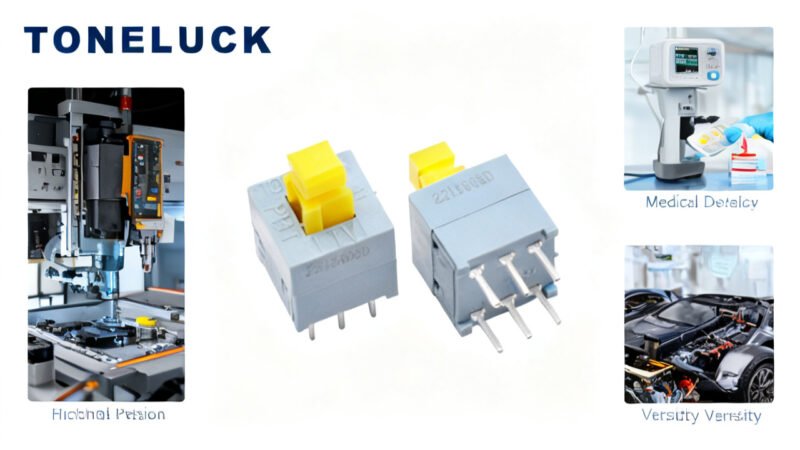
Introduction: The Unsung Heroes of Automation
In the intricate landscape of industrial automation, automotive systems, and advanced consumer electronics, certain components operate tirelessly behind the scenes, ensuring precision, safety, and reliability. Among these unsung heroes is the micro switch – a seemingly small device whose impact on operational integrity is monumental. From detecting the position of a robotic arm to triggering safety interlocks, micro switches are fundamental to countless B2B applications. This article delves into the critical role of these essential components, exploring their types, applications, and the factors vital for selecting a reputable micro switch manufacturer.
Understanding the Core: What is a Micro Switch?
At its heart, a micro switch is a snap-action electrical switch known for its rapid and consistent change of contact state. It operates with a ‘snap’ mechanism, ensuring that the contact points move quickly between open and closed positions, irrespective of the speed at which the actuator is pressed. This snap-action design minimizes arcing and extends the switch’s electrical life. Typically, a micro switch consists of a spring-loaded lever or plunger that, when activated, rapidly changes the state of internal contacts. These contacts can be Normally Open (NO), Normally Closed (NC), or a changeover configuration (Single Pole, Double Throw – SPDT), offering versatility for various circuit designs.
The Pillars of Performance: Key Advantages of micro switches
The widespread adoption of micro switches in demanding environments is attributed to several key performance advantages:
- High Precision and Repeatability: Micro switches are engineered for exact actuation points, offering exceptional positional accuracy and consistent performance over millions of cycles. This repeatability is crucial for applications requiring precise timing and control.
- Exceptional Durability and Longevity: Designed for robust operation, many micro switches boast impressive mechanical life cycles, often exceeding 10 million operations. This longevity translates into reduced maintenance and increased uptime for industrial machinery.
- Compact Design: Despite their robust performance, micro switches are typically small, allowing for integration into space-constrained applications without compromising functionality.
- Versatility in Actuation: Available with a wide array of actuator types—including pin plungers, hinge levers, roller levers, and simulated rollers—they can be tailored to specific mechanical interface requirements.
- High Current Handling Capability: Despite their small stature, many micro switches are capable of switching significant electrical loads, making them suitable for controlling motors, solenoids, and other power-hungry devices.
Beyond the Standard: Specialized Micro Switch Types
While the basic micro switch is a workhorse, specialized variants address particular environmental and functional demands:
- Limit Switches: A highly robust form of micro switch, limit switches are primarily used to detect the presence or absence of an object, or to limit the motion of a machine part. Encased in durable housings, often metal, they are built to withstand harsh industrial conditions, including exposure to dust, debris, and mechanical shock. They are indispensable for safety interlocks, position sensing in robotics, and controlling conveyor systems.
- Waterproof Micro Switches: For applications exposed to liquids, dust, or corrosive agents, waterproof micro switches are essential. These switches feature advanced sealing mechanisms, such as epoxy potting, O-rings, and specialized housings, to achieve high Ingress Protection (IP) ratings (e.g., IP67, IP68). This protection ensures reliable operation in outdoor equipment, marine applications, food processing machinery, and medical devices where hygiene and resistance to washdowns are critical.
- Miniature Micro Switches: Catering to the ever-increasing demand for smaller, more integrated components, miniature micro switches offer all the benefits of their larger counterparts in an ultra-compact footprint. These are ideal for consumer electronics, automotive interiors, and portable medical devices where space is at a premium.
Applications Across Industries: Where Micro Switches Make a Difference
The versatility of micro switches means they are found across a vast spectrum of industries:
- Industrial Automation: Critical for robotics, CNC machines, safety gates, and material handling systems, providing precise feedback on component positions and operational limits.
- Automotive: Used in door latches, seatbelt sensors, gear shift mechanisms, power window controls, and engine management systems.
- Home Appliances: Found in microwaves (door interlocks), washing machines (lid switches), refrigerators (ice dispenser controls), and HVAC systems.
- Medical Devices: Ensuring safety and precision in infusion pumps, diagnostic equipment, and patient monitoring systems.
- Security Systems: Employed in access control systems, alarm triggers, and tamper detection.
- Aerospace & Defense: Used in aircraft landing gear, cabin controls, and various critical defense applications.
Selecting the Right Partner: Choosing a micro switch manufacturer
The performance and longevity of your application hinge significantly on the quality of the micro switch chosen and the reliability of its manufacturer. When selecting a micro switch and a supplier, consider the following:
- Environmental Compatibility: Assess operating temperature ranges, shock and vibration resistance, and required IP ratings (especially for waterproof micro switch needs).
- Electrical Specifications: Match voltage, current, and contact resistance requirements to the switch’s capabilities.
- Mechanical Characteristics: Evaluate operating force, pre-travel, over-travel, and differential travel to ensure seamless integration with your mechanical design.
- Certifications: Look for industry-standard certifications such as UL, CE, CQC, and RoHS compliance, which indicate adherence to stringent quality and safety standards.
- Customization Capabilities: A reputable micro switch manufacturer, such as TONELUCK, often offers customization options for actuators, terminals, and housing materials to meet unique application demands.
- Reputation and Technical Support: Partnering with a manufacturer known for consistent quality, robust R&D, and excellent technical support ensures long-term reliability and problem-solving assistance.
The Future of Micro Switches: Innovation on the Horizon
The evolution of micro switches continues, driven by demands for greater efficiency, miniaturization, and intelligence. Future trends include further miniaturization for even tighter integration, enhanced durability through advanced materials and manufacturing processes, and the potential for integration with smart systems (IoT/IIoT) for predictive maintenance and remote monitoring capabilities.
Conclusion: The Enduring Value of Precision Switching
Micro switches, including specialized variants like the limit switch and waterproof micro switch, are indispensable components that underpin the reliability and functionality of countless B2B applications. Their precision, durability, and adaptability make them critical enablers of modern technology. Investing in high-quality micro switches from a trusted micro switch manufacturer is not merely a component choice; it is an investment in the long-term performance, safety, and efficiency of your industrial and commercial systems. As technology advances, the humble micro switch will continue to evolve, silently powering the innovations of tomorrow.
