
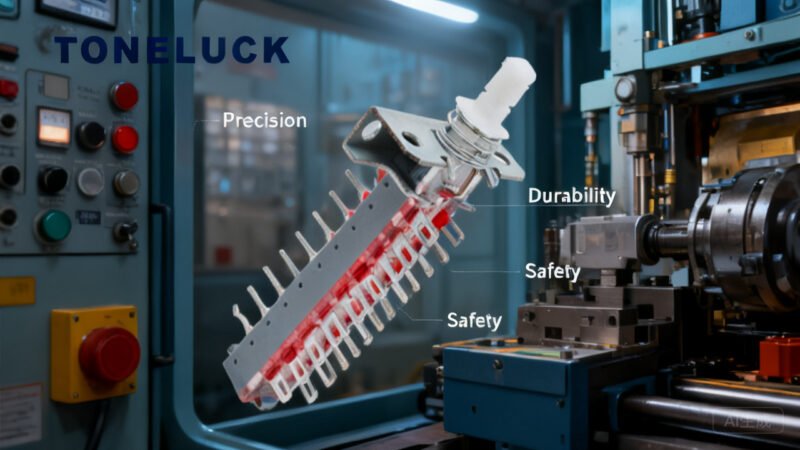
In the intricate machinery of modern industry, countless components work in concert to ensure seamless operation, safety, and efficiency. Among these, micro switches and limit switches stand out as critical, albeit often overlooked, elements. These compact devices are fundamental to control systems, providing precise feedback and triggering actions across a vast spectrum of applications, from heavy machinery to delicate medical equipment. Understanding their functionality, variations, and the importance of selecting a reliable micro switch manufacturer is paramount for engineers and procurement professionals aiming for operational excellence.
Understanding the Core: What is a Micro Switch?
A micro switch, often referred to as a miniature snap-action switch, is an electrical switch actuated by very little physical force, utilizing a snap-action mechanism. This mechanism ensures a rapid, decisive transfer of contacts, regardless of the speed of actuation. This ‘snap’ action is crucial for preventing arcing and extending the switch’s operational life. Typically featuring a lever or plunger actuator, micro switches are designed for high accuracy and repeatability, making them ideal for applications requiring precise position detection or end-of-travel sensing.
Their versatility stems from various contact configurations (normally open, normally closed, changeover) and diverse actuator types (pin plunger, lever, roller lever, simulated roller lever). This adaptability allows them to be integrated into complex systems, providing reliable electrical signals based on mechanical input. From consumer electronics and automotive systems to industrial control panels and security devices, the omnipresence of micro switches underscores their foundational role in modern technology.
The Specialized Role of Limit Switches
While all limit switches are, in essence, a type of micro switch, the term ‘limit switch’ typically refers to a robust, industrial-grade switch designed to detect the presence or absence of an object, or to monitor the limits of travel for moving parts. These switches are engineered to withstand harsher environments and heavier mechanical forces than standard micro switches. They often feature larger, more durable housings and a wider range of actuator styles (e.g., rotary, plunger, fork lever) to suit specific industrial applications.
Limit switches are indispensable in automation and safety systems. They can initiate or stop motor operations, trigger alarms, count items on a conveyor belt, or ensure that machinery does not exceed its safe operating parameters. For example, in a CNC machine, a limit switch might prevent the tool head from crashing into the end of its travel path. In a factory setting, they might detect if a safety gate is open or closed, preventing machine operation when a hazard is present. Their reliability in critical control loops makes them a cornerstone of industrial safety and efficiency.
The Imperative for Waterproof Micro Switches
Many industrial and outdoor applications expose electronic components to challenging environmental conditions, including moisture, dust, oil, and extreme temperatures. In such scenarios, standard switches are prone to failure, leading to costly downtime and potential safety hazards. This is where the waterproof micro switch becomes indispensable.
Waterproof micro switches are specially sealed to protect their internal mechanisms from ingress of liquids and particulates. They are typically rated according to the Ingress Protection (IP) standard, with common ratings like IP67 indicating complete protection against dust and immersion in water up to 1 meter for 30 minutes. This level of protection ensures consistent performance and extends the lifespan of the switch in environments such as marine applications, outdoor equipment, food processing plants, and automotive under-the-hood systems. Investing in high-quality waterproof switches significantly enhances the reliability and longevity of equipment operating in demanding conditions, thereby reducing maintenance costs and improving overall system integrity.
Selecting the Right micro switch manufacturer: Key Considerations
The performance and longevity of your equipment are directly tied to the quality of its components. When sourcing micro switches, partnering with a reputable micro switch manufacturer is crucial. Here are key factors to consider:
- Quality and Reliability: Look for manufacturers with a proven track record of producing high-durability switches that meet international standards (e.g., UL, CE, RoHS). Consistent performance over millions of cycles is a hallmark of quality.
- Customization Capabilities: Diverse applications often require specific actuator types, operating forces, electrical ratings, or sealing options. A good manufacturer should offer a range of standard products and the flexibility for custom solutions.
- Technical Support and Expertise: Access to knowledgeable technical support can be invaluable during design, integration, and troubleshooting phases.
- Supply Chain and Lead Times: Ensure the manufacturer can consistently meet your production demands with reliable lead times.
- Innovation: A forward-thinking manufacturer will continually invest in R&D, offering advanced features like miniaturization, higher current ratings, and improved environmental sealing.
Manufacturers like TONELUCK, for instance, are known for their commitment to precision engineering and stringent quality control, offering a wide array of micro switches, including robust waterproof options and miniature designs like the MQS-9A Mini Micro Switch series, catering to diverse industrial needs.
Spotlight on Miniature Precision: The MQS-9A Mini Micro Switch
The demand for smaller, more integrated devices has led to significant advancements in micro switch miniaturization. A prime example is a series like the MQS-9A Mini Micro Switch, which exemplifies how precision engineering can be packed into a compact form factor without compromising performance. These miniature switches are designed for applications where space is at a premium, such as in portable electronics, automotive door latches, medical diagnostic equipment, and smart home devices.
Despite their small size, switches like the MQS-9A typically offer high reliability, precise operating points, and robust electrical ratings. Key features often include a snap-action mechanism for rapid contact transfer, various terminal options (e.g., PCB terminals, solder terminals), and a choice of actuators to fit specific mechanical integration requirements. Their ability to deliver consistent performance in tight spaces makes them invaluable for the next generation of compact and complex systems.
Conclusion: Powering Progress with the Right Components
Micro switches and limit switches are more than just simple components; they are critical enablers of automation, safety, and efficiency across countless industries. From detecting the position of a robotic arm to ensuring the safe operation of heavy machinery, their precise and reliable feedback loops are indispensable. As technology evolves, the demand for more robust, compact, and environmentally resilient switches will only grow.
By carefully considering factors such as application environment, required precision, durability, and the reputation of your micro switch manufacturer, you can ensure the selection of components that not only meet current operational needs but also contribute to the long-term success and reliability of your systems. Choosing the right switch is an investment in the future performance and safety of your industrial applications.
