
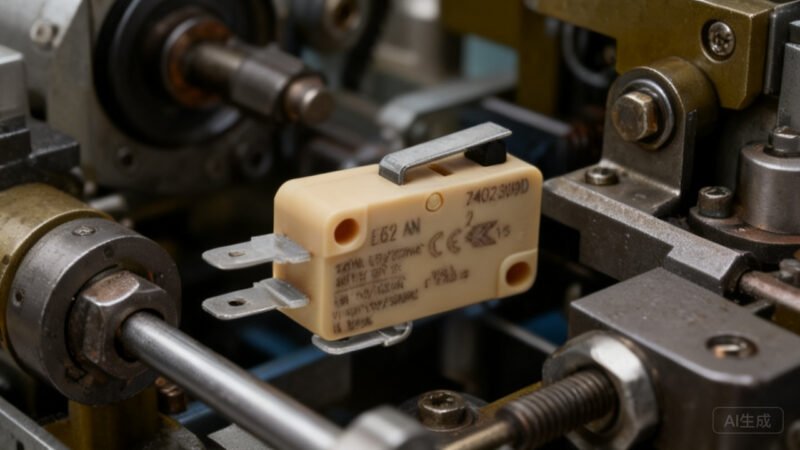
In the intricate machinery of modern industry, where precision, reliability, and durability are not merely desirable but essential, certain components operate tirelessly behind the scenes, ensuring seamless functionality. Among these unsung heroes are micro switches and limit switches – compact yet powerful devices that form the backbone of countless control systems. For B2B professionals engaged in product design, engineering, or procurement, a thorough understanding of these critical components is paramount to developing robust, efficient, and safe industrial solutions.
Understanding the Core: What is a Micro Switch?
At its core, a micro switch, often referred to as a miniature snap-action switch, is an electrical switch actuated by a very small physical force, at a rapid and repeatable speed. Its defining characteristic is the ‘snap-action’ mechanism, where a precisely designed internal spring system causes the electrical contacts to switch almost instantaneously once the actuation point is reached, regardless of the speed of the actuator. This rapid transfer prevents arcing, extends contact life, and ensures highly reliable switching. micro switches are renowned for their high repeatability and minimal hysteresis, making them ideal for applications requiring consistent performance over millions of cycles. Their compact size, versatility, and ability to handle various electrical loads contribute to their widespread adoption.
Diverse Applications Across Industries
The ubiquity of micro switches and limit switches is a testament to their adaptability. They are found in an astonishing array of applications across virtually every industrial and commercial sector:
- Automotive: Used in door latches, seatbelt sensors, gear position detection, power window controls, and throttle position sensors, ensuring safety and operational precision.
- Industrial Controls: Essential for safety interlocks on machinery guards, position sensing in robotic arms, conveyor belt control, process valve actuation, and emergency stop mechanisms.
- Home Appliances: Found in microwave oven doors, washing machine lids, refrigerators (ice makers), and smart home devices, providing feedback on status and safety.
- Medical Devices: Critical for patient beds, diagnostic equipment, infusion pumps, and surgical tools, where reliability and precision are non-negotiable.
- HVAC Systems: Employed in damper controls, fan speed regulation, and filter monitoring.
- Vending Machines & ATMs: For coin detection, paper sensing, and door security.
- Power Tools & Office Equipment: Ensuring safe operation and accurate feedback.
Key Types and Their Strategic Advantages
The market offers a variety of micro switch types, each engineered for specific operational environments and design constraints:
Standard Micro Switches
These are the general-purpose workhorses, available in various sizes, operating forces, and contact configurations (Normally Open – NO, Normally Closed – NC, or Changeover – CO). They offer a balance of performance, durability, and cost-effectiveness, suitable for a vast range of applications where environmental extremes are not a primary concern.
Mini Micro Switches (e.g., MQS-9A Mini Micro Switch)
For applications where space is at an absolute premium, such as compact electronic devices, portable equipment, or densely packed control panels, mini micro switches become indispensable. Models like the MQS-9A Mini Micro Switch exemplify this category, offering robust performance in a significantly reduced footprint. Their small size does not compromise their electrical integrity or mechanical lifespan, making them a preferred choice for miniaturized systems without sacrificing reliability. These are crucial for the ongoing trend of miniaturization in electronics and industrial components.
Waterproof Micro Switches
Environmental challenges often dictate specialized component requirements. Waterproof micro switches are engineered to withstand ingress from dust, liquids, and other contaminants, typically rated according to the Ingress Protection (IP) system (e.g., IP67 or IP68). Achieved through advanced sealing techniques, specialized housing materials, and robust contact designs, these switches are critical for outdoor equipment, marine applications, food processing machinery, automotive under-hood applications, and any industrial setting exposed to washdowns, harsh weather conditions, or high humidity. Their ability to maintain functionality in adverse conditions significantly enhances system reliability and longevity.
Limit Switches
While micro switches are versatile, limit switches typically serve more demanding industrial roles. They are electromechanical devices that detect the presence or absence of an object, or monitor the travel limits of moving parts in machinery. Generally larger and more rugged than standard micro switches, limit switches are designed for heavy-duty applications where physical impact, vibration, and extreme environments are common. Often featuring a variety of actuator heads (roller plungers, whisker levers, rotary levers) and robust metal housings, they provide critical feedback to Programmable Logic Controllers (PLCs) and control circuits, ensuring safe and precise operation in everything from factory automation to material handling systems, cranes, and machine tools. Their robust construction makes them ideal for environments where high mechanical forces are expected.
Critical Selection Criteria for B2B Buyers
Choosing the right micro or limit switch is a critical decision that impacts the performance, safety, and cost-effectiveness of an entire system. Key considerations include:
- Electrical Rating (Voltage, Current): Matching the switch’s voltage and current ratings to the circuit’s demands is paramount to prevent premature failure, overheating, and potential safety hazards. Over-specifying can lead to unnecessary cost, while under-specifying is a critical risk.
- Operating Force and Overtravel: This refers to the force required to actuate the switch and the distance the actuator can travel beyond the operating point. These factors directly impact the tactile feel, mechanical energy needed, and the switch’s tolerance for variations in actuator position.
- Mechanical and Electrical Life Cycles: Both mechanical (number of actuations without load) and electrical (number of actuations under rated load) life cycles are vital metrics. High-cycle applications demand switches rated for millions of operations to ensure longevity and reduce maintenance costs.
- Environmental Sealing (IP rating): For any application exposed to dust, moisture, oils, or chemicals, an appropriate IP rating (e.g., IP67 for waterproof and dust-tight) is non-negotiable to prevent internal corrosion and operational failure.
- Operating Temperature Range: Operating conditions can vary wildly. Selecting a switch certified for the expected minimum and maximum ambient temperatures ensures reliable performance without material degradation or contact issues.
- Actuator Type: The choice of actuator (e.g., pin plunger, roller lever, simulated roller lever, panel mount plunger) dictates how the switch interacts with the object it’s sensing, influencing precision, overtravel, and mounting flexibility.
- Contact Material and Configuration: Silver alloy contacts are common for general use, while gold plating might be preferred for low-current, high-reliability applications. Understanding Normally Open (NO) vs. Normally Closed (NC) configurations is fundamental to circuit design.
- Size and Mounting Options: Physical dimensions and mounting holes must align with the product’s design constraints and assembly processes, ensuring seamless integration.
The Importance of a Reliable micro switch manufacturer
The longevity and performance of a micro switch are heavily influenced by its manufacturer. A reputable micro switch manufacturer, such as TONELUCK, brings decades of engineering expertise, rigorous quality control processes (e.g., ISO 9001 certifications), and a commitment to innovation. Partnering with such a manufacturer ensures not only access to a wide range of standard and specialized products but also invaluable technical support, customization capabilities, and adherence to global regulatory standards like RoHS and REACH. This partnership minimizes risks, optimizes design cycles, and ultimately contributes to the overall reliability, safety, and market competitiveness of the end product. Quality components from a trusted source translate directly into reduced field failures and enhanced customer satisfaction.
Future Trends and Innovations
As industries continue to evolve, so too do the demands on component technology. Future trends for micro and limit switches point towards even greater miniaturization, enhanced durability for extreme environments, integration with smart manufacturing systems (IoT readiness), and increased energy efficiency. Manufacturers are continuously pushing the boundaries to develop switches that offer higher precision, longer life, and more versatile connectivity options, ensuring these humble components remain at the forefront of industrial control.
Conclusion: Powering Precision in the Modern Industrial Landscape
In conclusion, micro switches and limit switches, while often overlooked, are foundational elements in the quest for industrial excellence. Their ability to deliver precise, repeatable, and reliable electrical signals under diverse conditions makes them indispensable across virtually every sector. For B2B stakeholders, a thorough understanding of their types, applications, and critical selection criteria, coupled with the strategic choice of a trusted manufacturer, is not just good practice – it’s a prerequisite for designing and deploying systems that are both robust and future-proof. Investing in high-quality switching solutions is an investment in the reliability, safety, and efficiency of your entire operation, driving innovation and ensuring continuous performance in an ever-demanding industrial landscape.
