
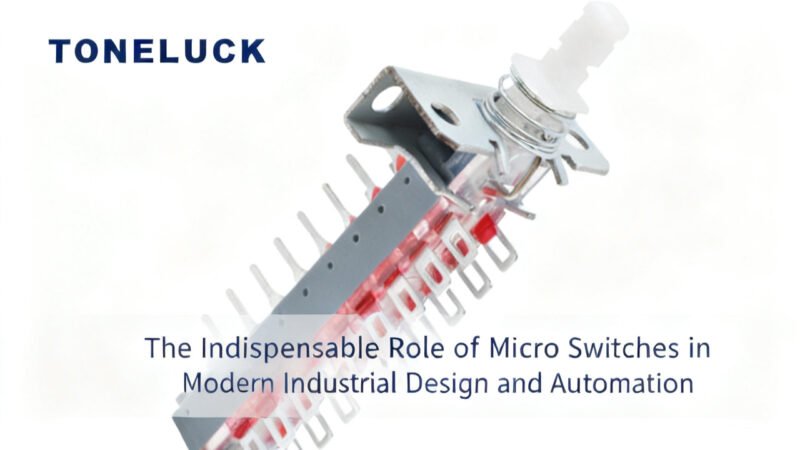
In the intricate world of industrial automation, consumer electronics, and specialized equipment, small components often play the most critical roles. Among these, the micro switch stands out as an indispensable device, converting subtle physical movements into precise electrical signals. These compact, snap-action switches are the silent workhorses behind countless operations, ensuring safety, efficiency, and reliability across a vast spectrum of applications. For any enterprise involved in manufacturing, system integration, or product design, understanding the nuances and capabilities of micro switches is paramount to achieving operational excellence and product integrity.
Defining Precision: What Makes a Micro Switch Crucial?
A micro switch, often characterized by its snap-action mechanism, rapidly changes contact states when a predetermined operating force is applied to its actuator. This rapid action minimizes arcing and extends the switch’s electrical life, making it ideal for applications requiring high reliability and long operational cycles. Key attributes that underscore their critical importance include:
- Exceptional Precision and Repeatability: The snap-action design ensures that the switch actuates at exactly the same point every time, crucial for applications demanding tight tolerances and consistent performance.
- High Durability and Longevity: Engineered for millions of mechanical and electrical cycles, micro switches offer robust performance in demanding environments.
- Compact Design: Their small footprint allows for integration into space-constrained applications, from handheld devices to complex machinery.
- Versatility: Available in a wide array of configurations, including various operating forces, lever styles, and terminal options, they can be tailored to specific application needs.
Exploring Key Variations and Applications
The utility of micro switches is further enhanced by their diverse forms, each optimized for particular operational challenges:
Standard Micro Switches
These are the foundational components found in everyday devices and industrial equipment. They serve as basic ON/OFF controls, safety interlocks in machinery doors, position detectors in vending machines, and sensors in home appliances. Their reliability and simplicity make them the go-to choice for fundamental switching tasks.
Limit Switches: The Sentinels of Position
A specialized and more robust iteration of the micro switch, limit switches are designed specifically for position sensing in industrial environments. They are typically housed in sturdy enclosures, often with various types of actuators (roller levers, plungers, wands) to withstand harsh conditions. Limit switches are critical in:
- Manufacturing Equipment: Detecting the end of travel for moving parts, ensuring proper sequencing in assembly lines.
- Robotics: Providing feedback on arm positions and collision avoidance.
- Elevators and Conveyors: Ensuring safe operation by confirming door closures and load positions.
- Safety Systems: Acting as fail-safes to prevent over-travel or improper machine operation.
Waterproof Micro Switches: Defying the Elements
For applications exposed to moisture, dust, or extreme temperatures, waterproof micro switches are indispensable. These switches are engineered with superior sealing mechanisms, often meeting stringent IP (Ingress Protection) ratings like IP67, which signifies protection against dust ingress and immersion in water up to 1 meter for 30 minutes. Their applications are widespread:
- Outdoor Equipment: Security cameras, garden tools, and marine electronics.
- Medical Devices: Equipment requiring frequent wash-downs or sterilization.
- Automotive Industry: Engine compartments, door latches, and window controls where exposure to elements is common.
- Industrial Wash-down Areas: Food processing plants and chemical handling facilities.
The Critical Role of a Reputable micro switch manufacturer
Selecting the right micro switch is as much about the product as it is about the micro switch manufacturer. A reputable manufacturer brings several crucial advantages:
- Uncompromising Quality Assurance: Adherence to rigorous manufacturing processes, comprehensive testing protocols, and international certifications (UL, CE, RoHS, CQC) ensures product reliability and compliance.
- Innovation and R&D: Leading manufacturers continuously invest in research and development to improve switch performance, explore new materials, and develop solutions for emerging technologies. For instance, a TONELUCK micro switch is often synonymous with quality and innovation, reflecting years of expertise in the field.
- Customization Capabilities: The ability to provide bespoke solutions, modifying existing designs or creating entirely new ones to meet unique application challenges.
- Technical Expertise and Support: Offering in-depth technical guidance, assisting clients in selecting the optimal switch for their specific requirements, and providing post-sales support.
Spotlight on Specifics: The MQS-9A Mini Micro Switch
To illustrate the versatility and specialized design within the micro switch family, consider the MQS-9A Mini Micro Switch. This particular model exemplifies how miniaturization does not compromise performance. Designed for applications where space is at an absolute premium, the MQS-9A offers high reliability and a long operational life within an extremely compact footprint. Its precise snap-action mechanism makes it ideal for integration into:
- Small household appliances (e.g., coffee makers, blenders)
- Medical diagnostic tools and portable devices
- Automotive electronics where component size is critical
- Compact industrial control panels
Such mini micro switches demonstrate the ongoing evolution of these components, pushing boundaries in performance within ever-shrinking physical dimensions.
Critical Considerations for Micro Switch Selection
When specifying a micro switch for an application, several factors must be meticulously evaluated:
- Electrical Ratings: Ensure the switch can safely handle the required voltage and current (AC/DC).
- Operating Force: Match the force required to actuate the switch with the available mechanical force from the application.
- Mechanical and Electrical Lifespan: Consider the number of cycles the switch is expected to perform over its lifetime.
- Operating Temperature Range: Verify suitability for the environmental temperature extremes.
- Environmental Sealing (IP Rating): Crucial for protection against dust, moisture, and liquids, especially for waterproof applications.
- Actuator Type: Choose from pin plungers, roller levers, simulated roller levers, and various other options based on the mechanical interface.
- Terminal Type: Select the appropriate connection method (e.g., solder terminals, quick connect, PCB terminals).
- Certifications: Confirm compliance with relevant industry standards and safety regulations for the target market.
Conclusion: Powering the Future with Precision
Micro switches, in all their variations—from standard models to robust limit switches and specialized waterproof designs—are far more than simple electrical components. They are foundational elements that enable precision, enhance safety, and drive efficiency across virtually every modern industry. The continuous innovation by leading manufacturers ensures that these vital components will continue to adapt and expand their capabilities, meeting the evolving demands of industrial automation and advanced product design. By carefully selecting the right micro switch from a trusted manufacturer, businesses can ensure the long-term reliability and optimal performance of their systems and products, thereby safeguarding investments and fostering innovation.
