
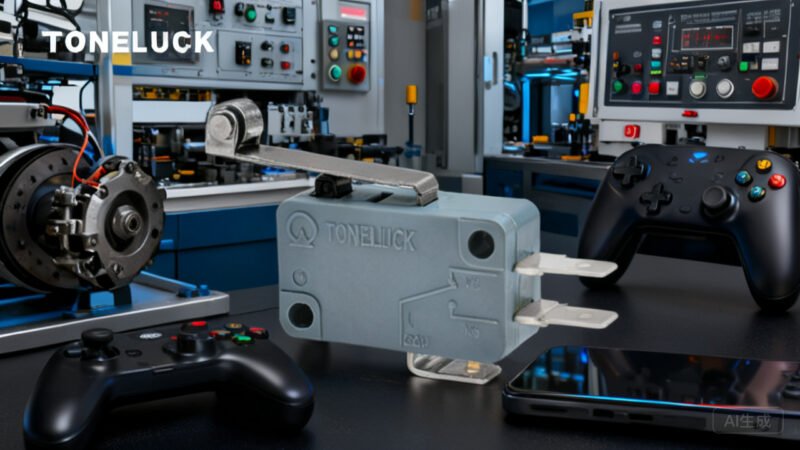
In the intricate world of modern industrial design and electronic systems, certain components, though small in stature, play an outsized role in ensuring reliability, safety, and functionality. Among these indispensable elements is the micro switch. Far more than just a simple on/off mechanism, these compact, snap-action devices are the silent workhorses behind countless operations, from the everyday appliances in our homes to the sophisticated machinery driving global industries. For engineers, product designers, and procurement specialists, understanding the nuances of micro switches—their types, applications, and critical specifications—is paramount to building robust and efficient systems.
What Exactly is a Micro Switch?
A micro switch, often referred to as a miniature snap-action switch, is an electrical switch that is actuated by very little physical force, through the use of a tipping point mechanism, sometimes called an ‘over-center’ mechanism. This design ensures a rapid, predictable, and repeatable switching action, regardless of the speed of actuation. This ‘snap-action’ is crucial for preventing arcing between contacts, thereby extending the switch’s operational life and enhancing its reliability in demanding applications. Their compact footprint and high precision make them a preferred choice where space is limited and consistent performance is critical.
Key Characteristics and Advantages
The widespread adoption of micro switches across diverse sectors is attributable to several inherent advantages:
- High Precision and Repeatability: The snap-action mechanism ensures that the switch state changes rapidly and consistently at a specific actuation point, crucial for accurate sensing.
- Durability and Long Operational Life: Designed for millions of cycles, high-quality micro switches offer exceptional longevity, reducing maintenance and replacement costs.
- Compact Design: Their small size allows for integration into tight spaces, enabling miniaturization in product designs.
- Versatility in Actuation: Available with various actuator types—pin plungers, roller levers, hinge levers, and more—they can be tailored to specific mechanical interface requirements.
- High Current Capacity: Despite their small size, many micro switches can handle significant electrical loads, making them suitable for controlling motors, solenoids, and other power components.
Exploring Diverse Micro Switch Types and Their Applications
The specific demands of an application often dictate the type of micro switch required. Understanding the distinctions is key:
Standard Micro Switches
These are the foundational components, used in a vast array of applications requiring basic position sensing or limit control. They are prevalent in consumer electronics, automotive systems (e.g., door latches, gearshift interlocks), and industrial equipment.
Mini Micro Switches: The MQS-9A Advantage
For applications where space is at an absolute premium, mini micro switches are indispensable. Products like the MQS-9A Mini Micro Switch exemplify this category, offering robust performance in an ultra-compact package. These are ideal for miniaturized medical devices, portable electronics, and complex control panels where every millimeter counts, without compromising on reliability or electrical rating.
Waterproof Micro Switches for Challenging Environments
When operations involve exposure to moisture, dust, or harsh chemicals, a standard switch simply won’t suffice. Waterproof micro switches are engineered with sealed enclosures (often meeting IP67 or higher ratings) to protect internal components from environmental ingress. These are critical in outdoor equipment, marine applications, industrial machinery subject to washdowns, and automotive under-hood systems, ensuring continuous operation and safety in adverse conditions.
Micro Switches as Limit Switches
A significant application for micro switches is their integration into limit switch assemblies. A limit switch is an electromechanical device that consists of an actuator mechanically linked to a set of contacts. When an object comes into contact with the actuator, the switch operates to make or break an electrical connection. Micro switches, with their precise snap-action, form the core of many limit switch designs, providing accurate end-of-travel detection, safety interlocks on machinery, and position sensing in automation systems.
Selecting the Right Micro Switch: Critical Considerations
Choosing the optimal micro switch for an application involves a thorough evaluation of several factors:
- Electrical Ratings: Ensure the switch’s voltage and current ratings meet or exceed the circuit requirements.
- Actuator Type: Match the actuator to the mechanical interface of the application (e.g., roller lever for cam actuation, pin plunger for direct push).
- Operating Force: Consider the force required to actuate the switch, which impacts user experience and system design.
- Environmental Conditions: For harsh environments, opt for sealed waterproof micro switches with appropriate IP ratings, and consider operating temperature ranges.
- Mechanical and Electrical Life: Evaluate the expected number of cycles the switch needs to endure over its lifespan.
- Certifications: Verify compliance with relevant industry standards (e.g., UL, CE, CQC) for safety and regulatory adherence.
- Manufacturer Reputation: Partnering with a reputable micro switch manufacturer is crucial. Companies like TONELUCK micro switch offer a proven track record of quality, innovation, and reliability, backed by stringent testing and engineering expertise. Their commitment to precision manufacturing ensures consistent performance and longevity, critical for B2B applications where failure is not an option.
The Future of Precision Switching
As industries continue to evolve, so too will the demands on micro switches. Trends point towards further miniaturization, enhanced environmental sealing, integration with smart technologies for predictive maintenance, and even greater durability. The continuous innovation by leading manufacturers ensures that these small but mighty components will remain at the forefront of reliable control and sensing solutions for years to come.
Conclusion
Micro switches are far more than mere electrical components; they are critical enablers of precision, safety, and efficiency across countless industries. From the robust limit switch applications in heavy machinery to the delicate sensing in medical devices, their consistent performance is indispensable. By carefully considering the specific needs of an application and partnering with a trusted micro switch manufacturer, engineers can ensure their designs leverage the full potential of these essential, high-performance devices, building systems that are not only functional but also exceptionally reliable and durable.
