
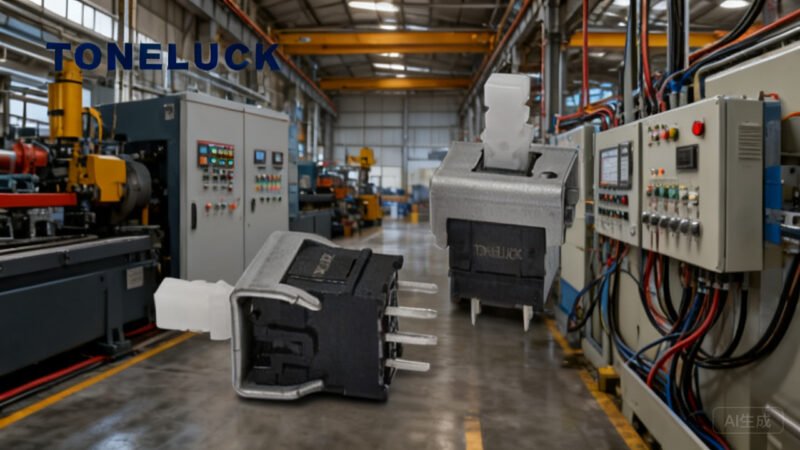
micro switches are often the unsung heroes of countless mechanical and electronic systems. These small, yet remarkably robust, components play a pivotal role in ensuring the precise operation, safety, and reliability of equipment across virtually every industry. From the simplest household appliance to complex industrial machinery and critical aerospace systems, the humble micro switch acts as a fundamental interface, translating mechanical motion into an electrical signal. In a world increasingly reliant on automation and precise control, understanding the nuances of micro switch technology and partnering with the right micro switch manufacturer is paramount for achieving optimal system performance and longevity.
At its core, a micro switch, also known as a miniature snap-action switch, is an electrical switch actuated by very little physical force, utilizing a “snap-action” mechanism. This mechanism ensures a rapid and decisive change in contact state, regardless of the speed of actuation. This rapid switching action is crucial for preventing arcing and extending the switch’s operational life. Typically, a micro switch consists of a spring-loaded lever or plunger that, when depressed, causes a set of contacts (common, normally open, and normally closed) to rapidly change their configuration. Their compact size, high repeatability, and ability to handle significant electrical loads make them indispensable.
Key Characteristics & Advantages
The enduring popularity of micro switches stems from several key characteristics:
- High Precision and Repeatability: The snap-action mechanism provides a consistent actuation point, making them ideal for applications requiring accurate position sensing.
- Durability and Long Life: Designed for millions of cycles, many micro switches are built to withstand continuous operation in demanding environments.
- Compact Size: Their small footprint allows for integration into space-constrained designs, a critical factor in modern miniaturized electronics and machinery.
- Versatility: Available in numerous configurations, actuation forces, and contact materials to suit a wide array of electrical and environmental requirements.
- Reliable Switching: The rapid contact transfer minimizes bounce and arcing, leading to stable electrical signals and reduced wear.
Types of Micro Switches: Expanding Capabilities
While the basic principle remains constant, micro switches come in various forms tailored for specific applications:
- Standard Micro Switches: These are the most common type, found in consumer electronics, small appliances, and general industrial controls. They offer a balance of cost-effectiveness, performance, and versatility.
- Limit Switches: A specialized form of micro switch, limit switches are designed to detect the presence or absence of an object, or to monitor the travel limits of machinery. They are robust, often housed in protective enclosures, and are crucial for safety interlocks, position sensing in CNC machines, conveyor systems, and automated gates. Their role in preventing over-travel and ensuring machinery operates within safe parameters cannot be overstated.
- Waterproof Micro Switches: For environments exposed to liquids, dust, or extreme temperatures, waterproof micro switches are essential. These switches feature enhanced sealing (often IP-rated) to protect internal components from ingress. Applications range from outdoor equipment and marine systems to industrial washdown areas and automotive under-hood components. The reliability of a waterproof micro switch is critical in preventing system failures due to environmental contamination.
Applications Across Industries
The ubiquitous nature of micro switches is evident in their diverse applications:
- Automotive Industry: Used extensively in door latches, seatbelt buckles, gear shift interlocks, power window controls, and engine management systems. A reliable micro switch ensures occupant safety and vehicle functionality.
- Industrial Automation & Robotics: Critical for position sensing, end-of-travel detection, safety interlocks on machinery guards, and control panels in automated production lines. They provide vital feedback for robotic arms and conveyor systems.
- Home Appliances: Found in microwaves (door interlocks), washing machines (lid switches), refrigerators (ice makers), and HVAC systems, where they ensure safe and precise operation.
- Medical Devices: In hospital beds, diagnostic equipment, and surgical tools, precision micro switches enable accurate control and patient safety.
- Aerospace & Defense: Due to their reliability and compact nature, they are used in critical aircraft controls, landing gear systems, and missile guidance systems, where failure is not an option.
- Building Automation: In elevators, access control systems, and security devices, providing crucial feedback on door positions and user interactions.
Choosing the Right micro switch manufacturer
Selecting the appropriate micro switch is only half the battle; partnering with a reputable micro switch manufacturer is equally vital. A leading manufacturer brings several advantages:
- Quality and Reliability: Look for manufacturers with rigorous testing protocols, certifications (e.g., ISO, UL, CE), and a proven track record of producing durable, high-performance components.
- Technical Expertise and Support: A strong manufacturer offers comprehensive technical data, application support, and the ability to assist with custom solutions.
- Product Range and Customization: Access to a wide variety of standard products, including different actuating forces, terminal types, and environmental ratings, along with the capability for custom designs to meet unique project specifications. For instance, a manufacturer like TONELUCK, known for its commitment to quality and innovation, offers a diverse portfolio, including specialized products like the MQS-9A Mini Micro Switch. This particular model exemplifies how advanced design can deliver high performance in an extremely compact form factor, suitable for space-constrained applications without compromising on reliability or operational life.
- Supply Chain Stability: Consistent availability and efficient logistics are crucial for uninterrupted production schedules.
- Innovation: Manufacturers who invest in R&D are more likely to offer cutting-edge solutions, such as enhanced sealing for waterproof micro switches or improved materials for extended life cycles.
Innovation and Future Trends
The evolution of micro switches continues. Future trends include:
- Further Miniaturization: As devices shrink, the demand for even smaller, yet equally robust, switches will grow.
- Enhanced Environmental Protection: The development of more advanced sealing technologies will lead to micro switches with higher IP ratings, capable of withstanding even more extreme conditions.
- Smart Integration: Incorporating features like integrated diagnostics or communication capabilities for predictive maintenance in IoT-enabled systems.
- New Materials: Exploration of advanced contact materials for higher current ratings, lower contact resistance, and even longer operational life.
Conclusion
Micro switches, though small, are indispensable components that underpin the reliability, safety, and efficiency of countless systems worldwide. Their versatility, precision, and durability make them a critical choice for engineers and designers across all sectors. Whether it’s a standard control application, a critical safety interlock requiring a robust limit switch, or an outdoor system demanding a waterproof micro switch, understanding the technical specifications and partnering with a trusted micro switch manufacturer is paramount. By prioritizing quality, innovation, and expert support, businesses can ensure their products benefit from the unseen power of these essential electromechanical marvels, driving performance and longevity in an increasingly automated world.
