
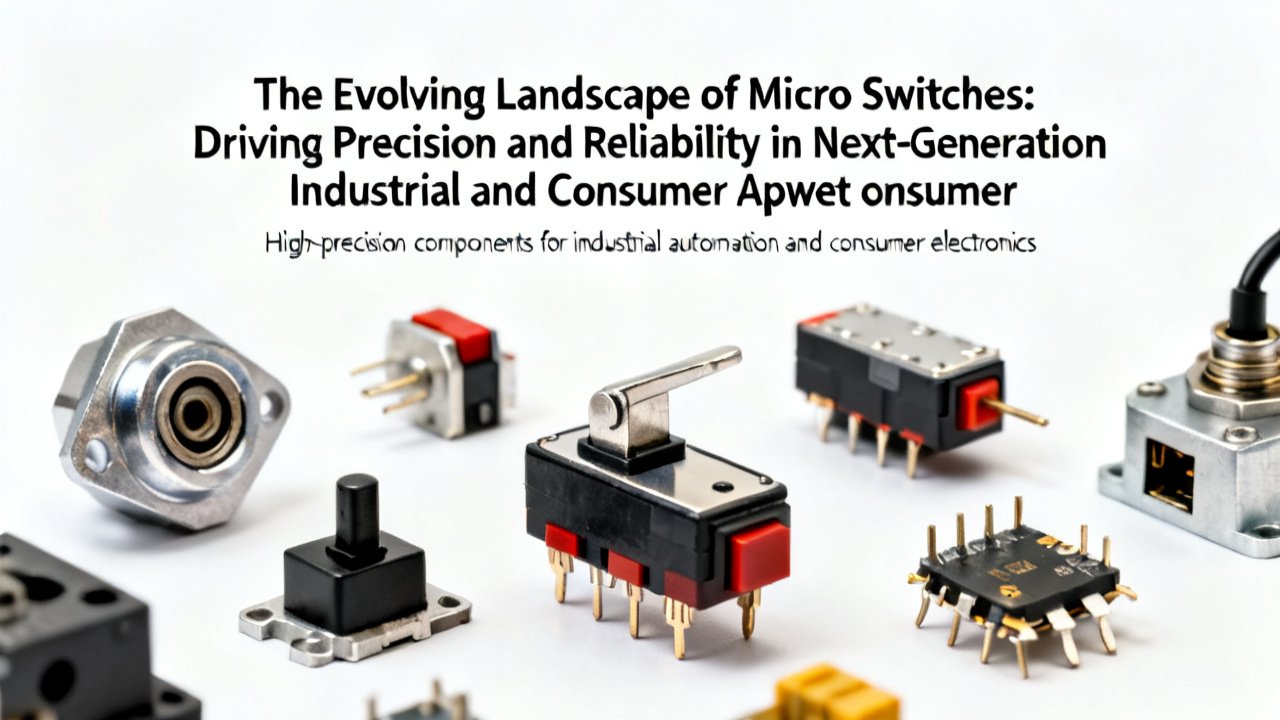
The Evolving Landscape of micro switches: Driving Precision and Reliability in Next-Generation Industrial and Consumer Applications
In the intricate world of electromechanical components, few devices boast the ubiquitous presence and critical functionality of the micro switch. These seemingly small components, often overlooked, are the unsung heroes behind countless operations, from the simplest household appliances to the most complex industrial machinery. As technology advances at an unprecedented pace, the demands placed upon these vital components are escalating. Today, the micro switch is evolving, driven by the need for greater precision, enhanced reliability, miniaturization, and seamless integration into smart systems. Understanding these trends is crucial for any discerning engineer, product designer, or purchasing manager in the manufacturing sector.
The Enduring Core: Precision and Repeatability
At its heart, a micro switch is a snap-action electrical switch known for its rapid actuation, high repeatability, and compact size. Its distinctive snap-action mechanism ensures a quick, decisive change in contact state, minimizing arcing and extending operational life. This inherent precision makes it indispensable for applications requiring accurate position sensing, interlocking, or end-of-travel detection. From automotive systems to medical devices, and from aerospace controls to consumer electronics, the fundamental principle of the micro switch remains critical, providing reliable binary feedback that initiates or interrupts a circuit with unparalleled consistency.
Trend 1: Miniaturization for Compact Designs
The relentless drive towards smaller, more compact devices across all industries has placed significant pressure on component manufacturers. In the realm of switches, this translates to a demand for ever-smaller footprints without compromising performance or durability. Modern micro switches are engineered to fit into incredibly tight spaces, enabling sleeker product designs and higher component density. For instance, products like the MQS-9A Mini Micro Switch exemplify this trend, offering robust functionality in a significantly reduced package. This miniaturization is pivotal for the development of wearable technology, portable medical diagnostic equipment, compact automation modules, and next-generation consumer gadgets where space is a premium.
Trend 2: Enhanced Durability for Harsh Environments
Beyond size, the operating environments for electromechanical components are becoming increasingly challenging. Industries such as automotive, outdoor power equipment, heavy machinery, and marine applications demand switches that can withstand extreme temperatures, dust, vibration, and moisture. This has led to significant advancements in the development of the waterproof micro switch. Utilizing advanced sealing technologies, specialized housing materials, and robust internal mechanisms, these switches achieve high Ingress Protection (IP) ratings, often IP67 or higher. A truly waterproof micro switch ensures reliable operation even when submerged or exposed to jets of water, particulate matter, and corrosive agents, drastically extending the lifespan and reliability of equipment operating in harsh conditions.
Trend 3: Precision and Repeatability in Automation and Robotics
The rise of Industry 4.0 and advanced robotics hinges on components that deliver unwavering accuracy and repeatability. Micro switches, particularly in their role as limit switch devices, are fundamental to these automated systems. They provide precise positional feedback, ensuring that robotic arms stop at exact points, conveyor belts index correctly, and safety gates are properly closed. The snap-action mechanism guarantees that the switch state changes definitively, preventing ambiguous signals that could lead to errors or system failures. In high-speed manufacturing lines, the reliability and longevity of these switches are paramount, directly impacting throughput, safety, and overall operational efficiency.
Trend 4: Integration into Smart Systems and IoT
The Internet of Things (IoT) is transforming how we interact with our environment, connecting physical devices to digital networks. Micro switches serve as crucial physical-to-digital interfaces within this ecosystem. Whether it’s detecting the closure of a smart appliance door, the position of a security sensor, or the activation of a smart home device, micro switches provide reliable binary input to IoT controllers. Their low power consumption and robust design make them ideal for battery-powered smart devices, contributing to longer operational life and dependable data acquisition. As IoT continues to expand into industrial, commercial, and consumer applications, the role of the micro switch as a fundamental sensing element will only grow in importance.
The Role of the micro switch manufacturer
Choosing the right micro switch manufacturer is more critical than ever. Leading manufacturers, like TONELUCK micro switch, are not merely suppliers of components; they are partners in innovation. They invest heavily in research and development, materials science, and advanced manufacturing techniques to meet the evolving demands of the market. This includes rigorous testing protocols to ensure compliance with international standards, offering custom design solutions for specific application needs, and providing comprehensive technical support. A reputable manufacturer offers a broad portfolio of switches, from miniature to heavy-duty, standard to waterproof, ensuring that engineers have access to the precise component required for their unique designs, backed by quality assurance and consistent supply.
Looking Ahead
The future of micro switches promises even greater innovation. We can anticipate further advancements in material science for enhanced durability and performance in extreme environments, even smaller form factors for next-generation portable and implanted devices, and smarter integration capabilities that allow for more sophisticated self-diagnostic features. As industries continue to embrace automation, miniaturization, and connectivity, the micro switch will undoubtedly remain a cornerstone component, continuously adapting to power the innovations of tomorrow.
Conclusion
From ensuring the safety of industrial machinery to enabling the seamless operation of everyday smart devices, the micro switch is an indispensable component in today’s technological landscape. Its evolution, driven by demands for precision, durability, and miniaturization, reflects the broader trends in modern engineering. By understanding these advancements and partnering with an innovative micro switch manufacturer, companies can ensure their products are equipped with reliable, high-performance components, ready to meet the challenges of next-generation applications.
