
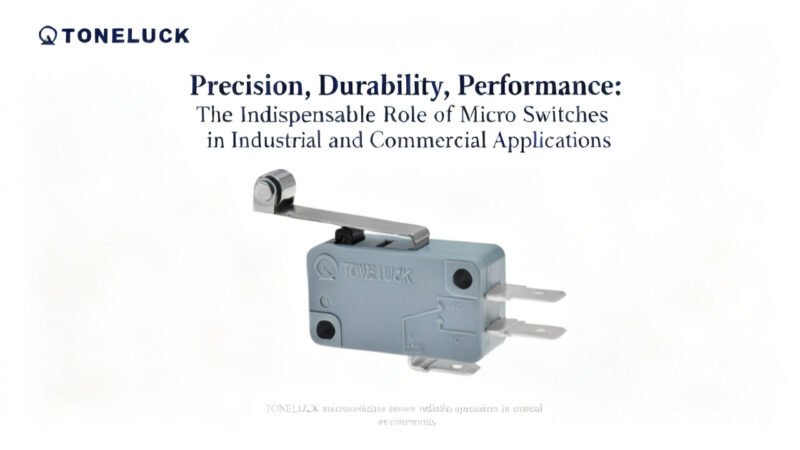
In the intricate world of industrial automation, consumer electronics, and specialized equipment, the reliability of even the smallest components can dictate the success or failure of an entire system. Among these critical elements, the micro switch stands out as a fundamental yet often underestimated hero. These compact, high-precision devices are the silent workhorses behind countless operations, providing crucial feedback and control in diverse environments. Understanding their function, types, and selection criteria is paramount for engineers and procurement professionals aiming to build robust and efficient systems.
At its core, a micro switch, also known as a miniature snap-action switch, is an electromechanical device designed to open or close an electrical circuit with a rapid, decisive action, regardless of the speed at which the actuator is pressed. This ‘snap-action’ mechanism is key to its reliability, preventing slow make-or-break contacts that can lead to arcing, premature wear, and signal inconsistencies. Typically, a micro switch consists of a spring-loaded lever or plunger that, when actuated, quickly moves an internal contact from one position to another. This rapid transition ensures a clean electrical signal and extends the operational life of the switch by minimizing contact bounce and electrical erosion.
Key Advantages and Operational Principles
The widespread adoption of micro switches across industries is largely due to their unique combination of advantages:
- High Precision and Repeatability: The snap-action mechanism ensures a consistent actuation point, making them ideal for applications requiring precise position sensing or timing.
- Long Mechanical and Electrical Life: Designed for millions of cycles, their robust construction and clean switching action contribute to exceptional durability.
- Compact Size: Their small footprint allows for integration into space-constrained designs, from handheld devices to complex machinery.
- Versatility: Available in a vast array of configurations, including various operating forces, actuator types (pin plunger, lever, roller lever), and terminal options.
- Reliable Contact: The rapid switching minimizes contact resistance and ensures a dependable electrical connection.
Exploring Different Types of micro switches
The market offers a specialized range of micro switches, each tailored to specific environmental and application demands:
Standard Micro Switches
These are the general-purpose workhorses, found in everything from household appliances to industrial control panels. They offer a balance of size, durability, and electrical ratings, making them suitable for a broad spectrum of applications where basic on/off switching or position detection is required.
Mini Micro Switches
When space is at an absolute premium, mini micro switches become indispensable. Products like the MQS-9A Mini Micro Switch exemplify this category, offering the same reliable snap-action performance in an ultra-compact package. These are frequently used in miniaturized electronics, automotive components, and portable devices where every millimeter counts, without compromising on functionality or durability.
Waterproof Micro Switches
For applications exposed to moisture, dust, or harsh chemicals, waterproof micro switches are essential. These switches feature robust sealing mechanisms, often achieving high IP (Ingress Protection) ratings (e.g., IP67), which indicate complete protection against dust ingress and the effects of temporary immersion in water. They are critical in outdoor equipment, marine applications, industrial wash-down areas, and automotive under-hood systems, ensuring reliable operation even in challenging environmental conditions.
Limit Switches
While often considered a distinct category, limit switches are fundamentally robust electromechanical switches that perform a similar function to micro switches but are typically designed for more heavy-duty industrial environments. They are used to detect the presence or absence of an object, or to monitor the limits of travel for moving parts in machinery. Limit switches often feature larger, more durable housings and a wider range of actuator styles, including roller levers, plungers, and rotary heads, to withstand the rigors of industrial automation, conveyer systems, and heavy equipment.
Applications Across Industries
The versatility of micro switches means they are integral to a vast array of sectors:
- Industrial Automation: Essential for safety interlocks on machinery, position sensing in robotics, material handling, and control panels.
- Automotive: Used in door locks, seat belt detection, gear shift mechanisms, power windows, and engine management systems. Waterproof variants are crucial for exterior and under-hood applications.
- Home Appliances: Found in washing machines (door locks, water level detection), microwave ovens (door interlocks), refrigerators (ice makers), and HVAC systems.
- Medical Devices: Critical for precision control and safety in diagnostic equipment, patient beds, and surgical tools.
- Security Systems: Employed in door and window sensors, alarm systems, and access control devices.
Choosing the Right Micro Switch for Your Application
Selecting the optimal micro switch requires careful consideration of several factors:
- Electrical Ratings: Match the switch’s voltage and current capabilities to your circuit’s requirements. Consider both AC and DC loads, and ensure the switch can handle inrush currents if applicable.
- Operating Force: The force required to actuate the switch. This is crucial for user experience in manual applications and for reliable detection in automated systems.
- Actuator Type: Pin plunger, lever, roller lever, push button – choose based on the physical interface with the object being detected.
- Environmental Conditions: Temperature range, humidity, and the presence of dust, water, or corrosive agents will dictate the need for sealed or waterproof micro switch variants.
- Life Expectancy: Both mechanical (number of operations without electrical load) and electrical (number of operations at rated load) life cycles are important for long-term reliability.
- Mounting Style: Panel mount, PCB mount, or chassis mount options must align with your product’s design.
- Certifications: Ensure compliance with relevant industry standards (e.g., UL, CE, RoHS) for safety and market access.
The Importance of a Reliable micro switch manufacturer
Partnering with an experienced and reputable micro switch manufacturer is crucial for ensuring the quality, consistency, and long-term performance of your products. A leading manufacturer invests in rigorous testing, advanced production processes, and continuous innovation to meet the evolving demands of various industries. They offer comprehensive technical support, customization options, and a deep understanding of application-specific challenges, providing not just components, but solutions that enhance the reliability and efficiency of your designs.
Conclusion
Micro switches, in their various forms—from standard designs to specialized waterproof micro switch models, and from compact mini micro switches like the MQS-9A to robust limit switch variants—are indispensable components that underpin the functionality and safety of modern technology. Their precision, durability, and adaptability make them a foundational element in everything from consumer gadgets to heavy industrial machinery. By carefully selecting the right type and partnering with a trusted micro switch manufacturer, businesses can ensure the longevity, efficiency, and superior performance of their critical systems, driving innovation and reliability in an ever-demanding technological landscape.
