
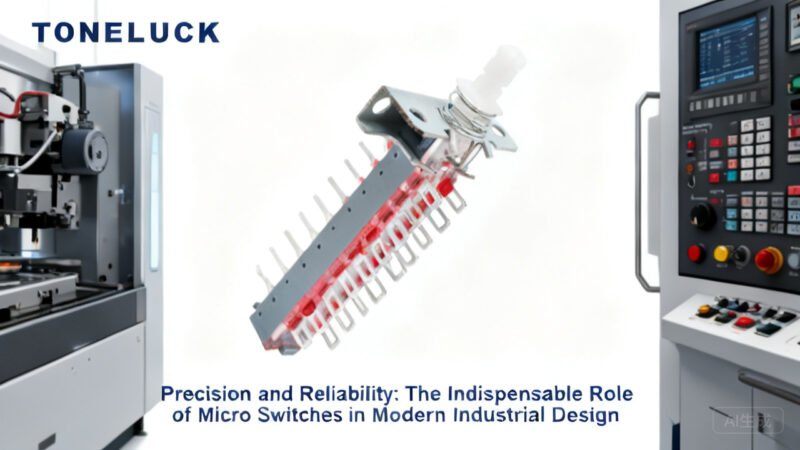
In the intricate landscape of modern industrial design and electronic systems, certain components, though small, play an outsized role in ensuring precision, safety, and operational efficiency. Among these, the micro switch stands as a foundational element, critical to the functionality of countless devices and machines across virtually every sector. From the simple click of a button to complex automated sequences, these compact, high-precision devices are the silent workhorses enabling a world of automated and user-interactive experiences.
At its core, a micro switch, often referred to as a miniature snap-action switch, is an electrical switch actuated by very little physical force, utilizing a tipping-point mechanism to achieve rapid and decisive contact closure or opening. This “snap-action” ensures a quick, clean break or make, minimizing arcing and extending the switch’s operational life. Their inherent reliability, repeatability, and compact size make them indispensable for applications demanding precise position detection and robust electrical control.
Diverse Applications Across Industries
The ubiquity of micro switches is a testament to their versatility. They are fundamental in:
- Industrial Automation: For position sensing, safety interlocks, and control panel feedback in robotics, conveyors, and machinery.
- Automotive Sector: In door latches, seat belt indicators, gear shift mechanisms, and engine management systems.
- Consumer Electronics: From home appliances like washing machines and microwaves to gaming controllers and vending machines.
- Medical Devices: Ensuring precise control and safety in diagnostic equipment, patient beds, and surgical tools.
- HVAC Systems: Detecting airflow, water levels, and damper positions.
Key Types of micro switches and Their Unique Advantages
Standard Micro Switches
These are the workhorses, offering a balance of size, electrical rating, and mechanical life. They are suitable for a vast array of general-purpose applications where reliability and cost-effectiveness are paramount.
Mini Micro Switches
As devices become increasingly compact, the demand for smaller components grows. Mini micro switches are engineered to fit into tight spaces without compromising performance. A prime example is the MQS-9A Mini Micro Switch, known for its ultra-compact design, high reliability, and suitability for applications where space is at an absolute premium, such as compact appliances, portable devices, and intricate control systems. Their small footprint allows for greater design flexibility and miniaturization of end products.
Limit Switches: The Sentinels of Position
While often categorized broadly with micro switches due to their snap-action mechanism, limit switch devices are typically more robust and designed for industrial environments to detect the presence or absence of an object, or to monitor the travel limits of moving machinery. They are crucial for safety interlocking, sequential control, and machine automation, providing critical feedback on the physical position of components within a system. Their rugged construction often includes sealed enclosures to protect against dust, dirt, and moisture.
Waterproof Micro Switches: Defying the Elements
In applications exposed to moisture, dust, or harsh environmental conditions, standard switches simply won’t suffice. This is where the waterproof micro switch becomes indispensable. Engineered with advanced sealing technologies, such as epoxy potting, O-rings, and specialized housing materials, these switches achieve high IP (Ingress Protection) ratings, safeguarding internal components from liquids and particulates. They are essential in outdoor equipment, marine applications, automotive under-hood systems, and industrial machinery where washdowns or high humidity are common, ensuring consistent performance and preventing costly failures due to environmental ingress.
The Crucial Role of a Reputable micro switch manufacturer
The performance and longevity of any system are only as good as its weakest component. This underscores the paramount importance of selecting a reliable micro switch manufacturer. A reputable manufacturer, such as TONELUCK micro switch, invests heavily in R&D, stringent quality control, and precision manufacturing processes. This commitment translates into products that offer:
- Consistent Performance: Ensuring every switch meets specified electrical and mechanical characteristics.
- Extended Durability: High mechanical and electrical life cycles, reducing maintenance and replacement costs.
- Technical Support: Expertise to assist with selection, integration, and custom solutions.
- Compliance: Adherence to international standards and certifications (e.g., UL, CE, RoHS), vital for global market access.
Partnering with a trusted manufacturer guarantees not only a superior product but also peace of mind, knowing that critical components will perform as expected in demanding applications.
Key Criteria for Selecting the Right Micro Switch
Choosing the optimal micro switch involves a careful evaluation of several technical specifications:
- Electrical Rating: Current and voltage requirements (AC/DC) must match the application’s load.
- Operating Force: The force required to actuate the switch, critical for user interface design and mechanical linkages.
- Mechanical Life: The number of operations the switch can withstand before mechanical failure, directly impacting product longevity.
- Electrical Life: The number of operations before electrical contact degradation, especially under load.
- Operating Temperature Range: Ensuring the switch performs reliably within the environmental temperature extremes of the application.
- Actuator Type: Pin plungers, roller levers, hinge levers, and simulated rollers offer different actuation characteristics and mounting options.
- Sealing/IP Rating: For harsh environments, specifying the appropriate Ingress Protection (IP) rating is crucial for preventing dust and water ingress.
- Contact Material: Different materials (e.g., silver, gold plating) are chosen based on current levels and desired contact reliability.
- Mounting Options: Panel mount, PCB mount, or chassis mount influence design and assembly.
Innovation and the Future of Micro Switches
The evolution of micro switches continues, driven by demands for greater efficiency, smaller footprints, and enhanced integration. Innovations include further miniaturization, improved sealing technologies, and the incorporation of smarter features for diagnostics and predictive maintenance. As industries push the boundaries of automation and connectivity, the role of these fundamental switches will only become more sophisticated, adapting to new challenges and enabling future technological advancements.
Conclusion
Micro switches, in their various forms—from standard designs to specialized waterproof micro switch and robust limit switch variants—are indispensable components in the vast ecosystem of modern technology. Their precise snap-action, durability, and adaptability make them critical for ensuring the reliable operation of everything from consumer gadgets to heavy industrial machinery. For engineers and designers, a deep understanding of their capabilities and careful selection from a reputable micro switch manufacturer like TONELUCK (or similar quality provider) are paramount to achieving optimal performance, safety, and longevity in their designs. Investing in high-quality micro switches is not just a component choice; it’s an investment in the reliability and success of the entire system.
