
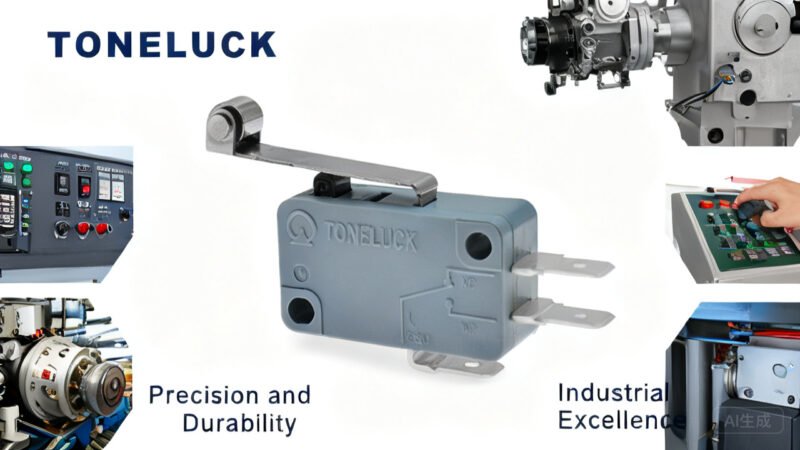
In the intricate tapestry of modern industrial and consumer electronics, countless components work in concert to ensure seamless operation. Among these, the micro switch stands as a silent, yet indispensable, guardian of precision and reliability. Often overlooked due to its diminutive size, this snap-action marvel is the linchpin in everything from complex industrial machinery and automotive systems to everyday appliances and medical devices. For B2B stakeholders – engineers, product designers, and procurement managers – understanding the nuances of micro switches, including their diverse types and applications, is paramount to building robust, efficient, and safe systems.
Understanding the Core: What is a Micro Switch?
At its heart, a micro switch, also known as a miniature snap-action switch, is an electrical switch that is actuated by very little physical force, utilizing a snap-action mechanism. This mechanism ensures that the contacts switch rapidly and decisively, regardless of the speed of the actuator. This rapid switching minimizes arcing, reduces contact wear, and provides a highly repeatable operating point. Typically, a micro switch features an actuator (plunger, lever, roller), a set of contacts (normally open, normally closed, or changeover), and a robust housing. Their reliability stems from this simple yet ingenious design, allowing them to perform millions of cycles with consistent precision.
The Pillars of Performance: Key Benefits of Advanced micro switches
The widespread adoption of micro switches across diverse sectors is driven by a set of critical advantages:
- Unparalleled Precision and Repeatability: The snap-action mechanism ensures that the switching point is consistently accurate, making them ideal for applications requiring exact position sensing or timing. This repeatability is crucial for automation and quality control.
- Exceptional Durability and Longevity: Designed for demanding environments, quality micro switches boast mechanical lifespans often exceeding millions of cycles. Robust construction materials and meticulous manufacturing processes contribute to their long-term reliability, reducing maintenance costs and downtime.
- Compact Size and Versatility: Their small footprint allows for integration into miniaturized equipment where space is at a premium. Furthermore, the vast array of actuator styles, terminal types, and electrical ratings means there’s a micro switch solution for nearly any application challenge.
- Enhanced Safety Features: Many micro switches are integral to safety interlock systems in machinery, ensuring that equipment only operates under safe conditions, thus protecting personnel and preventing damage.
- High Current Capacity: Despite their small size, many micro switches are capable of switching significant electrical loads, making them suitable for a wide range of power control applications.
A Spectrum of Solutions: Types and Applications
The world of micro switches is diverse, with specialized variants designed to meet specific environmental and operational challenges:
Limit Switches: The Industrial Workhorses
Limit switches are essentially heavy-duty micro switches, specifically engineered for industrial environments where ruggedness and reliability are paramount. They are primarily used for position detection, motion control, and safety interlocks in machinery like conveyors, machine tools, and robotics. Characterized by their robust housings (often metal), various actuator types (roller plungers, rotary levers, fork levers), and high current ratings, limit switches can withstand harsh conditions involving dust, moisture, vibration, and extreme temperatures. Their ability to precisely detect the presence or absence of an object makes them indispensable for automated processes, ensuring machines operate within defined parameters.
Waterproof Micro Switches: Defying the Elements
In applications exposed to liquids, humidity, or corrosive agents, standard switches simply won’t suffice. This is where waterproof micro switches become critical. Designed with advanced sealing technologies, such as epoxy potting, O-rings, and specialized housing materials, these switches achieve high Ingress Protection (IP) ratings, typically IP67 or IP68. This ensures protection against dust ingress and immersion in water, making them ideal for outdoor equipment, marine applications, automotive systems (e.g., door locks, hood latches), food processing machinery, and medical devices requiring frequent sterilization. Their ability to maintain electrical integrity in challenging environments is crucial for operational safety and longevity.
Mini and Subminiature Micro Switches: Precision in Miniaturization
The relentless drive towards smaller, more portable devices has spurred the development of mini and subminiature micro switches. Products like the MQS-9A Mini Micro Switch exemplify this trend, offering the snap-action reliability of their larger counterparts in incredibly compact packages. These tiny switches are vital for consumer electronics (smartphones, cameras), small appliances, medical diagnostic equipment, and automotive interior components where space is severely limited. Despite their size, they maintain high precision and durability, proving that robust performance doesn’t have to come in a large form factor. Their design often incorporates specialized contact materials and mechanisms to ensure consistent performance over millions of cycles even in miniature form.
Strategic Selection: Choosing the Right Micro Switch
Selecting the optimal micro switch for an application requires careful consideration of several factors:
- Environmental Conditions: Assess operating temperature range, presence of dust, moisture (requiring waterproof options), vibration, and corrosive substances.
- Electrical Specifications: Determine required voltage, current rating (AC/DC), type of load (resistive, inductive, motor), and contact configuration (NO, NC, CO).
- Mechanical Requirements: Consider actuation force, operating position, differential travel, overtravel, and the expected mechanical and electrical life cycles.
- Form Factor and Mounting: Evaluate the available space, desired mounting method (panel mount, PCB mount, screw mount), and actuator style (pin plunger, lever, roller lever) for compatibility with the application’s design.
- Certifications and Compliance: Ensure the switch meets necessary industry standards and regulatory approvals (e.g., UL, CE, RoHS, REACH) for global market access.
The Manufacturer’s Edge: Why Expertise Matters
Partnering with a reputable micro switch manufacturer is as crucial as the selection process itself. A leading manufacturer like TONELUCK (as an example of a dedicated micro switch manufacturer) brings to the table not just products, but a wealth of expertise in design, engineering, and quality assurance. They offer:
- Robust R&D Capabilities: Continuously innovating to meet evolving industry demands, from enhanced sealing technologies to new miniaturization techniques.
- Rigorous Quality Control: Adhering to stringent testing protocols to ensure every switch meets performance specifications and reliability standards.
- Customization Options: The ability to tailor switches for unique application requirements, including specific actuating forces, terminal types, or housing materials.
- Technical Support: Providing expert guidance throughout the design and integration process, ensuring optimal component selection and performance.
Choosing a manufacturer with a proven track record ensures not only high-quality components but also reliable supply chains and consistent product performance.
Looking Ahead: Innovations in Micro Switch Technology
The future of micro switches is marked by continued innovation. We can anticipate further miniaturization, integration with smart technologies for IoT applications, enhanced material science for even greater durability and environmental resistance, and modular designs that simplify installation and maintenance. As industries demand higher levels of automation and connectivity, the role of these precision components will only grow in significance.
Conclusion
Micro switches are far more than simple on/off devices; they are critical enablers of precision, safety, and efficiency across countless applications. From the rugged reliability of a limit switch controlling heavy machinery to the delicate precision of a waterproof micro switch in a medical device, their impact is profound. For B2B professionals, a deep understanding of these components and a strategic partnership with an experienced micro switch manufacturer are essential steps towards designing and deploying systems that are not only high-performing but also built to last in an increasingly demanding technological landscape.
