
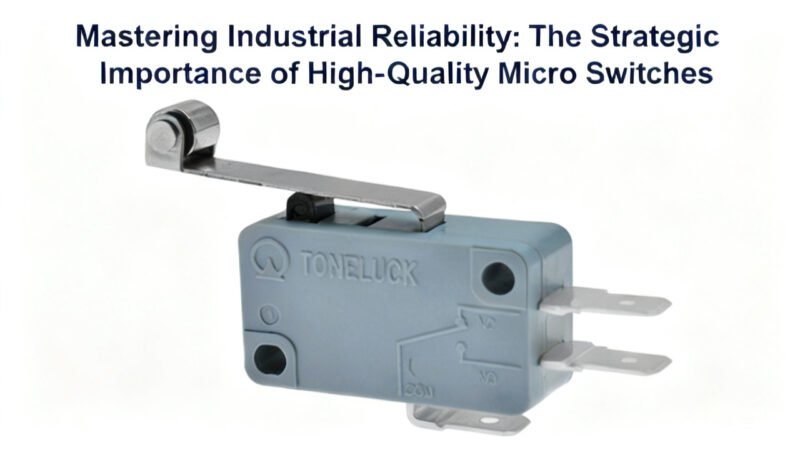
In the intricate tapestry of modern industrial and commercial systems, countless unseen components work tirelessly to ensure precision, safety, and efficiency. Among these unsung heroes, the micro switch stands out as a fundamental yet critically important device. Despite its often compact size, a micro switch is a cornerstone of control, enabling everything from the precise movement of robotic arms to the safety interlocks in heavy machinery. For B2B stakeholders, understanding the nuances of these components and selecting the right micro switch manufacturer is paramount to achieving long-term operational excellence and minimizing costly downtime.
At its core, a micro switch is a snap-action electrical switch known for its rapid and decisive change of contact state. It typically features a very small contact gap and a mechanism that produces a quick, forceful action, regardless of the speed at which the actuator is pressed. This ‘snap-action’ ensures consistent, repeatable operation with minimal contact bounce, making it ideal for applications requiring high precision and reliability. When a small amount of force is applied to the actuator, the internal mechanism quickly shifts the contacts from one position to another, either opening (normally open) or closing (normally closed) a circuit.
Key Attributes Driving Industrial Success
The strategic importance of micro switches stems from several key characteristics:
-
Precision and Repeatability: The snap-action mechanism guarantees an extremely consistent operating point, crucial for precise timing and position sensing in automated systems. This high repeatability minimizes errors and enhances system accuracy.
-
Durability and Longevity: Designed for millions of mechanical and electrical cycles, high-quality micro switches offer exceptional longevity, significantly reducing maintenance frequency and replacement costs. This robustness is vital in demanding industrial environments.
-
Compact Design: Their small footprint allows for integration into tight spaces where larger switches would be impractical, enabling miniaturization in various products and systems.
-
Versatility: Micro switches come in a vast array of actuator styles (pin plunger, lever, roller lever, simulated roller lever, etc.) and contact configurations (SPDT, SPST-NO, SPST-NC), making them adaptable to diverse application requirements.
-
Environmental Resilience: Many micro switches are engineered to perform reliably in harsh conditions. For instance, a waterproof micro switch, often boasting IP67 or higher ratings, is indispensable in environments exposed to dust, moisture, oils, or even temporary submersion, safeguarding critical operations in outdoor equipment, marine applications, or washdown areas.
Beyond the Standard: Specialized Micro Switches
While the basic micro switch is highly versatile, specialized variants cater to specific industrial needs:
-
Limit Switches: Often considered a robust, industrial-grade evolution of the micro switch, a limit switch is typically housed in a durable casing (metal or heavy-duty plastic) to withstand severe mechanical impact, vibration, and environmental factors. They are primarily used for detecting the presence, absence, or position of an object in industrial machinery, conveyor systems, and safety gates. Their heavy-duty construction makes them ideal for demanding applications where precise endpoint detection is critical for automation and safety.
-
Mini Micro Switches: For applications where space is at an absolute premium, such as compact electronic devices, automotive interiors, or intricate medical instruments, mini micro switches are indispensable. These ultra-small components, exemplified by models like the MQS-9A Mini Micro Switch, deliver the same snap-action reliability in a significantly reduced form factor, enabling advanced designs without compromising performance.
Applications Across the Industrial Spectrum
The reach of micro switches extends across virtually every industry:
-
Industrial Automation: Position sensing in robotics, CNC machines, and assembly lines; safety interlocks on machinery doors and guards.
-
Automotive: Door latches, gearshift position detection, seat belt reminders, power window controls, and engine management systems.
-
Home Appliances: Microwave oven door interlocks, washing machine lid switches, refrigerator ice makers, and thermostat controls.
-
Medical Devices: Infusion pumps, diagnostic equipment, and patient monitoring systems where precise control and safety are paramount.
-
HVAC Systems: Airflow detection, damper position sensing, and fan controls.
-
Security Systems: Tamper detection in alarms, access control systems, and surveillance equipment.
Strategic Selection: Partnering with a Premier micro switch manufacturer
For B2B buyers, the selection of a micro switch is not merely a component purchase; it’s a strategic decision impacting the reliability, safety, and longevity of entire systems. Key considerations include:
-
Quality and Reliability: Prioritize manufacturers known for rigorous quality control, robust materials, and extensive testing. A reputable micro switch manufacturer like TONELUCK, for example, invests heavily in R&D and precision manufacturing to ensure consistent performance and extended operational life.
-
Technical Specifications: Carefully match electrical ratings (voltage, current), operating force, pre-travel, over-travel, and differential travel to your specific application requirements. Understanding these parameters prevents premature failure and ensures optimal system performance.
-
Environmental Suitability: Assess the operating environment for temperature extremes, dust, moisture, and vibration. Opt for specialized options like a waterproof micro switch (with appropriate IP ratings) when conditions demand superior ingress protection.
-
Certifications: Verify that switches meet relevant international standards such as UL, cUL, ENEC, CE, and RoHS compliance. These certifications are crucial for market entry, safety, and environmental responsibility.
-
Customization and Support: A strong manufacturing partner should offer not only a broad standard product line but also the capability for custom solutions and robust technical support to address unique application challenges.
Conclusion
Micro switches, in all their forms – from standard to waterproof micro switch, and from the compact MQS-9A Mini Micro Switch to the robust limit switch – are indispensable components driving the functionality and reliability of countless industrial and commercial systems. Their small size belies their immense impact on precision, safety, and operational efficiency. By carefully evaluating technical requirements and partnering with a reputable micro switch manufacturer, businesses can ensure the longevity and peak performance of their products and systems, securing a competitive edge in today’s demanding markets. Investing in high-quality micro switches is not just a cost; it’s an investment in uninterrupted operation and enduring reliability.
