
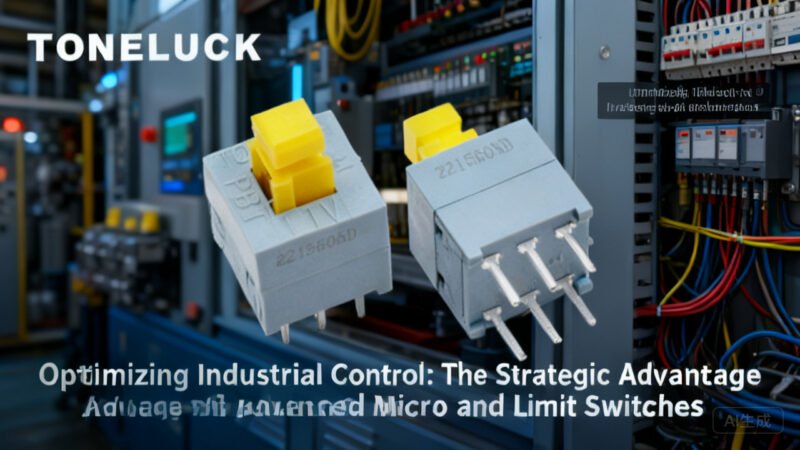
In the intricate world of industrial automation and control systems, seemingly small components often play the most critical roles. Among these, micro switches and limit switches stand out as indispensable elements, providing the foundational feedback mechanisms necessary for precise operation, safety, and efficiency. For B2B enterprises, understanding the nuances of these components and selecting the right micro switch manufacturer is paramount to achieving robust, reliable, and high-performing solutions.
A micro switch, often referred to as a miniature snap-action switch, is an electrical switch actuated by very little physical force, through the use of a tipping point mechanism, sometimes called an “over-center” mechanism. This design ensures a rapid and definitive change in contact state, regardless of the speed of actuation. This “snap-action” property is crucial for preventing arcing and extending the switch’s electrical life, making micro switches highly reliable for applications requiring precise, repeatable operations.
Their compact size and high durability make them ubiquitous across a vast array of industries, from consumer electronics and home appliances to complex industrial machinery. They serve as essential feedback sensors, detecting position, presence, or limits of motion. Whether it’s ensuring a washing machine door is closed, detecting the home position of a robotic arm, or confirming the successful operation of a valve, the reliability of a micro switch directly impacts system performance and user safety.
Limit Switches: The Guardians of Motion
While sharing similarities with micro switches in their fundamental function of detecting presence or position, limit switches are generally larger, more robust, and designed for heavy-duty industrial environments. They are electromechanical devices that detect the presence or absence of an object when it reaches a predetermined limit. Often housed in rugged enclosures, limit switches are built to withstand harsh conditions, including dust, moisture, and extreme temperatures, making them ideal for applications on production lines, material handling equipment, and heavy machinery.
Limit switches typically feature various actuator types—plunger, roller lever, fork lever, and rotary—to accommodate different mechanical interactions. They are critical for ensuring the safe and efficient operation of machinery by preventing over-travel, initiating sequential operations, or providing feedback for automated processes. The ability of a limit switch to reliably signal the end of a mechanical movement is fundamental to preventing damage, ensuring operator safety, and maintaining the integrity of automated sequences.
Critical Factors in Micro Switch Selection
Choosing the appropriate switch involves a comprehensive evaluation of several technical specifications to ensure optimal performance and longevity:
- Electrical Rating: The maximum voltage and current the switch can safely handle. This is critical for preventing premature failure due to electrical overload.
- Operating Force: The amount of force required to actuate the switch. This directly impacts the sensitivity and responsiveness of the application.
- Mechanical and Electrical Life: The number of cycles the switch can endure before failure. High-quality switches offer millions of cycles, ensuring long-term reliability.
- Environmental Protection: For demanding environments, switches with high Ingress Protection (IP) ratings are essential. A waterproof micro switch, for example, is indispensable in applications exposed to liquids, dust, or humidity, preventing contamination and ensuring uninterrupted operation.
- Actuator Type: The mechanism that translates mechanical force into switch actuation. Options include pin plungers, roller levers, simulated rollers, and more, each suited for different mechanical interfaces.
- Size and Form Factor: From standard industrial sizes to compact options like the MQS-9A Mini Micro Switch, the physical dimensions must fit the application’s spatial constraints.
- Contact Configuration: Normally Open (NO), Normally Closed (NC), or Changeover (SPDT) contacts determine the switch’s electrical behavior.
The Imperative of a Reputable micro switch manufacturer
The performance and longevity of your industrial systems are only as good as the components within them. This makes the selection of a reliable micro switch manufacturer a strategic decision. A leading manufacturer brings more than just products; they offer:
- Unwavering Quality Control: Rigorous testing and adherence to international standards ensure consistent product quality and reliability.
- Innovation and R&D: Continuous investment in research and development leads to advancements in durability, miniaturization, and specialized features, such as enhanced sealing for a waterproof micro switch.
- Customization Capabilities: The ability to tailor switches to unique application requirements, including specific operating forces, terminal types, or housing materials.
- Technical Support and Expertise: Access to engineering support that can guide selection and troubleshoot integration challenges.
- Global Compliance: Products that meet various regional and international safety and environmental regulations (e.g., UL, CE, RoHS).
Manufacturers like TONELUCK micro switch exemplify these qualities, offering a diverse portfolio of high-performance switches designed for precision, durability, and reliability across a multitude of industrial and commercial applications. Their commitment to engineering excellence ensures that critical components, such as the compact yet robust MQS-9A Mini Micro Switch, deliver consistent performance even in the most demanding operational environments.
Advanced Applications and Future Trends
The demand for high-performance switches continues to grow as industries push the boundaries of automation and miniaturization. In the automotive sector, micro switches are integral to safety systems, door latches, and power window controls. Medical devices rely on their precision for accurate fluid delivery and instrument positioning. In smart home devices and consumer electronics, miniature switches enable intuitive user interfaces and compact designs.
The rise of IoT (Internet of Things) and Industry 4.0 further accentuates the need for reliable sensors, where micro and limit switches provide crucial physical layer feedback. The development of more robust, smaller, and environmentally resilient switches, including advanced waterproof micro switch designs, is central to enabling innovation in these rapidly evolving fields. For instance, the MQS-9A Mini Micro Switch is perfect for applications where space is at a premium but reliability cannot be compromised, such as in compact medical instruments or sophisticated consumer gadgets.
Conclusion
Micro switches and limit switches are far more than simple on/off devices; they are the silent workhorses that ensure the precision, safety, and efficiency of countless systems worldwide. Their strategic selection, guided by a thorough understanding of application requirements and the capabilities of a reputable micro switch manufacturer, is crucial for any B2B enterprise aiming for operational excellence and long-term reliability. Investing in high-quality components, like those from TONELUCK, ensures that your systems are built on a foundation of dependable performance, driving innovation and success in an increasingly automated world.
