
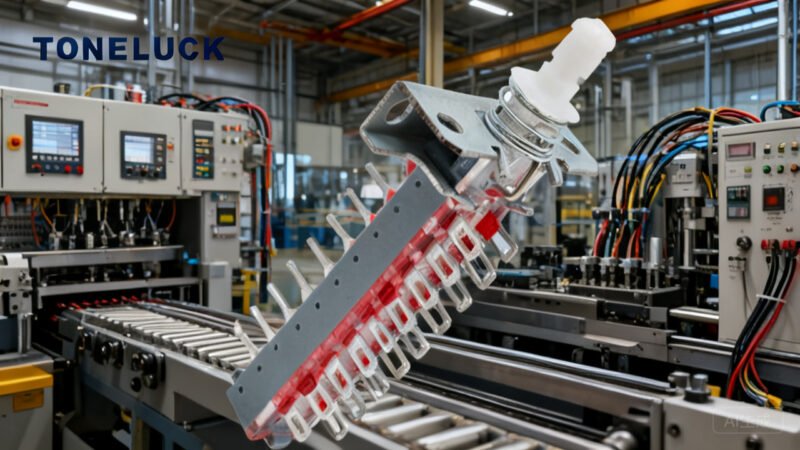
In the vast landscape of industrial automation, precision and reliability are paramount. While often overlooked, the humble micro switch stands as a foundational component, silently orchestrating countless operations across diverse sectors. These compact, sensitive devices are far more than simple on/off mechanisms; they are the critical interface between mechanical motion and electrical control, ensuring the seamless and safe functioning of everything from heavy machinery to consumer electronics.
A micro switch, by definition, is a snap-action switch that makes or breaks an electrical circuit at a specific position of its actuator. Its design prioritizes rapid, repeatable action and high contact pressure, making it incredibly resilient and dependable. For B2B professionals, understanding the nuances and capabilities of various micro switches is key to optimizing operational efficiency, enhancing product reliability, and ensuring safety compliance.
Diverse Applications, Diverse Needs: Exploring Micro Switch Variants
Standard micro switches: The Everyday Workhorse
The standard micro switch is ubiquitous, found in a myriad of applications where a reliable signal is needed from a small mechanical input. From activating safety interlocks on machinery to detecting the closure of a car door, their high repeatability and long mechanical life make them indispensable. They are valued for their consistent performance, even after millions of cycles, which is a testament to robust engineering and material selection.
Limit Switches: Defining Operational Boundaries
A specialized form of micro switch, the limit switch, plays a crucial role in industrial automation. These devices are designed to detect the presence or absence of an object, or to monitor the limits of travel for moving parts. In manufacturing, limit switches are essential for:
- Position Sensing: Accurately determining the exact position of components on an assembly line.
- Safety Interlocks: Preventing machinery from operating if a guard is open or a component is out of place.
- Sequence Control: Initiating the next step in an automated process only when the previous one is complete.
The reliability of a limit switch directly impacts the efficiency and safety of automated systems, making its selection a critical engineering decision.
Waterproof Micro Switches: Conquering Harsh Environments
Not all operational environments are benign. For applications exposed to moisture, dust, oils, or other contaminants, a standard switch simply won’t suffice. This is where the waterproof micro switch becomes indispensable. Engineered with specialized sealing mechanisms, often achieving high IP (Ingress Protection) ratings (e.g., IP67), these switches are designed to withstand challenging conditions without compromising performance or safety.
Common applications for waterproof micro switches include:
- Outdoor equipment and security systems.
- Marine applications and subsea equipment.
- Medical devices requiring sterilization.
- Heavy industrial machinery exposed to washdowns or extreme weather.
- Food and beverage processing equipment.
The robust construction of a waterproof micro switch ensures long-term reliability and prevents costly downtime caused by environmental ingress.
Critical Selection Criteria for B2B Professionals
Choosing the right micro switch involves more than just a quick glance at specifications. B2B decision-makers must consider several key factors to ensure optimal performance and longevity:
- Reliability & Durability: Look for high mechanical and electrical life cycles, indicating superior design and material quality. This translates to reduced maintenance and replacement costs.
- Precision & Repeatability: Consistent actuation points are crucial for precise control and accurate sensing, particularly in automated systems.
- Electrical Ratings: Ensure the switch’s voltage and current ratings match or exceed the application’s requirements, considering both resistive and inductive loads.
- Operating Force & Overtravel: The force required to actuate the switch and the distance the actuator can travel beyond the operating point are vital for proper integration into mechanical designs.
- Environmental Resistance: Beyond waterproofing, consider temperature ranges, vibration resistance, and shock tolerance for the specific operating environment.
- Certifications: Adherence to international standards (UL, cUL, CE, RoHS) signifies compliance with safety and environmental regulations, crucial for global market access.
The Manufacturer’s Edge: Partnering for Performance
The quality of a micro switch is directly linked to the expertise and manufacturing prowess of its producer. Partnering with a reputable micro switch manufacturer is paramount for businesses seeking consistent performance, reliability, and innovative solutions.
Companies like TONELUCK micro switch have built a legacy on precision engineering, rigorous quality control, and a deep understanding of diverse industrial needs. A leading manufacturer brings not only a broad portfolio of standard and specialized switches but also the capability for custom solutions, tailored to unique application demands. Their commitment to research and development ensures that their products remain at the forefront of switch technology, offering enhanced durability, miniaturization, and improved electrical characteristics.
Spotlight: The MQS-9A Mini Micro Switch
Consider the MQS-9A Mini Micro Switch as an example of advanced engineering. This compact yet powerful switch offers exceptional reliability in a miniature footprint, making it ideal for applications where space is at a premium. Despite its small size, the MQS-9A typically boasts a robust contact mechanism and high current capacity, suitable for a wide range of devices from smart home appliances to compact industrial control panels. Its precision snap-action ensures consistent performance, even in demanding, high-cycle environments, embodying the balance of miniaturization and robust functionality that modern industries demand.
Driving Efficiency and Safety with Quality Switches
Investing in high-quality micro switches is not merely a component purchase; it’s an investment in operational continuity, enhanced safety, and overall product integrity. Reliable switches minimize unexpected downtime, reduce the need for frequent maintenance, and contribute significantly to the safety protocols of machinery and systems. As industries continue to evolve towards greater automation and miniaturization, the demand for more precise, durable, and environmentally resilient micro switches will only grow.
Conclusion
From the precise movements of a robotic arm to the secure closure of an aircraft door, micro switches are the unsung heroes enabling the precision and safety of countless systems. For B2B professionals, understanding the various types – including standard, limit, and waterproof micro switches – and the critical selection criteria is essential. By partnering with an experienced micro switch manufacturer like TONELUCK, and leveraging advanced products such as the MQS-9A Mini Micro Switch, businesses can ensure they are equipping their operations with the reliable, high-performance components necessary to thrive in today’s demanding industrial landscape.
