
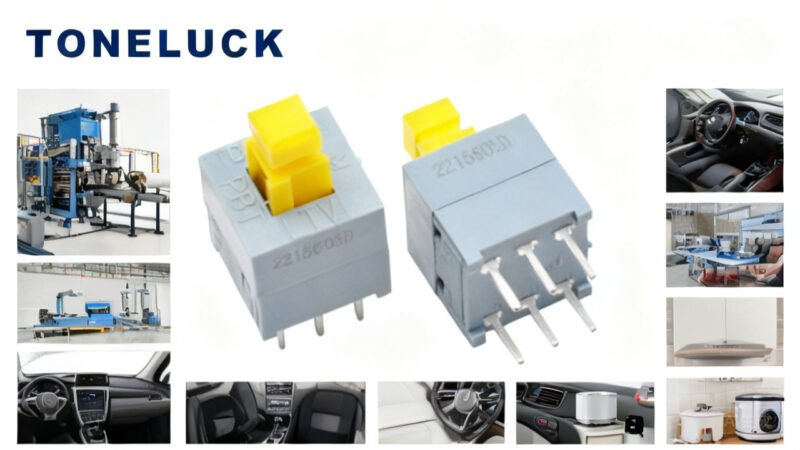
In the intricate world of industrial automation, consumer electronics, and countless other applications, the reliability and precision of fundamental components are paramount. Among these, micro switches and limit switches stand out as unsung heroes, silently orchestrating control, safety, and operational efficiency. For B2B professionals, understanding the nuances of these critical components, from their basic functionality to advanced applications, is key to successful product design and system implementation.
At its core, a micro switch, often referred to as a snap-action switch, is a small, highly sensitive electrical switch activated by a small amount of physical force. Its defining characteristic is the snap-action mechanism, which ensures a rapid, decisive change in contact state, regardless of the speed of the actuator. This rapid action minimizes arcing and extends the electrical life of the switch, making it incredibly reliable for millions of cycles.
Key Characteristics and Benefits:
- High Repeatability: micro switches offer extremely consistent operating positions, crucial for precision applications.
- Rapid Response: The snap-action mechanism provides quick make-and-break action, reducing contact bounce.
- Durability: Designed for millions of operations, contributing to the longevity of equipment.
- Compact Size: Their small footprint allows for integration into tight spaces.
Varieties for Every Need:
The market offers a diverse range of micro switches to meet specific application demands. Standard micro switches are versatile, while MQS-9A Mini Micro Switch types provide space-saving solutions for compact devices. For environments exposed to moisture, dust, or other contaminants, the waterproof micro switch is indispensable. These switches feature robust sealing to achieve various IP (Ingress Protection) ratings, ensuring reliable operation in harsh conditions, from outdoor machinery to medical equipment requiring frequent cleaning.
Limit Switches: The Guardians of Motion
While often incorporating micro switches within their design, limit switch devices serve a broader, distinct role. A limit switch is an electromechanical device that uses an actuator to operate a set of electrical contacts when a moving object physically contacts it. They are primarily used to detect the presence or absence of an object, monitor position, or determine the end-of-travel of a moving part in a machine.
Common Applications of Limit Switches:
- Industrial Machinery: Detecting the position of parts on a conveyor belt, opening/closing safety gates, or controlling the stroke of a hydraulic cylinder.
- Automotive: Door ajar sensors, seatbelt detection, or gear position sensing.
- Safety Interlocks: Preventing machinery operation if guards are open or not properly secured.
The robust construction of limit switches, often encased in durable housings, makes them suitable for demanding industrial environments where reliability under physical stress is critical.
Critical Selection Criteria for B2B Professionals
Choosing the right micro or limit switch is a strategic decision that impacts product performance, safety, and cost. Professionals should consider several key factors:
1. Electrical Ratings:
Understand the voltage, current, and load type (resistive, inductive, lamp) to ensure the switch can safely handle the electrical demands of the circuit. Over-specifying can lead to unnecessary costs, while under-specifying can cause premature failure and safety hazards.
2. Actuation Force and Overtravel:
The force required to operate the switch and the amount of travel beyond the operating point are crucial for precise mechanical integration. Consider the application’s specific requirements for sensitivity and physical robustness.
3. Mechanical and Electrical Life:
Switches are rated for a certain number of mechanical and electrical operations. For high-cycle applications, selecting switches with extended lifespans is vital to minimize maintenance and downtime.
4. Environmental Conditions:
Temperature range, humidity, exposure to dust, water, oil, or corrosive agents dictate the need for specialized switches. This is where waterproof micro switch options with appropriate IP ratings become essential. For extreme temperatures, switches designed with specific materials and tolerances are required.
5. Actuator Type and Mounting:
Actuators come in various forms (pin plunger, roller lever, hinge lever, panel mount plunger, etc.), each suited for different mechanical interactions. Mounting options (panel mount, PCB mount, screw mount) also need to align with the product’s design.
6. Contact Material:
The material of the contacts (e.g., silver, gold-plated) affects performance, especially in low-current or high-reliability applications where resistance to oxidation is critical.
The Importance of a Reputable micro switch manufacturer
The quality of a micro or limit switch directly correlates with the reliability and lifespan of the end product. Partnering with a reputable micro switch manufacturer is not just about procurement; it’s about securing a reliable supply chain, access to technical expertise, and ensuring compliance with industry standards. Manufacturers like TONELUCK, for example, are known for their rigorous testing, consistent quality, and ability to provide a wide range of standard and customized solutions, including high-performance miniature and waterproof options.
A good manufacturer offers:
- Quality Assurance: Adherence to international standards (ISO, UL, cUL, ENEC, CQC).
- Innovation: Continuously developing new solutions, such as smaller form factors or enhanced sealing.
- Technical Support: Expertise to assist with selection, integration, and troubleshooting.
- Customization: Ability to tailor switches to unique application requirements.
Conclusion
Micro switches and limit switches, though often small and out of sight, are foundational components in modern engineering. Their precision, reliability, and versatility enable countless automated processes and ensure the safe operation of equipment across diverse industries. For B2B professionals, a thorough understanding of their types, selection criteria, and the importance of partnering with a quality micro switch manufacturer is indispensable for designing robust, efficient, and long-lasting systems. Investing in the right switch is an investment in the overall performance and reputation of your product.
