
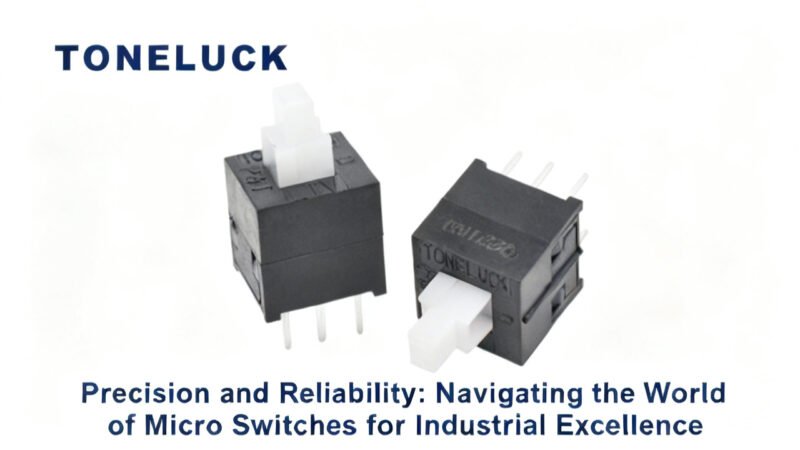
In the intricate landscape of modern industrial and commercial applications, the unassuming micro switch plays a pivotal, often unnoticed, role. These small, yet powerful, electromechanical devices are critical for ensuring the precise control, safety, and reliability of countless systems, from consumer electronics to heavy machinery. For engineers, product designers, and procurement professionals, understanding the nuances of micro switch technology and partnering with a reputable micro switch manufacturer is paramount to achieving operational excellence and product longevity.
What is a Micro Switch?
At its core, a micro switch, also known as a miniature snap-action switch, is an electrical switch actuated by very little physical force, utilizing a tipping-point mechanism. This mechanism produces a rapid, repeatable change in the state of electrical contacts, regardless of the speed of actuation. This “snap-action” ensures a clean break and make, minimizing arcing and extending the switch’s operational life. Typically, micro switches feature three terminals: common (C), normally open (NO), and normally closed (NC), allowing for versatile circuit control. Their compact size, high reliability, and precise operation make them indispensable components in a vast array of devices requiring accurate position detection or end-of-travel sensing.
Key Types and Their Industrial Applications
The versatility of micro switches is evident in their various specialized forms, each tailored for specific operational environments and functional demands.
-
Standard Micro Switches
These are the workhorses, found in everything from household appliances like microwaves and washing machines to industrial control panels and security systems. They are essential for simple on/off functions, door interlocks, and basic sensing tasks where environmental conditions are relatively benign. Their robust design and predictable performance make them a go-to choice for general-purpose applications.
-
Limit Switches
A specialized form of micro switch, limit switches are designed to detect the presence or absence of an object, or to monitor the position of moving parts within a system. They are fundamentally critical in industrial automation, machine tools, robotics, and conveyor systems. When a machine part reaches a specific limit or position, the limit switch is actuated, sending a signal to the control system. This ensures safe operation, prevents overtravel, and facilitates precise sequencing of operations, directly contributing to both efficiency and worker safety.
-
Waterproof Micro Switches
For applications exposed to moisture, dust, or other environmental contaminants, waterproof micro switches are indispensable. These switches are engineered with sealed enclosures, often rated to IP67 or higher, protecting internal components from ingress. Their robust construction makes them ideal for outdoor equipment, automotive applications (e.g., door latches, hood sensors), marine environments, medical devices requiring sterilization, and industrial machinery operating in wash-down areas. Ensuring reliable operation in challenging conditions, they prevent costly failures and maintain system integrity in harsh settings.
The Critical Role of a micro switch manufacturer
The performance and longevity of any product heavily depend on the quality of its components. This holds particularly true for micro switches. A reputable micro switch manufacturer does more than just produce switches; they offer expertise, precision engineering, and rigorous quality control. Key attributes of a leading manufacturer include:
- Design and Engineering Expertise: Ability to develop switches for specific force requirements, travel distances, and electrical loads.
- Material Selection: Using high-grade materials for contacts, housings, and plungers to ensure durability and consistent performance.
- Quality Assurance: Implementing stringent testing protocols (e.g., life cycle testing, environmental testing) to guarantee reliability.
- Customization Capabilities: Offering tailored solutions for unique application requirements, including custom levers, terminals, and housing designs.
- Compliance and Certifications: Adhering to international standards such as UL, cUL, ENEC, and CQC, ensuring product safety and market acceptance.
Spotlight on Precision: The MQS-9A Mini Micro Switch from TONELUCK
Among the diverse offerings in the market, products like the MQS-9A Mini Micro Switch exemplify the blend of compact design and high performance that modern applications demand. Manufactured by TONELUCK, a recognized leader in precision switch technology, the MQS-9A is engineered for applications where space is at a premium but reliability cannot be compromised.
The MQS-9A stands out due to its:
- Miniature Footprint: Ideal for integration into compact devices, enabling smaller and more streamlined product designs.
- High Precision: Consistent actuation point and repeatable performance, crucial for sensitive control applications.
- Durability: Designed for a long mechanical and electrical life, reducing maintenance and replacement costs.
- Versatility: Suitable for a wide range of uses including automotive electronics, smart home devices, medical equipment, and office automation.
Choosing a TONELUCK micro switch like the MQS-9A means investing in a component backed by years of manufacturing excellence and a commitment to innovation, ensuring optimal performance in critical systems.
Key Factors When Selecting Micro Switches
To ensure the right fit for your application, consider these essential factors:
- Electrical Ratings: Match the switch’s voltage and current ratings to your circuit’s requirements to prevent premature failure.
- Operating Force: The amount of force required to actuate the switch, critical for user interface design and mechanical linkages.
- Mechanical Life: The number of actuation cycles the switch can endure before failure, indicating its long-term durability.
- Environmental Resistance: For harsh conditions, evaluate IP ratings for dust and water ingress, as well as temperature and vibration resistance.
- Actuator Type: Plunger, lever, roller lever – choose based on the mechanical interface with the activating mechanism.
- Terminal Type: Solder, quick connect, PCB terminals – select based on ease of assembly and connection reliability.
- Certifications: Verify relevant industry certifications (UL, CE, RoHS, etc.) for safety and market compliance.
Benefits of High-Quality Micro Switches
Investing in high-quality micro switches from a reputable manufacturer yields significant benefits:
- Enhanced Product Lifespan: Reliable components reduce the likelihood of premature product failure, leading to greater customer satisfaction.
- Reduced Downtime: In industrial settings, durable switches minimize equipment malfunctions, ensuring continuous operation and productivity.
- Improved Safety: Precision and reliability are critical in safety interlocks and emergency stop systems, protecting personnel and assets.
- Consistent Performance: High-quality switches deliver predictable and repeatable operation, crucial for maintaining system accuracy and efficiency.
- Cost Efficiency: While initial costs might be slightly higher, the long-term savings from reduced maintenance, warranty claims, and improved system reliability far outweigh them.
Conclusion
Micro switches, though often small in stature, are indispensable components powering the reliability and precision of countless devices and systems across industries. From the fundamental snap-action mechanism to specialized waterproof designs and robust limit switches, their careful selection is paramount. Partnering with an experienced micro switch manufacturer, one committed to quality, innovation, and adherence to global standards, is not merely a purchasing decision but a strategic investment in the performance, safety, and longevity of your products. By understanding the diverse types available and considering critical selection factors, engineers and designers can ensure their systems operate with unparalleled efficiency and dependability.
