
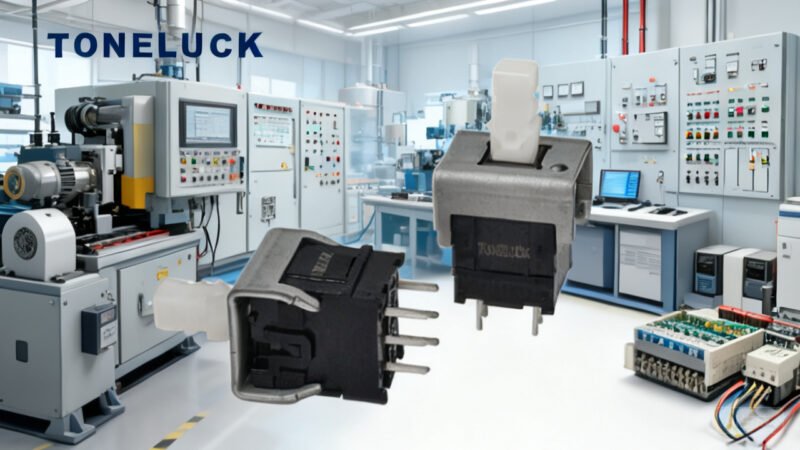
In the intricate machinery of modern industry and the ubiquitous devices of everyday life, tiny components often hold the key to grand functionality. Among these, the micro switch stands out as a silent, yet indispensable, workhorse. These compact, snap-action switches are the unsung heroes ensuring precision, safety, and reliability across countless applications. For B2B enterprises, understanding the nuances of micro switches and partnering with a reputable micro switch manufacturer is not merely an operational detail; it’s a strategic imperative for product quality and market competitiveness.
At its core, a micro switch is a small, electromechanical device characterized by its “snap-action” mechanism. This mechanism provides a rapid, predictable change in electrical contact state, regardless of the speed at which the actuator is pressed. This instantaneous action minimizes arcing and extends the switch’s operational life, making it ideal for applications requiring high reliability and repeatability. From simple on/off functions to complex interlocking systems, the micro switch’s design ensures consistent performance over millions of cycles, a critical factor for any B2B product’s longevity.
Diverse Applications Across Industries
The versatility of the micro switch is truly remarkable, finding its way into virtually every sector:
- Automotive: Used in door interlocks, seatbelt warning systems, gear shift mechanisms, and power window controls.
- Industrial Automation: Essential for position sensing, safety interlocks on machinery, and control panels. Here, the robust limit switch, often a specialized form of micro switch, plays a crucial role in detecting the presence or absence of an object, or whether the limits of travel have been reached.
- Consumer Electronics: Found in everything from home appliances like washing machines and microwaves to gaming controllers and printers.
- Medical Devices: Ensuring precise control and safety in equipment ranging from hospital beds to diagnostic tools.
- HVAC Systems: Controlling airflow, detecting pressure, and managing temperature settings.
- Security Systems: In door and window sensors, alarm triggers, and access control.
Key Types and Their Strategic Advantages
While the fundamental principle remains the same, micro switches come in various forms, each tailored for specific environmental and operational demands:
- Standard Micro Switches: These general-purpose switches offer excellent reliability and a long mechanical life, suitable for a vast array of indoor and controlled environment applications where basic switching functionality is needed.
- Limit Switches: Often more robust and larger than standard micro switches, limit switches are designed for industrial environments to detect the position of moving parts in machinery. They are critical for automation, safety cut-offs, and sequence control, providing definitive feedback on mechanical travel.
- Waterproof Micro Switches: For applications exposed to moisture, dust, or other contaminants, waterproof micro switches are indispensable. Featuring sealed enclosures (often meeting IP67 or higher ratings), these switches prevent ingress that could lead to malfunction or failure. They are vital in outdoor equipment, marine applications, automotive under-hood systems, and food processing machinery, ensuring operational continuity in challenging conditions.
- Mini and Subminiature Micro Switches: As devices shrink, so does the demand for smaller components. Mini micro switches, such as the renowned MQS-9A Mini Micro Switch, exemplify this trend. These compact units enable designers to create sleeker, more space-efficient products without compromising performance. Despite their small size, they maintain the snap-action precision and durability expected from their larger counterparts, making them ideal for high-density PCBs and miniaturized devices.
Why Partner with a Reputable micro switch manufacturer?
The quality of a micro switch directly impacts the reliability and safety of the end product. Therefore, selecting the right micro switch manufacturer is paramount. A leading manufacturer like TONELUCK micro switch, for example, brings several critical advantages to the table:
- Uncompromising Quality and Durability: Reputable manufacturers use high-grade materials and precise manufacturing processes to ensure switches withstand millions of cycles and perform consistently in specified conditions.
- Extensive Product Range: A diverse portfolio means access to standard, limit, waterproof, and mini switches, ensuring the right solution for every unique application.
- Customization Capabilities: For highly specialized needs, a strong manufacturer can offer tailored solutions, modifying actuators, terminals, or electrical ratings.
- Technical Expertise and Support: Beyond just selling components, a good partner provides valuable technical guidance, helping integrate switches effectively and troubleshoot potential issues.
- Compliance and Certifications: Adherence to international standards (e.g., RoHS, REACH, UL, ENEC) is crucial for global market access and product safety.
- Reliable Supply Chain: Consistent availability and on-time delivery are essential for maintaining production schedules and avoiding costly delays.
Critical Factors in Micro Switch Selection
When specifying a micro switch, several factors must be carefully considered:
- Electrical Rating: Ensure the switch can handle the maximum voltage and current of the circuit.
- Operating Force: The force required to actuate the switch, critical for user interface design or mechanical linkage.
- Actuator Type: Pin plungers, roller levers, simulated rollers, and other variations cater to different mechanical actuation methods.
- Terminal Type: Solder lugs, quick connect, PCB terminals – chosen based on assembly method.
- Environmental Sealing: Determine the required IP rating for protection against dust and moisture.
- Mechanical and Electrical Life: Match the switch’s lifespan to the expected operational life of the end product.
- Operating Temperature Range: Ensure the switch can perform reliably within the application’s thermal limits.
The Future Landscape of Micro Switches
Innovation continues within the micro switch domain. We are seeing trends towards even greater miniaturization, enhanced durability for extreme environments, and the integration of smart features for predictive maintenance and IoT applications. As technology advances, the role of these fundamental components will only become more sophisticated and critical.
Conclusion
Micro switches, though small, are mighty components that underpin the functionality and reliability of countless B2B products. From ensuring safety in industrial machinery with robust limit switches to enabling compact designs with mini micro switches like the MQS-9A, their impact is undeniable. For businesses aiming to deliver superior products, the choice of a high-quality micro switch, sourced from a trusted micro switch manufacturer, is an investment in long-term performance, customer satisfaction, and competitive advantage. By understanding the diverse types and critical selection criteria, enterprises can unlock the full potential of these indispensable control components and build products that truly stand the test of time.
