
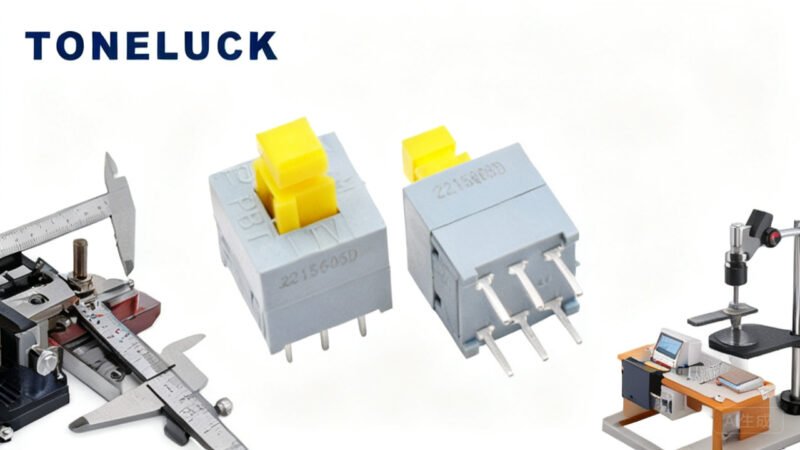
In the intricate world of industrial automation, control systems, and advanced machinery, certain components operate silently in the background, yet their reliability is absolutely critical to overall system performance. Among these unsung heroes, the micro switch stands out. These small, yet remarkably robust, snap-action devices are fundamental to ensuring precision, safety, and efficiency across countless applications. For engineers, product designers, and procurement professionals, understanding the nuances of micro switch technology and making informed selection choices is paramount.
What is a Micro Switch?
At its core, a micro switch, also known as a miniature snap-action switch, is an electrical switch that is actuated by very little physical force, utilizing a tipping-point mechanism. This “snap-action” ensures a rapid, decisive transfer of contacts, minimizing arcing and maximizing electrical life. Their design allows for highly repeatable actuation points, making them ideal for applications requiring precise detection or control over millions of cycles. Despite their often diminutive size, their impact on system functionality is immense.
Key Advantages of Integrating High-Quality micro switches
The widespread adoption of micro switches in industrial settings is driven by several inherent advantages:
- Unmatched Precision and Repeatability: The snap-action mechanism ensures a consistent actuation point with minimal hysteresis, crucial for accurate sensing and control.
- Exceptional Durability and Longevity: Engineered for high mechanical and electrical life cycles, quality micro switches can withstand millions of operations, reducing maintenance and downtime.
- Compact and Versatile Design: Available in a vast array of sizes – from standard to miniature and subminiature (like the MQS-9A Mini Micro Switch) – they can be integrated into space-constrained designs.
- Robust Electrical Performance: Capable of handling significant electrical loads, they are reliable in demanding power switching applications.
- Safety Interlock Capabilities: Often used as safety limit switches or interlocks in machinery, ensuring equipment operates only under safe conditions.
Exploring Diverse Micro Switch Types and Their Applications
The broad category of micro switches encompasses several specialized types, each designed to meet specific environmental and operational challenges:
Standard and Miniature Micro Switches
These are the workhorses of industrial control, found in everything from office equipment to industrial machinery. Miniature and subminiature versions, such as the MQS-9A Mini Micro Switch, are essential for modern devices where space is at a premium, without compromising performance or reliability.
Waterproof Micro Switches
For applications exposed to moisture, dust, or harsh chemicals, a waterproof micro switch is indispensable. These switches feature sealed enclosures, often rated to various IP (Ingress Protection) standards (e.g., IP67), ensuring reliable operation even when submerged or subjected to high-pressure washdowns. This makes them critical for outdoor equipment, food processing machinery, and marine applications.
Limit Switches
A specialized application of micro switch technology, limit switches are designed to detect the presence or absence of an object, monitor position, or indicate the end-of-travel for moving parts. They are fundamental in automation, robotics, and safety systems, providing critical feedback for sequential operations and preventing machine overtravel. Their robust construction often includes heavy-duty housings and various actuator types to withstand industrial environments.
Critical Selection Criteria for B2B Buyers and Engineers
Choosing the optimal micro switch requires careful consideration of several technical specifications:
- Electrical Ratings: Match the switch’s voltage and current capabilities (AC/DC) to the application’s requirements.
- Operating Force: The force required to actuate the switch, which impacts the responsiveness and sensitivity of the system.
- Actuator Type: Select from pin plungers, various levers (straight, roller, simulated roller), or other designs based on the physical interaction needed.
- Terminal Type: Common options include solder, quick connect, and PCB terminals, dictating ease of integration.
- Operating Temperature Range: Ensure the switch can perform reliably within the environmental temperature extremes of the application.
- IP Rating: Crucial for wet or dusty environments, specifying the level of protection against solids and liquids.
- Mechanical and Electrical Life: Consider the expected number of operations over the product’s lifespan to ensure longevity.
- Certifications: Verify compliance with relevant industry standards (e.g., UL, CE, CQC) for safety and market access.
- Manufacturer Reputation: Partnering with an experienced micro switch manufacturer, known for quality and consistency (such as TONELUCK), ensures access to reliable components and expert support.
Broadening Horizons: Industry Applications
Micro switches are integral to a vast array of industries:
- Automotive: Door latches, seatbelt detection, gear shift interlocks.
- Industrial Automation: Robotics, conveyor systems, safety gates, machine tool positioning.
- Home Appliances: Microwave ovens, washing machines, refrigerators.
- Medical Devices: Diagnostic equipment, patient beds, infusion pumps.
- HVAC Systems: Damper control, fan speed detection.
- Security Systems: Tamper detection, access control.
The Future of Micro Switch Technology
As industries continue to evolve, so too will micro switch technology. Trends point towards further miniaturization, enhanced environmental sealing (higher IP ratings), and integration into smart, connected systems, ensuring their continued relevance in an increasingly automated world.
Conclusion
The micro switch, in its many forms – from general-purpose types to specialized waterproof micro switch and robust limit switch variants – remains an indispensable component in modern industrial and commercial applications. Its ability to provide precise, durable, and reliable switching action under diverse conditions makes it a cornerstone of efficient and safe system design. By carefully considering the technical specifications and partnering with a reputable micro switch manufacturer, engineers and designers can ensure they select the ideal components to achieve optimal performance and long-term reliability in their critical applications.
