
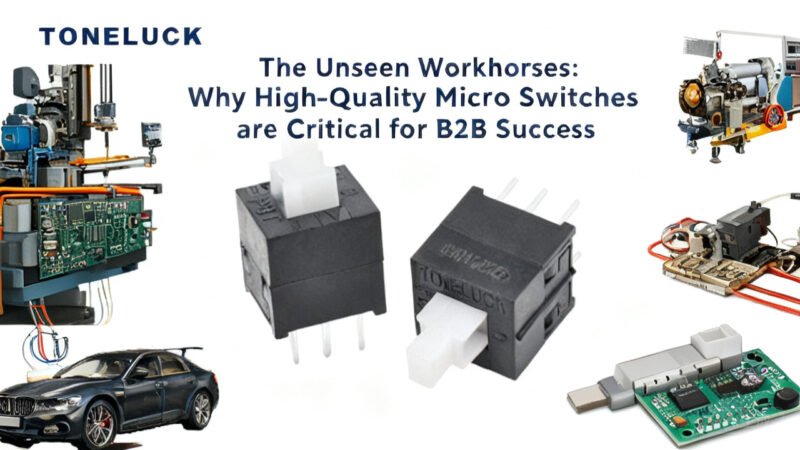
In the intricate world of industrial automation, consumer electronics, and specialized machinery, certain components operate silently, performing critical functions without much fanfare. Among these unsung heroes, the micro switch stands out as a fundamental yet indispensable device. Despite its often diminutive size, a micro switch is a precision electromechanical component designed to detect the presence or absence of an object, limit motion, or ensure safety interlocks by actuating an electrical circuit with minimal physical force. For B2B enterprises, understanding the nuances of these components, from their diverse applications to the critical factors in choosing a reliable micro switch manufacturer, is paramount for operational excellence, product longevity, and safety compliance.
What is a Micro Switch and Why Does it Matter?
A micro switch, often referred to as a miniature snap-action switch, is characterized by its quick-make, quick-break mechanism. This design ensures that the contacts rapidly snap open or closed once the operating point is reached, irrespective of the actuator’s speed. This rapid action minimizes arcing, thereby extending the switch’s electrical life and enhancing its reliability. Their precision, durability, and versatility make them integral to a vast array of equipment, from the simple door interlock in a microwave oven to complex position sensing in robotic arms.
Diverse Applications Across Industries
The ubiquity of micro switches is a testament to their adaptability and critical functionality. They are found in almost every sector:
- Automotive: Used in car door latches, seatbelt buckle sensors, gear shift interlocks, and power window controls.
- Industrial Automation: Essential for position sensing in conveyor systems, safety interlocks on machinery guards, and control panels. Here, they often function as limit switches.
- Appliances: Integral to washing machines, refrigerators, dishwashers, and ovens for door sensing, water level detection, and cycle control.
- Medical Devices: Employed in hospital beds, diagnostic equipment, and drug delivery systems where precise control and reliability are non-negotiable.
- HVAC Systems: Used for damper control, fan speed regulation, and pressure sensing.
- Security Systems: Found in alarm triggers, tamper switches, and access control mechanisms.
Exploring Key Types: Standard, Limit, and Waterproof micro switches
While the basic principle remains consistent, micro switches come in various forms, each tailored for specific environmental and operational demands:
Standard Micro Switches
These are the most common type, offering high precision and a long mechanical life. They are typically used in environments where dust and moisture are not significant concerns, providing reliable switching action for general-purpose applications. Their compact size allows for integration into tight spaces, making them ideal for miniaturized electronic devices and control panels.
Limit Switches: The Industrial Workhorses
A limit switch is essentially a robust variant of a micro switch, specifically designed for industrial applications to detect the presence or absence of an object, monitor position, or limit the travel of machinery. These switches often feature larger, more durable housings and a variety of actuators (roller plungers, levers, rods) to withstand harsh industrial environments. They are crucial for safety and automation in manufacturing plants, material handling systems, and heavy machinery, ensuring that operations proceed within predefined boundaries and preventing overtravel or collisions.
Waterproof Micro Switches: Resilience in Challenging Environments
For applications exposed to moisture, dust, oils, or other contaminants, a waterproof micro switch is indispensable. These switches are engineered with specialized sealing mechanisms, often achieving high Ingress Protection (IP) ratings (e.g., IP67), which means they are fully protected against dust ingress and can withstand immersion in water up to 1 meter for 30 minutes. Applications include outdoor equipment, marine electronics, food processing machinery, and automotive under-hood components where environmental resilience is critical to preventing failures and ensuring long-term performance. The robust construction of a quality waterproof micro switch ensures consistent operation even in the most demanding conditions, safeguarding both equipment and operational continuity.
The Critical Role of a Reliable micro switch manufacturer
The performance and longevity of any product relying on micro switches are directly tied to the quality and reliability of its components. This makes the choice of a micro switch manufacturer a strategic decision for any B2B entity. A reputable manufacturer doesn’t just produce switches; they offer:
- Uncompromising Quality: Adherence to strict manufacturing standards, rigorous testing, and quality control processes to ensure consistent performance and durability.
- Industry Compliance: Products that meet international certifications like UL, CE, RoHS, and REACH, ensuring global market acceptance and safety.
- Innovation and R&D: Continuous development of new technologies and designs to meet evolving industry demands, such as miniaturization, higher electrical ratings, and enhanced environmental protection.
- Customization Capabilities: The ability to tailor switches to specific application requirements, including custom actuators, wiring harnesses, and housing materials.
- Technical Support and Supply Chain Reliability: Expert guidance during selection and design, coupled with a robust supply chain to ensure timely delivery and consistent availability.
Spotlight on Precision and Innovation: TONELUCK and the MQS-9A Mini Micro Switch
When discussing high-quality micro switches, brands like TONELUCK micro switch often come to mind. Known for their commitment to precision engineering and reliability, manufacturers like TONELUCK exemplify what B2B clients should seek. Their product lines often feature innovative designs that address specific market needs. For instance, the MQS-9A Mini Micro Switch is an excellent example of how advanced manufacturing can deliver high performance in a compact form factor. This type of mini micro switch is engineered for applications where space is at a premium but reliability cannot be compromised. Its precise snap-action mechanism and robust construction make it suitable for intricate electronic assemblies, portable devices, and automated systems requiring accurate and repeatable switching operations within confined spaces. Such specialized components underscore the importance of partnering with manufacturers who understand the delicate balance between size, performance, and durability.
Key Factors in Selecting the Right Micro Switch
Choosing the optimal micro switch for an application requires careful consideration of several parameters:
- Electrical Rating: Matching the switch’s voltage and current capacity to the circuit requirements is crucial to prevent overheating and premature failure.
- Actuation Force: The force required to operate the switch. This can range from very light for sensitive applications to heavier for robust industrial use.
- Operating Temperature Range: Ensuring the switch can perform reliably within the environmental temperature extremes of the application.
- Mechanical and Electrical Life: The number of cycles the switch can endure. High-quality switches offer millions of cycles, ensuring long-term reliability.
- Environmental Sealing (IP Rating): Essential for applications exposed to dust, moisture, or liquids. An appropriate IP rating guarantees protection.
- Actuator Type: Plunger, lever, roller lever, push button – selecting the right actuator for the physical interaction with the switch.
- Mounting Options: Panel mount, PCB mount, screw mount – ensuring compatibility with the product’s design.
Conclusion: The Foundation of Reliable Operations
In the complex ecosystem of modern technology and industrial processes, micro switches are far more than mere electrical components; they are the silent sentinels that ensure precision, safety, and operational continuity. From detecting a simple door closure to controlling critical functions in heavy machinery, their role is indispensable. For B2B companies, investing in high-quality micro switches from a reputable micro switch manufacturer is not just a procurement decision—it’s a strategic imperative that underpins the reliability, longevity, and overall success of their products and systems. By carefully considering the type, specifications, and manufacturer, businesses can ensure they are building on a foundation of robust and dependable performance.
