
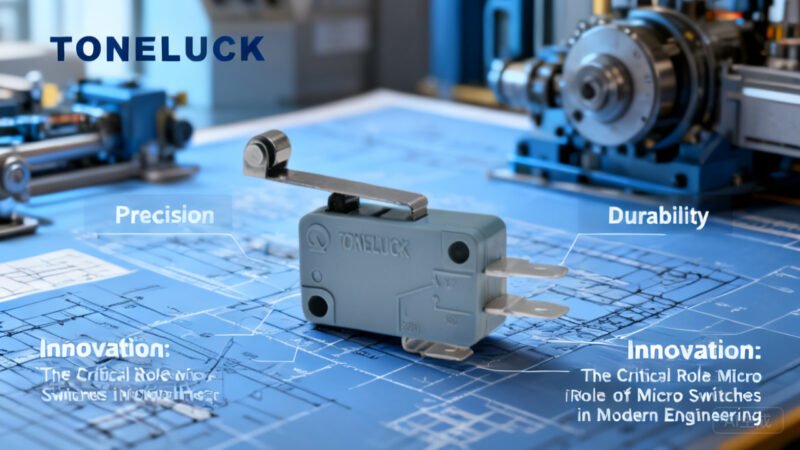
In the intricate world of industrial automation, consumer electronics, and specialized machinery, a tiny but mighty component often dictates the precision and reliability of operations: the micro switch. These electromechanical devices, characterized by their snap-action mechanism, are fundamental to countless applications, providing crucial feedback and control signals. For engineers and product developers, understanding the nuances of micro switch technology and selecting the right micro switch manufacturer is paramount to achieving optimal system performance and longevity.
What Defines a Micro Switch?
At its core, a micro switch is a small, highly sensitive switch that requires minimal force to operate. Its defining characteristic is the snap-action mechanism, which ensures a rapid transfer of contacts, regardless of the speed of the actuator. This snap action minimizes arcing and contact bounce, leading to enhanced reliability and extended operational life. Typically, micro switches feature a small overtravel distance and require a specific operating force, making them ideal for applications demanding precise position sensing.
The Versatility of Micro Switch Applications
The ubiquity of micro switches stems from their adaptability across diverse industries. In the automotive sector, they are integral to door interlocks, seatbelt sensors, and gearshift mechanisms. Within industrial automation, they serve as critical components in safety gates, conveyor systems, and process control equipment, often working in conjunction with or as a type of limit switch to detect the presence or position of objects. Consumer appliances, from microwaves and washing machines to vending machines, also heavily rely on micro switches for user interface and internal safety functions. Their compact size and robust design make them suitable for integration into confined spaces without compromising performance.
Delving into Specialized Micro Switches: Waterproof and Mini Variants
While standard micro switches offer broad utility, specific environments and design constraints necessitate specialized versions:
-
Waterproof Micro Switches:
For applications exposed to moisture, dust, or harsh chemicals, a waterproof micro switch is indispensable. These switches are engineered with enhanced sealing, often boasting IP (Ingress Protection) ratings that signify their resistance to water and dust ingress. This makes them ideal for outdoor equipment, marine applications, industrial washdown areas, and automotive under-the-hood systems, where environmental integrity is critical to preventing premature failure and ensuring consistent operation.
-
Mini Micro Switches:
Miniature micro switches, such as the MQS-9A Mini Micro Switch, address the growing demand for compact components in ever-shrinking electronic devices and machinery. Despite their small footprint, these mini switches retain the high precision and durability characteristic of their larger counterparts. They are frequently found in portable devices, medical equipment, small appliances, and intricate control panels where space is at a premium but reliable switching is non-negotiable.
The Importance of Choosing a Reputable micro switch manufacturer
The performance of a micro switch directly impacts the overall reliability and safety of the end product. Therefore, partnering with a reputable micro switch manufacturer is a critical decision. Manufacturers like TONELUCK micro switch are recognized for their commitment to quality, precision engineering, and rigorous testing protocols. A reliable manufacturer offers:
- Consistent Quality: Ensuring each switch meets stringent performance standards.
- Extensive Product Range: Providing a variety of actuator types, operating forces, electrical ratings, and environmental protections.
- Technical Support: Offering expert guidance in selecting the optimal switch for specific applications.
- Customization Capabilities: The ability to tailor switches to unique design requirements.
- Compliance and Certifications: Adhering to international safety and quality standards (e.g., UL, CQC, ENEC).
Micro Switches vs. Limit Switches: Understanding the Distinction
While often used interchangeably or in similar contexts, it’s important to clarify the relationship between micro switches and limit switches. A limit switch is fundamentally an electromechanical device that detects the presence or absence of an object, or verifies the travel limits of moving machinery. Many limit switches actually incorporate micro switches as their internal switching element. The primary difference lies in their application context: a micro switch is the component itself, designed for precise snap action, while a limit switch is a complete assembly, often housed in a robust enclosure with a specific actuator (like a roller lever or plunger) designed for industrial sensing applications where durability and environmental protection are key. Therefore, all limit switches are not micro switches, but many use micro switches within their design.
Key Considerations for Micro Switch Selection
When specifying a micro switch, engineers must consider several critical factors:
- Electrical Rating: Current and voltage requirements (AC/DC) and whether the switch will handle inductive, resistive, or lamp loads.
- Operating Force: The force required to actuate the switch, crucial for sensitive applications.
- Actuator Type: Plunger, lever (straight, roller, simulated roller), and other specialized types to match mechanical interface.
- Environmental Conditions: Temperature range, dust, moisture, and chemical exposure (dictating the need for a waterproof micro switch or specialized materials).
- Life Expectancy: Mechanical and electrical life cycles, often measured in millions of operations.
- Contact Configuration: Normally Open (NO), Normally Closed (NC), or Changeover (SPDT) to suit control logic.
- Mounting Options: Panel mount, PCB mount, screw mount, etc.
The Future of Precision Switching
As industries continue to push the boundaries of automation and miniaturization, the demand for high-performance micro switch technology will only grow. Innovations in materials, sealing techniques, and manufacturing processes are constantly enhancing their reliability, extending their operational life, and expanding their application scope. From the robust demands of heavy industry to the delicate precision required in medical devices, micro switches remain an indispensable component, ensuring that complex systems operate flawlessly and safely. Investing in quality components from trusted manufacturers is not just a choice; it’s a strategic imperative for any successful engineering endeavor.
