
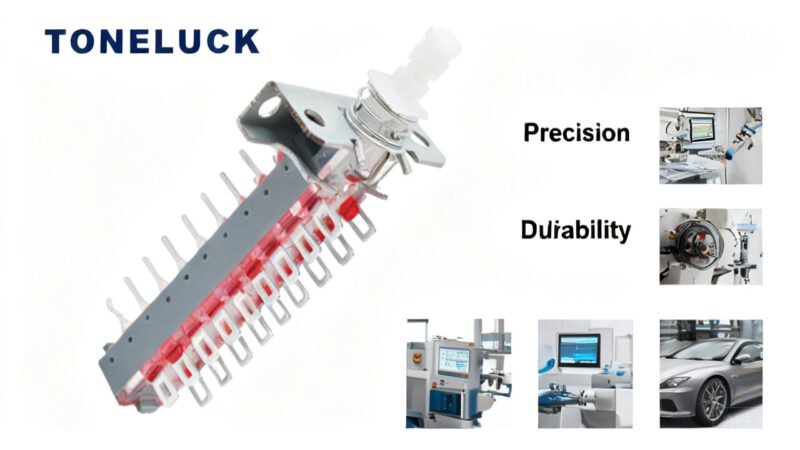
In the intricate tapestry of modern electromechanical design, few components are as ubiquitous and critical as the micro switch. These compact, snap-action devices are the silent workhorses found in an astonishing array of products, from industrial machinery and automotive systems to home appliances and sophisticated medical equipment. Their fundamental role in detecting position, triggering actions, and ensuring safety makes them indispensable for engineers and product developers across virtually every sector.
At its core, a micro switch operates on a simple yet ingenious principle: a small force applied to an actuator causes the rapid, snap-action transfer of contacts from one position to another. This distinctive snap action provides a crisp, repeatable switching point, minimizing arcing and extending the switch’s operational life. This inherent reliability, combined with their robust construction and compact form factor, positions micro switches as a cornerstone component for precise control and feedback mechanisms.
Diverse Applications: Where micro switches Drive Performance
The versatility of micro switches is truly remarkable, allowing them to perform critical functions in a multitude of environments:
- Industrial Automation: Used in conveyor systems, safety interlocks, material handling equipment, and robotics for position sensing and operational control.
- Automotive Sector: Integral to door latches, seatbelt sensors, gear shifters, and power window controls, ensuring both functionality and passenger safety.
- Home Appliances: Found in microwaves, washing machines, refrigerators, and dishwashers, controlling door closures, water levels, and operational cycles.
- HVAC Systems: Employed in thermostats, damper controls, and pressure switches for efficient climate management.
- Medical Devices: Essential for precision control and safety in equipment ranging from patient beds to diagnostic instruments.
- Consumer Electronics: From gaming controllers to vending machines, micro switches provide tactile feedback and reliable input.
Specialized Solutions: Limit Switches and Waterproof Micro Switches
While the basic micro switch design is highly adaptable, specific applications demand specialized features. Two prominent examples are limit switches and waterproof micro switches.
Limit Switches: The Guardians of Industrial Precision
A limit switch is essentially a micro switch housed within a rugged enclosure, designed to withstand the harsh conditions of industrial environments. These devices are primarily used to detect the presence or absence of an object, or to monitor the limits of movement for machinery. Their robust construction often includes metal housings and heavy-duty actuators, making them ideal for applications requiring high mechanical strength and resistance to impact, vibration, and contaminants. In manufacturing plants, for instance, limit switches ensure that robotic arms operate within safe parameters, that conveyor belts stop at precise points, and that safety gates are properly closed before machinery can operate.
Waterproof Micro Switches: Defying the Elements
For applications exposed to moisture, dust, or other environmental contaminants, standard micro switches simply won’t suffice. This is where waterproof micro switches become indispensable. Engineered with advanced sealing technologies, such as epoxy potting, rubber gaskets, and specialized housings, these switches achieve various Ingress Protection (IP) ratings, commonly IP67 or even IP68. An IP67 rating, for example, signifies that the switch is completely protected against dust ingress and can withstand immersion in water up to 1 meter for 30 minutes. This makes them perfect for outdoor equipment, marine applications, food processing machinery, and any environment where liquid exposure is a concern, ensuring continuous operation and preventing costly failures due to environmental damage.
The Critical Role of the micro switch manufacturer
Choosing the right micro switch is not merely about selecting a component; it’s about partnering with a reliable micro switch manufacturer. The quality, consistency, and innovation offered by a manufacturer directly impact the performance, longevity, and safety of your end product. A reputable manufacturer invests heavily in research and development, ensuring their products meet stringent industry standards and can withstand rigorous testing protocols.
For instance, a manufacturer like TONELUCK Micro Switch has built a reputation on delivering high-performance, durable switches that cater to a wide range of industrial and commercial demands. Their commitment to quality control and precision engineering ensures that each switch, whether a standard model or a specialized variant like the MQS-9A Mini Micro Switch, delivers consistent, reliable operation. The MQS-9A, in particular, exemplifies how miniaturization can be combined with robust performance, making it suitable for compact designs without compromising on durability or electrical integrity.
Key Considerations for Micro Switch Selection
When selecting a micro switch, several factors must be carefully evaluated to ensure optimal performance and longevity:
- Electrical Rating: Voltage and current requirements are paramount. Ensure the switch can safely handle the electrical load of your application.
- Operating Force: The amount of force required to actuate the switch. This is critical for ergonomic design and precise mechanical integration.
- Actuator Type: Pin plunger, lever, roller lever, push-button – the choice depends on the mechanism triggering the switch.
- Mechanical and Electrical Life: Specifies the number of cycles the switch can reliably perform. High-quality switches offer millions of cycles.
- Operating Temperature Range: Ensure the switch can perform consistently within the environmental temperature extremes of your application.
- Environmental Sealing (IP Rating): As discussed, essential for protection against dust, water, and other contaminants.
- Size and Mounting: Physical dimensions and mounting options must fit within the product’s design constraints. The MQS-9A Mini Micro Switch is an excellent example for space-constrained applications.
- Material Composition: Contact materials (e.g., silver alloy for high currents) and housing materials (e.g., high-temperature plastics) impact performance and durability.
- Certifications: Compliance with international standards (e.g., UL, CE, RoHS, REACH) is crucial for global market access and product safety.
Conclusion: Partnering for Performance and Reliability
The humble micro switch, in its many forms, remains an indispensable component in countless applications, underpinning reliability and precision across industries. Whether it’s the rugged dependability of a limit switch in an industrial setting, the environmental resilience of a waterproof micro switch, or the compact efficiency of a mini micro switch like the MQS-9A, the choice of component and, crucially, the manufacturer, dictate the success and longevity of your product.
For B2B entities, understanding the nuances of micro switch technology and partnering with an experienced, reputable micro switch manufacturer like TONELUCK is not just a matter of procurement—it’s a strategic decision that ensures the highest standards of quality, performance, and safety for their designs and ultimately, for their end-users.
