
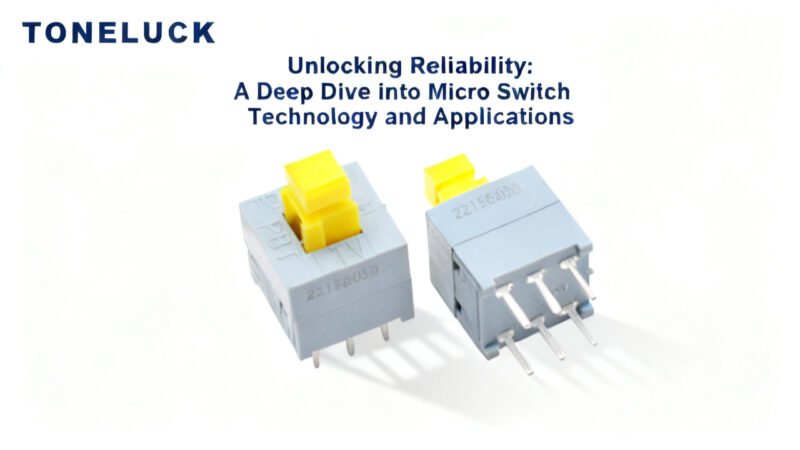
micro switches, often unassuming in their compact form, are foundational components in an immense array of electronic and electromechanical systems. Their critical role spans from ensuring the safety of industrial machinery to enabling the precise operation of consumer electronics. For engineers, product designers, and procurement specialists, understanding the nuances of micro switch technology is paramount to developing reliable, efficient, and compliant products.
At its core, a micro switch (often referred to as a miniature snap-action switch) is a small electrical switch actuated by a tiny physical force, causing a quick and decisive change in electrical contact. This “snap-action” mechanism is key to their reliability, minimizing arcing and ensuring consistent performance over millions of cycles. They typically feature an over-center mechanism that rapidly transfers the contacts from one position to another once a specific actuation force is reached, regardless of the speed of the actuator.
Key characteristics that define their utility include:
- Precision Actuation: Designed for highly repeatable operation, making them ideal for precise position detection.
- High Durability: Capable of withstanding millions of operational cycles, crucial for long-life applications.
- Compact Size: Enables integration into space-constrained designs.
- Versatile Actuator Options: Available with various levers, plungers, and rollers to suit diverse mechanical interfaces.
Diverse Applications Across Industries
The versatility of micro switches makes them indispensable in countless sectors:
- Industrial Automation: As limit switches, they detect the presence or position of objects, control motion, and provide safety interlocks in robotics, CNC machines, and assembly lines. A reliable micro switch manufacturer is crucial here for operational integrity.
- Automotive: Used in door latches, seat belt indicators, gear shift mechanisms, and engine control systems, where precision and durability are non-negotiable.
- Home Appliances: Found in microwaves (door interlocks), washing machines, refrigerators, and power tools, ensuring safety and correct operation.
- Medical Devices: Critical for safety and control in equipment ranging from hospital beds to diagnostic instruments.
- HVAC Systems: Employed in damper controls, pressure switches, and fan interlocks.
- Security Systems: In door/window sensors, alarm triggers, and access control panels.
Beyond Basic: Specialized Micro Switches
While the fundamental design remains, advancements have led to specialized variants addressing specific environmental and functional demands.
Waterproof Micro Switches
For applications exposed to moisture, dust, or other contaminants, waterproof micro switches are essential. These switches are engineered with robust sealing mechanisms, often achieving high IP (Ingress Protection) ratings like IP67, indicating protection against dust ingress and temporary immersion in water. This makes them ideal for outdoor equipment, marine applications, food processing machinery, and industrial environments where washdowns are common.
Limit Switches
While all limit switches are technically snap-action switches, the term “limit switch” often refers to a more robust, often larger, industrial-grade switch designed for heavy-duty position sensing in harsh environments. They typically feature more durable housings and can incorporate various types of actuators, making them suitable for detecting the physical limits of movement in machinery.
Mini and Subminiature Micro Switches
As electronic devices become smaller and more integrated, the demand for miniature components grows. Mini micro switches, such as the MQS-9A Mini Micro Switch, offer the same reliable snap-action functionality in significantly smaller footprints. This miniaturization is crucial for compact consumer electronics, portable medical devices, and advanced automotive applications where space is at a premium without compromising performance or lifespan.
Key Considerations for Micro Switch Selection
Choosing the correct micro switch involves a careful evaluation of several parameters:
- Electrical Ratings: Match the switch’s voltage and current ratings to the application’s electrical load. Overloading can lead to premature failure.
- Operating Force: The force required to actuate the switch. This must be compatible with the mechanical system it interacts with.
- Actuator Type: Select from pin plungers, hinge levers, roller levers, and simulated rollers based on the desired actuation method and travel distance.
- Terminal Configuration: Common types include solder terminals, quick-connect terminals, and PCB terminals, each suited for different assembly processes.
- Environmental Conditions: For harsh environments, consider waterproof micro switches with appropriate IP ratings. Temperature range and vibration resistance are also critical.
- Mechanical & Electrical Life: Evaluate the expected number of cycles the switch needs to perform reliably over its lifespan. High-quality switches can offer millions of cycles.
- Material Quality: The choice of contact material (e.g., silver alloy for high current, gold for low current) and housing material impacts durability and performance.
- Certifications: Ensure the switch complies with relevant industry standards (e.g., UL, cUL, ENEC, CQC) for safety and quality assurance.
Partnering with a Reputable micro switch manufacturer
The performance and longevity of a micro switch are directly tied to the quality of its design and manufacturing. Partnering with an experienced and reputable micro switch manufacturer is paramount. Manufacturers like TONELUCK, for instance, are known for their commitment to precision engineering, rigorous testing, and a broad portfolio of switches, including specialized options like the MQS-9A Mini Micro Switch. A strong manufacturer provides not only high-quality components but also technical support, design assistance, and consistent supply chain reliability.
The Future of Micro Switch Technology
The trajectory of micro switch development points towards continued miniaturization, enhanced durability in extreme environments, and integration with smarter systems. As IoT and advanced automation proliferate, micro switches will evolve to meet demands for even lower power consumption, higher precision, and greater resilience, solidifying their indispensable role in the technological landscape.
In conclusion, micro switches, despite their small stature, are critical enablers of functionality, safety, and reliability across a vast spectrum of applications. Careful selection, considering both general specifications and specialized requirements like waterproofing or miniaturization, is key to successful product development. By understanding the technology and partnering with a trusted micro switch manufacturer, engineers and designers can ensure the robust and long-lasting performance of their systems.
