
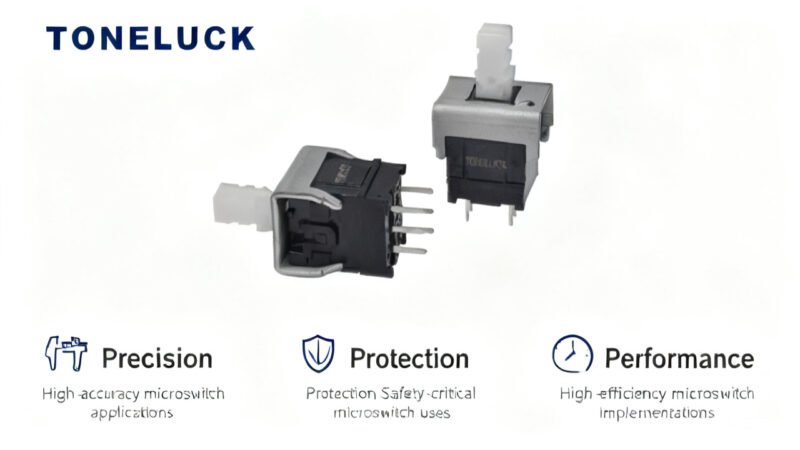
In the intricate landscape of modern industrial automation, consumer electronics, and machinery, countless operations rely on the precise and reliable detection of position, presence, and movement. At the heart of many such systems are micro switches and limit switches – seemingly small components that play an outsized role in ensuring safety, efficiency, and functionality. These devices are the silent workhorses, enabling everything from the proper functioning of a washing machine door to the critical safety interlocks on heavy industrial equipment.
For engineers, procurement specialists, and product designers, understanding the nuances of these switches and partnering with a reputable micro switch manufacturer is paramount. The right switch can define a product’s longevity, performance, and compliance with industry standards, making the selection process a critical strategic decision.
What is a Micro Switch?
A micro switch, often referred to as a miniature snap-action switch, is an electrical switch that is actuated by very little physical force, utilizing a ‘snap-action’ mechanism. This mechanism ensures a rapid, decisive transfer of contacts from one position to another, regardless of the speed of the actuator. This ‘snap’ action is crucial as it minimizes arcing at the contacts, extending the switch’s electrical life and enhancing its reliability. micro switches are characterized by their small size, high precision, and robust construction, making them suitable for applications requiring millions of operating cycles.
Their versatility means they are found in an incredibly diverse range of products, including home appliances, automotive systems, industrial controls, medical devices, and security systems. From detecting a paper jam in a printer to confirming the closure of a microwave oven door, the micro switch is fundamental to countless daily interactions.
The Essential Role of a micro switch manufacturer
The quality and reliability of a micro switch are directly tied to the expertise of its manufacturer. A leading micro switch manufacturer doesn’t just produce components; they innovate, test rigorously, and provide solutions tailored to specific application demands. Key aspects of a manufacturer’s role include:
- Research & Development: Continuously improving switch designs, materials, and manufacturing processes to meet evolving industry needs.
- Quality Control: Implementing stringent testing protocols to ensure consistent performance, durability, and compliance with international standards (e.g., UL, CE, CQC).
- Customization: Offering a range of actuator types, terminal configurations, operating forces, and electrical ratings to fit unique application requirements.
- Technical Support: Providing expert guidance on switch selection, integration, and troubleshooting.
Key Types of Switches and Their Applications
Limit Switches: The Industrial Guardian
Limit switches are a robust type of micro switch designed for industrial applications where they detect the presence or absence of an object, or monitor the limits of travel for moving parts. They are typically larger and more durable than standard micro switches, built to withstand harsh industrial environments, including exposure to dust, moisture, and mechanical stress. Common applications include:
- Machine Tooling: Confirming the position of workpieces or tool heads.
- Conveyor Systems: Detecting item presence or ensuring proper alignment.
- Safety Interlocks: Preventing machine operation when guards are open or safety conditions are not met.
- Automated Assembly Lines: Controlling the sequence of operations.
Waterproof Micro Switches: Defying the Elements
For applications exposed to liquids, dust, or extreme humidity, a standard micro switch simply won’t suffice. This is where waterproof micro switches become indispensable. Engineered with advanced sealing technologies, these switches offer superior protection against environmental ingress, typically rated according to the Ingress Protection (IP) system (e.g., IP67 for dust-tight and temporary immersion). Their applications are critical in:
- Outdoor Equipment: Garden tools, vending machines, security cameras.
- Automotive: Door latches, hood sensors, power window controls.
- Marine Applications: Bilge pump controls, navigation equipment.
- Industrial Washdown Areas: Food processing machinery, chemical plants.
Mini Micro Switches: Precision in Compact Spaces
As devices become smaller and more integrated, the demand for miniature components grows. Mini micro switches, such as the MQS-9A Mini Micro Switch, are designed to deliver the same reliable snap-action performance in a significantly reduced footprint. These switches are ideal for applications where space is at a premium but precision and durability cannot be compromised. The MQS-9A, for instance, offers high reliability and a long operating life within a compact package, making it suitable for:
- Small Appliances: Coffee makers, electric toothbrushes.
- Consumer Electronics: Gaming controllers, cameras.
- Automotive Electronics: Compact sensors, dashboard controls.
- Medical Devices: Diagnostic equipment, portable instruments.
Choosing the Right Switch: Critical Considerations
Selecting the optimal micro switch or limit switch requires careful evaluation of several factors:
- Application Environment: Will the switch be exposed to dust, moisture, extreme temperatures, vibrations, or corrosive agents? This dictates the need for sealed or waterproof options.
- Electrical Requirements: Consider the voltage, current, and type of load (resistive, inductive) the switch will control. Ensure the switch’s electrical rating exceeds the application’s maximum requirements.
- Mechanical Life & Reliability: How many operating cycles will the switch endure? High-cycle applications demand switches with robust internal mechanisms and quality materials.
- Actuator Type: Roller levers, plungers, simulated rollers, and wire levers are common. The choice depends on the mechanism that will activate the switch.
- Mounting Options: Panel mount, PCB mount, or screw mount are typical. Ensure compatibility with the product design.
- Compliance & Certifications: Verify that the switch meets relevant industry standards and safety certifications for the target market.
Conclusion
Micro switches and limit switches are far more than simple on/off components; they are critical enablers of precision, safety, and efficiency across countless industries. From the rugged reliability of a limit switch guarding industrial machinery to the compact precision of an MQS-9A Mini Micro Switch in a consumer gadget, their role is foundational. Partnering with an experienced and innovative micro switch manufacturer is not just about sourcing parts; it’s about securing a competitive edge through superior component quality, tailored solutions, and unwavering reliability. As technology continues to advance, the demand for ever more precise, durable, and specialized switching solutions will only grow, underscoring the enduring importance of these unsung heroes of automation.
