
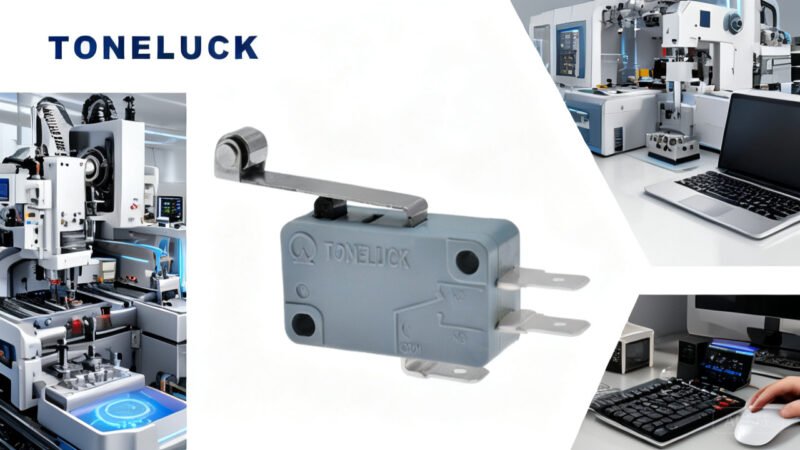
At the heart of countless devices, from everyday appliances to complex industrial machinery, lies a seemingly simple yet profoundly critical component: the micro switch. Also known as a miniature snap-action switch, this electromechanical device is designed to make or break an electrical circuit with a very small physical force, providing a rapid and decisive change in contact state. Its defining characteristic is the snap-action mechanism, which ensures a quick, predictable changeover regardless of the speed of actuation. This inherent reliability and precision make micro switches indispensable for accurate detection and control in a vast array of applications.
The fundamental principle involves an over-center mechanism that stores energy from the actuator. Once a specific operating point is reached, this stored energy is suddenly released, causing the contacts to snap from one position to another with high speed and minimal bounce. This rapid transfer minimizes arcing, extending the switch’s electrical life and ensuring consistent performance over millions of cycles. Understanding this core functionality is key to appreciating why these compact devices are so vital for robust system design.
Beyond Basic On/Off: Diverse Applications and Types
The versatility of the micro switch extends far beyond simple on/off functions. Their robust design and precise operation allow them to serve in critical roles across numerous sectors, adapting to specific environmental and operational demands through various specialized forms.
Limit Switches: The Guardians of Automation
A prominent application of micro switch technology is found in limit switch designs. Often larger and more robust, limit switches are primarily used in industrial automation and control systems to detect the presence or absence of an object, or to monitor the position of moving parts. They act as electromechanical sensors, providing feedback to a control system when a mechanical arm, a door, or a machine component reaches a predetermined limit. From safety interlocks on factory equipment to position sensing in robotic arms and conveyor systems, limit switches are crucial for ensuring operational safety, process control, and efficient machinery movement. Their ability to withstand harsh industrial environments and provide reliable positional feedback makes them a cornerstone of modern manufacturing.
Conquering the Elements: Waterproof micro switches
In environments where moisture, dust, or other contaminants are prevalent, standard switches simply won’t suffice. This is where waterproof micro switch technology becomes essential. Engineered with sealed enclosures, often meeting stringent IP (Ingress Protection) ratings like IP67, these switches are designed to prevent the ingress of water and particulate matter, ensuring uninterrupted operation even when submerged or exposed to jets of water. Applications range from outdoor security systems and marine equipment to medical devices that require sterilization, and automotive components exposed to the elements. The robust sealing not only protects against water but also extends the switch’s life in dusty or chemically aggressive environments, making them critical for reliability in challenging conditions.
Miniaturization for Modern Design: The MQS-9A Example
As electronic devices become smaller and more integrated, the demand for miniature components grows exponentially. This trend has driven the development of ultra-compact micro switches, such as the MQS-9A Mini Micro Switch. These tiny powerhouses offer the same snap-action precision and reliability in significantly reduced footprints, enabling designers to create sleeker, more portable, and more densely packed products. From portable consumer electronics like smartphones and digital cameras to compact medical diagnostic tools and intricate automotive modules, miniature micro switches are vital. Their small size allows them to be incorporated into designs where space is at an absolute premium, without compromising on performance or durability. The MQS-9A, for instance, exemplifies how advanced manufacturing techniques can deliver high-performance switching in a package that fits into the most constrained spaces, proving that small size doesn’t mean small impact.
Navigating the Selection Process: Key Considerations for Designers
Choosing the right micro switch is paramount for the success and longevity of any application. Designers must consider several critical factors:
- Electrical Ratings: Voltage and current handling capabilities must match or exceed application requirements.
- Operating Force: The force required to actuate the switch, crucial for ergonomic design and precise mechanical integration.
- Actuator Type: Plunger, lever, roller lever, and other options dictate how the switch interacts with the activating mechanism.
- Terminal Type: Solder lugs, quick-connect terminals, PCB pins, and wire leads offer different connection methods.
- Environmental Resilience: Beyond waterproofing, consider temperature range, vibration resistance, and shock tolerance.
- Mechanical and Electrical Life: The number of cycles the switch can endure, often in the millions, is a key indicator of durability.
- Certifications: Compliance with standards like UL, CE, CQC, or ENEC ensures safety and quality.
A thorough evaluation of these parameters ensures optimal performance, reliability, and safety for the end product.
The Manufacturer’s Edge: Why Quality Matters
The performance of a micro switch is highly dependent on the quality of its design and manufacturing. This underscores the importance of partnering with a reputable micro switch manufacturer. A leading manufacturer invests heavily in R&D, precision tooling, and stringent quality control processes to ensure consistency and reliability across their product lines. They often offer a wide range of standard and customizable solutions, providing technical expertise and support throughout the design cycle.
For instance, a brand like TONELUCK micro switch exemplifies the commitment to engineering excellence. Such manufacturers leverage decades of experience to produce switches that not only meet but often exceed industry standards for durability, precision, and environmental resistance. Choosing a manufacturer with a proven track record ensures access to high-quality components, robust technical documentation, and reliable after-sales support, all of which are crucial for minimizing risks and accelerating time-to- market for complex designs.
The Future of Precision Switching
The evolution of micro switches continues, driven by advancements in materials science, manufacturing techniques, and the increasing demands of smart technologies. Future trends will likely include further miniaturization, enhanced durability for extreme environments, integration with smart sensing capabilities (e.g., IoT compatibility), and even more precise actuation mechanisms. As industries push the boundaries of automation and connectivity, the humble micro switch will undoubtedly evolve to meet these new challenges, remaining a cornerstone of reliable control.
Conclusion: Powering Innovation with Precision
From safeguarding industrial machinery to enabling the sleek functionality of consumer gadgets, micro switches are unsung heroes of modern technology. Their precision, reliability, and adaptability make them indispensable components in almost every sector. By understanding the diverse types, critical selection factors, and the importance of partnering with a quality micro switch manufacturer, engineers and designers can leverage these miniature marvels to power innovation and ensure the robust, dependable operation of their products for years to come.
