
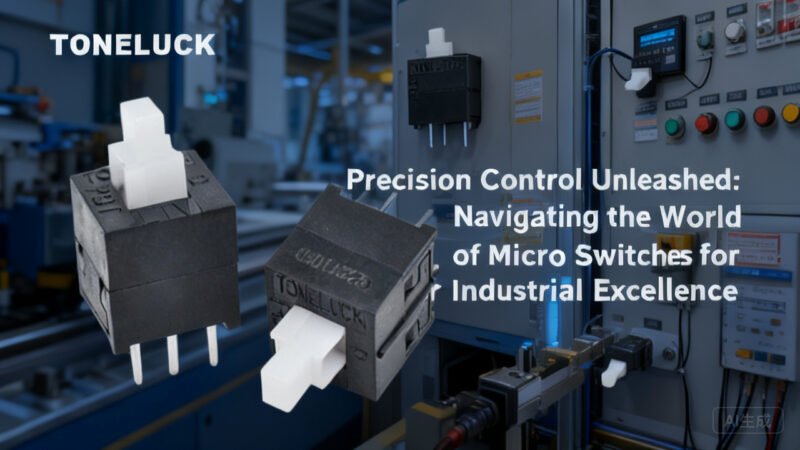
In the intricate ecosystem of modern industrial design and automation, certain components operate silently, yet their precision and reliability are absolutely critical to the functionality of countless devices. Among these unsung heroes, the micro switch stands out. Often overlooked but indispensable, micro switches are fundamental to everything from consumer electronics to heavy industrial machinery. For B2B stakeholders, understanding the nuances of micro switch technology and the strategic importance of partnering with a reputable micro switch manufacturer is paramount to ensuring product quality, operational efficiency, and long-term reliability.
What is a Micro Switch? A Foundation of Reliability
At its core, a micro switch is a small, snap-action electrical switch that requires very little force to operate. Characterized by its precise actuation point and rapid switching action, it is designed to make or break an electrical connection quickly and repeatedly. This ‘snap-action’ mechanism ensures that the contacts move swiftly between states, minimizing arcing and extending the switch’s operational lifespan. Their compact design, combined with high accuracy and durability, makes them ideal for applications where space is at a premium and reliable detection or control is essential.
Key Characteristics and Advantages
- Precision & Repeatability: micro switches offer highly consistent operating points, crucial for applications requiring exact positioning or timing.
- Durability & Long Lifespan: Engineered for millions of cycles, they provide exceptional mechanical and electrical life, reducing maintenance and replacement costs.
- Compact Size: Their small footprint allows for integration into tight spaces, enabling miniaturization in product design, such as the MQS-9A Mini Micro Switch.
- Versatility: Available in a wide array of configurations, including various actuator types (lever, roller, plunger) and electrical ratings.
- Rapid Switching: The snap-action mechanism ensures quick contact transfer, minimizing bounce and improving signal integrity.
Exploring Specialized Micro Switch Variants
While the basic principle remains consistent, micro switches come in several specialized forms to meet diverse application requirements:
- Miniature Micro Switches: Designed for extremely confined spaces, these switches, like the MQS-9A, offer high performance in a compact package, ideal for consumer electronics, medical devices, and automotive applications.
- Waterproof Micro Switches: Crucial for harsh environments where exposure to liquids, dust, or other contaminants is a concern, waterproof micro switches are sealed to prevent ingress, ensuring reliable operation in outdoor equipment, marine applications, and industrial wash-down areas.
- Limit Switches: Often confused with micro switches, a limit switch is essentially a micro switch housed within a robust enclosure, typically designed for industrial environments. They are used to detect the presence or absence of an object, or to monitor the travel limits of moving machinery parts. While a micro switch is the internal component, a limit switch is the complete assembly, offering enhanced protection and higher current ratings for heavy-duty applications.
The Indispensable Role of a Professional micro switch manufacturer
Choosing the right micro switch is only half the battle; partnering with a proficient micro switch manufacturer is equally, if not more, important. A leading manufacturer brings several critical advantages to the table:
- Uncompromising Quality & Consistency: Reputable manufacturers adhere to stringent quality control processes, ensuring every switch meets exacting standards for performance and longevity. Brands like TONELUCK micro switch, for example, are known for their commitment to quality.
- Research & Development Capabilities: Advanced manufacturers invest in R&D to innovate new designs, improve existing products, and develop custom solutions for unique applications.
- Customization & Flexibility: The ability to customize switches to specific operational forces, electrical ratings, terminal types, and actuator designs is invaluable for specialized projects.
- Certifications & Compliance: Adherence to international standards (e.g., UL, CE, RoHS) is non-negotiable, ensuring products meet global safety and environmental regulations.
- Technical Support & Expertise: A strong manufacturer provides expert guidance on product selection, integration, and troubleshooting, acting as a true partner in your design process.
- Supply Chain Reliability: Consistent product availability and efficient logistics are vital for maintaining production schedules and minimizing downtime.
Applications Across Diverse Industries
The versatility of micro switches makes them a cornerstone in a vast array of industries:
- Automotive: Used in door interlocks, seatbelt detection, gear shift mechanisms, brake pedal sensors, and window controls.
- Home Appliances: Found in microwaves (door interlocks), washing machines (lid switches), refrigerators (ice dispenser mechanisms), and vacuum cleaners.
- Industrial Automation: Essential for position sensing in robotics, machine tools, conveyor systems, and safety interlocks on machinery.
- HVAC Systems: Employed in damper controls, pressure switches, and fan activation.
- Medical Devices: Integrated into infusion pumps, patient beds, and diagnostic equipment where precision and reliability are paramount.
- Security Systems: Utilized in alarm systems, door/window sensors, and access control devices.
Key Considerations for Selecting the Right Micro Switch
When specifying a micro switch, several factors must be carefully evaluated:
- Electrical Rating: Ensure the switch can safely handle the required voltage and current for both AC and DC applications.
- Operating Force & Travel: Match the switch’s actuation force and pre-travel/over-travel to the application’s mechanical requirements.
- Environmental Conditions: Consider operating temperature range, humidity, and the presence of dust or moisture. For challenging environments, a waterproof micro switch is essential.
- Mechanical & Electrical Life: Specify a switch with a lifespan that exceeds the expected operational cycles of the end product.
- Actuator Type: Choose from plunger, lever, roller, and other actuator types based on the mechanism it needs to interact with.
- Mounting Options: Evaluate the available mounting styles (panel mount, PCB mount, screw mount) to ensure compatibility with your design.
Conclusion: Strategic Partnerships for Future-Proof Designs
Micro switches, though small, play an outsized role in the functionality, safety, and reliability of countless products and systems. For businesses aiming for industrial excellence, the strategic selection of these components and the establishment of robust partnerships with leading micro switch manufacturers are not merely procurement decisions but critical investments in future-proof design and operational resilience. By prioritizing quality, innovation, and expert support, companies can harness the full potential of micro switch technology, ensuring their products perform flawlessly, even in the most demanding applications.
