
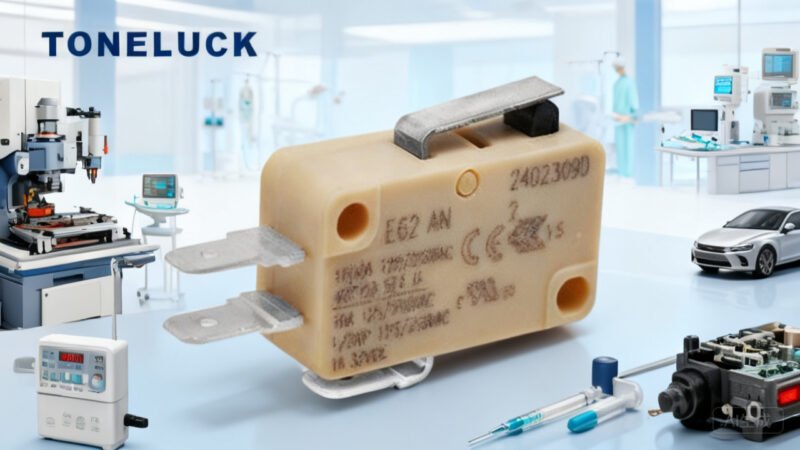
In the intricate landscape of modern industrial automation, consumer electronics, and specialized machinery, the seemingly small components often hold the most critical functions. Among these, micro switches and limit switches stand out as indispensable electromechanical devices, acting as the fundamental sensors and control elements that ensure precision, safety, and efficiency. For engineers, product designers, and procurement professionals, understanding the nuances of these components and partnering with a reputable micro switch manufacturer is paramount to system integrity and operational success.
Understanding Micro Switches: Compact Powerhouses of Control
A micro switch, also known as a miniature snap-action switch, is a compact electrical switch characterized by its highly sensitive actuation and rapid, repeatable switching action. Its core mechanism involves a spring-loaded lever that, upon a small amount of force, quickly changes the state of its electrical contacts (typically Normally Open – NO, Normally Closed – NC, or Changeover – CO). This ‘snap-action’ ensures a swift break and make, minimizing arcing and extending the switch’s operational lifespan.
The applications for micro switches are incredibly diverse, spanning numerous industries. In consumer electronics, they are found in appliances, computer mice, and game controllers. The automotive sector utilizes them extensively for door latches, seat belt indicators, and gear shift mechanisms. Industrially, they are critical in control panels, safety interlocks, and as position sensors in various machinery due to their precision and reliability.
The Power of Miniaturization: Introducing the MQS-9A Mini Micro Switch
As technology progresses, the demand for smaller, more efficient components grows. This trend has led to the development of specialized miniature switches, such as the MQS-9A Mini Micro Switch. This particular model embodies the best of compact design without compromising on performance. Its tiny footprint makes it ideal for applications where space is at an absolute premium, such as portable medical devices, compact industrial sensors, and next-generation consumer gadgets.
The MQS-9A, often a product of advanced engineering from a dedicated micro switch manufacturer like TONELUCK, offers high reliability and a robust operational life despite its diminutive size. Its precision ensures accurate sensing and control in even the most constrained environments, enabling innovative designs and system architectures that were previously impossible with larger components.
Enduring Harsh Environments: The Role of Waterproof Micro Switches
Not all applications operate in pristine conditions. Many industrial, outdoor, and marine environments demand components that can withstand exposure to dust, moisture, and even direct water immersion. This is where the waterproof micro switch becomes indispensable. These specialized switches are designed with enhanced sealing mechanisms, often featuring robust housings, O-rings, and encapsulated terminals, to achieve high Ingress Protection (IP) ratings (e.g., IP67).
Waterproof micro switches are critical in applications such as industrial washdown equipment, outdoor security systems, marine navigation equipment, automotive under-hood applications, and even certain medical devices that require sterilization. The ability of these switches to maintain operational integrity in challenging conditions directly contributes to the safety, reliability, and longevity of the larger systems they serve.
Ensuring Safety and Control: The Function of Limit Switches
While sharing the snap-action principle with micro switches, a limit switch is typically a more robust, industrially-oriented device designed to detect the presence or absence of an object, or to monitor the travel limits of moving machinery. They are fundamental to automation and safety systems, providing critical feedback on position, speed, and direction.
Limit switches come in various actuator types, including roller plungers, levers, and wobble sticks, allowing them to be configured for a wide array of mechanical interactions. Their primary functions include safety interlocks (preventing machinery from operating under unsafe conditions), sequence control (initiating the next step in an automated process), and position sensing (confirming a component has reached its intended location). From machine tools and conveyors to robotic systems and access control, limit switches are the silent guardians of operational integrity.
The TONELUCK Advantage: Partnering with a Specialized Micro Switch Manufacturer
Choosing the right micro switch manufacturer is a strategic decision that impacts the performance, safety, and longevity of your products. A reputable manufacturer, such as TONELUCK, brings several key advantages to the table:
- Expertise and R&D: Deep understanding of snap-action mechanisms, contact materials, and housing design, leading to superior product development.
- Quality Control: Rigorous testing protocols (durability, electrical performance, environmental resistance) ensure switches meet stringent industry standards (UL, cUL, ENEC, CQC).
- Customization Capabilities: The ability to tailor switches for specific application needs, including actuator types, operating force, electrical ratings, and terminal options.
- Reliability and Longevity: High-quality components translate to extended operational life, minimizing downtime and maintenance costs.
- Technical Support: Access to expert guidance for selection, integration, and troubleshooting.
By collaborating with a dedicated manufacturer, businesses can ensure they are sourcing components that are not only high-performing but also compliant with global safety and environmental regulations.
Key Considerations When Selecting a Switch
When specifying a micro or limit switch, several technical factors must be carefully evaluated:
- Electrical Ratings: Voltage, current (AC/DC), and load type (resistive, inductive) must match the application’s requirements.
- Operating Force: The force required to actuate the switch, critical for sensitive applications or those with specific mechanical constraints.
- Actuator Type: Pin plunger, lever, roller lever, push button – chosen based on the mechanical interface.
- Environmental Conditions: Temperature range, humidity, presence of dust, chemicals, or water (IP rating).
- Life Cycle Expectancy: The number of mechanical and electrical operations the switch is guaranteed to perform.
- Mounting Options: Panel mount, PCB mount, screw mount, etc., to ensure proper integration.
Careful consideration of these parameters ensures optimal performance and prevents premature failure, safeguarding the overall system’s reliability.
The Future of Switching Technology
The evolution of micro and limit switches continues, driven by advancements in smart manufacturing and the Internet of Things (IoT). Future trends include further miniaturization without compromising performance, enhanced sensing capabilities for predictive maintenance, and seamless integration with digital control systems. As industries move towards more connected and autonomous operations, the demand for highly reliable, intelligent switching solutions will only intensify.
Conclusion
Micro switches and limit switches, including specialized variants like the waterproof micro switch and compact units like the MQS-9A Mini Micro Switch, are more than just simple electrical components. They are the guardians of precision, the enablers of automation, and the silent sentinels of safety across a multitude of industries. Partnering with an experienced and quality-focused micro switch manufacturer like TONELUCK is not merely a purchasing decision; it is a strategic investment in the reliability, efficiency, and innovative potential of your products and systems. By understanding their capabilities and selecting the right components, businesses can ensure robust performance in today’s demanding technical landscape.
